The hip-hop community is no stranger to long-standing feuds, lingering grudges, and the shadows of past violence that sometimes stretch into the present. Lately, one particularly intense rumor has captured attention: the idea that 50 Cent played a crucial behind-the-scenes role in protecting Lil Meech from potential harm linked to Sean “Diddy” Combs. This speculation ties back to a tragic 2003 incident involving Diddy’s close friend and bodyguard, Anthony “Wolf” Jones, and Lil Meech’s father, Demetrius “Big Meech” Flenory.
To understand the buzz, we have to go back to the early 2000s, when the worlds of street life and music stardom often overlapped in dangerous ways. Big Meech, co-founder of the Black Mafia Family (BMF), was building an empire that blended massive drug operations with high-profile connections in entertainment. Diddy, then at the peak of Bad Boy Records, reportedly hired BMF members for security during trips to the South, forging a business relationship that brought Meech close to Diddy’s inner circle—including Wolf Jones, a loyal childhood friend and enforcer known for his fierce reputation.

Things turned deadly on November 11, 2003, outside Club Chaos in Atlanta’s Buckhead district. What started as a heated argument inside the nightclub—reportedly over a woman—escalated into chaos. Wolf Jones and his associate Lamont “Riz” Girdy confronted Meech and his group in the parking lot. Gunfire erupted, leaving Jones and Girdy dead from multiple shots. Big Meech was also wounded but survived. Police investigated, and Meech faced murder charges briefly, but the case fell apart due to lack of cooperating witnesses and evidence. It remains officially unsolved, though street accounts point fingers at BMF retaliation.
For Diddy, losing Wolf was devastating. Jones wasn’t just security; he was family, someone who’d been by his side through the heights of fame and the tensions of industry rivalries. The fallout severed any ties between Diddy and BMF, replacing alliance with deep resentment. Big Meech went on to serve decades in prison for his drug empire, but whispers persisted that the grudge didn’t die with Wolf.

Fast-forward to more recent years, and those whispers evolved into bolder claims online and in gossip circles. Some say Diddy, unable to settle the score directly with an incarcerated Big Meech, shifted focus to his son, Demetrius “Lil Meech” Flenory Jr.—a young actor stepping into the spotlight. The theory suggests a plot to harm Lil Meech as payback, turning a father’s past into a son’s peril.
Enter 50 Cent, the powerhouse producer and perpetual instigator who’s made a career out of spotlighting industry drama. Known for his hit Starz series BMF, which chronicles the Flenory brothers’ story, 50 cast Lil Meech in the lead role as his own father. On the surface, it was a perfect fit: authentic casting that brought real emotion to the screen. But according to the rumors, there was more to it. By bringing Lil Meech into his orbit—paying for acting lessons, guiding his career, and keeping him central to a major production—50 allegedly created a shield. Proximity to 50’s influence and visibility supposedly made Lil Meech untouchable, deterring any moves from lingering enemies.

This narrative gained traction amid 50’s relentless trolling of Diddy, especially as allegations against the mogul mounted in recent years. 50 has produced documentaries and social media storms highlighting Diddy’s controversies, positioning himself as an antagonist unafraid to dig into old wounds. In this context, his support for Lil Meech takes on a heroic tint for some fans: not just mentorship, but protection in a world where old beefs can resurface unpredictably.
Of course, it’s important to note that these are rumors—unsubstantiated claims circulating in blogs, podcasts, and social media. There’s no public evidence of any active threat against Lil Meech, and Diddy has faced enough legal scrutiny without confirmed ties to such plots. The 2003 shooting was a street tragedy born from a nightclub dispute, not a proven conspiracy. Big Meech has maintained distance from direct accusations, and Lil Meech has focused on building his acting career amid the fame.

Still, the story resonates because it taps into the raw underbelly of hip-hop history: how personal losses echo through generations, how power dynamics shift, and how unlikely alliances form. 50 Cent’s relationship with the Flenory family has had its ups and downs—he’s clashed publicly with Big Meech over business and associations—but his early investment in Lil Meech stands out. Whether it was purely professional or laced with protective intent, it gave the young star a platform and stability.
Lil Meech himself has navigated the spotlight with a mix of gratitude and independence, turning heads on BMF and beyond. The show became a cultural hit, blending grit with glamour and drawing viewers into the BMF legend. Yet, behind the scenes, the weight of family history is undeniable. Growing up with a father in prison, Lil Meech has spoken about resilience and legacy, channeling real-life experiences into his performance.
In today’s climate, where past scandals are reexamined under brighter lights, stories like this spark endless debate. Some see 50 as a savvy mentor who spotted talent and opportunity. Others view the protection angle as dramatic embellishment, amplifying old gossip for clicks. Either way, it highlights the enduring connections—and fractures—in rap’s elite circles.
The human element can’t be overlooked. Wolf Jones’ death was a real loss, mourned by friends and family. Big Meech’s empire came at a steep cost, including decades away from his children. Diddy’s journey has been marked by triumphs and turmoil. And Lil Meech? He’s carving his own path, proving that legacy can evolve beyond the shadows.
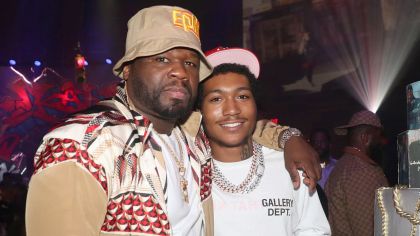
As discussions continue online, one thing is clear: hip-hop’s history is layered with complexity. Feuds fade, but memories linger, and sometimes, acts of support—big or small—make all the difference. Whether 50 truly “saved” Lil Meech or simply gave him a break, the narrative adds another chapter to the ongoing saga of survival in the game.
These rumors remind us to approach celebrity drama with caution, separating fact from fiction while acknowledging the real pain that often fuels it. In the end, it’s a story about loyalty, consequence, and the thin line between past and present in a world that never fully lets go.