The Network Didn’t End With Epstein—And That’s the Part Sparking New Alarm
For years, people treated Jeffrey Epstein’s death as the end of the story. But the deeper fear now is that it was never the end at all.
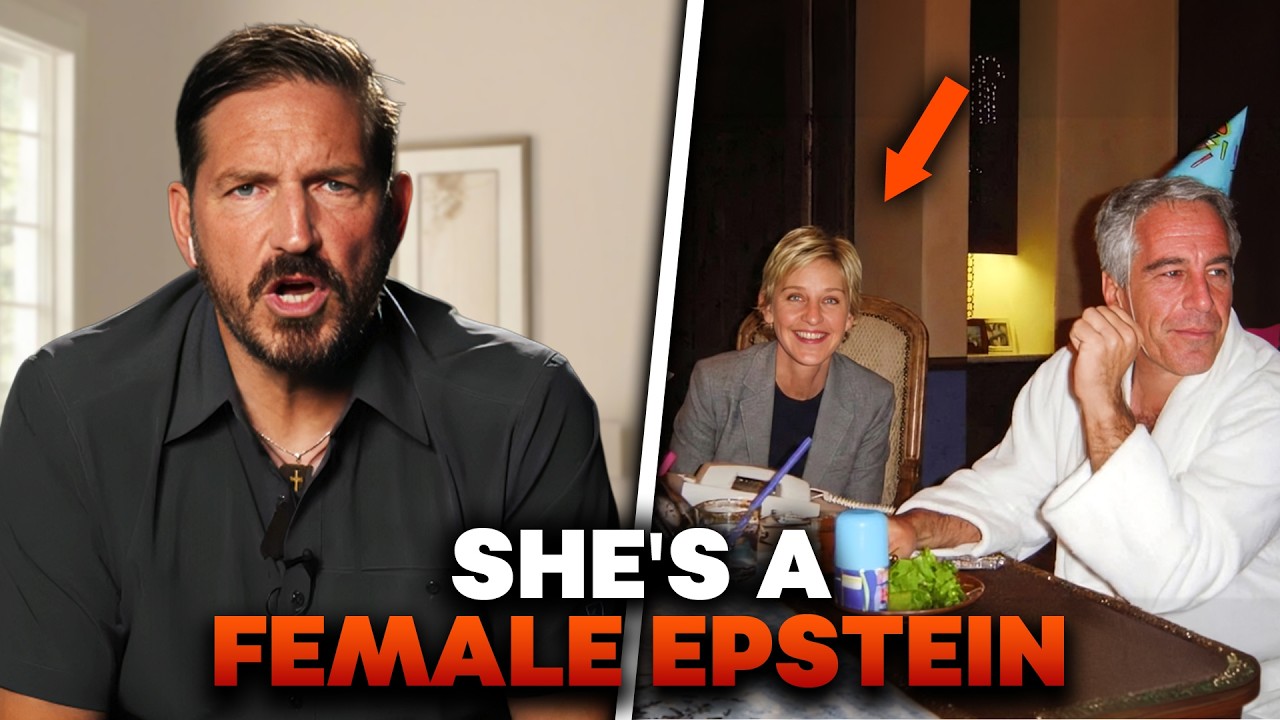
That is the claim driving the latest wave of outrage. According to this account, the network Epstein helped build did not collapse with him. It survived, adapted, and continued operating under the protection of people with money, influence, and global reach. And for Jim Caviezel, that realization appears to have turned concern into something much more urgent.
The question is no longer just who Epstein was connected to. It is who kept the system alive after he was gone.
A Story Bigger Than One Man
The central argument here is simple but disturbing: Epstein was never acting alone, and he was never the true center of the machine.
What is being described is not a scandal that began and ended with one man, but a structure built on exploitation, blackmail, and protection from powerful figures. Even after convictions, public outrage, and document releases, the system is portrayed as still functioning behind the scenes.
That is why the latest revelations feel so unsettling. They do not point backward only. They suggest continuity.
The Document Release That Changed the Focus
A massive document release pushed the conversation into a new phase.
According to the account, on January 30, 2026, the Department of Justice released millions of pages, thousands of videos, and a huge trove of images tied to the Epstein case. At first, the expectation was that people would comb through the files looking for names, travel records, and evidence tied to the island and Epstein’s wider circle.
But what stood out in this telling was not just who appeared in the files. It was the suggestion that the operation described in them did not stop with Epstein’s fall.
Instead of a closed chapter, the material was presented as evidence of a system that outlived its most notorious face.
Two Names at the Center of the Power Structure
As the story unfolds, two men are cast as especially significant.
The first is Les Wexner, described here as far more than an associate. He is portrayed as the figure who gave Epstein money, assets, credibility, and access. The claim is that without Wexner, Epstein would never have become the figure the world came to know. His role is framed not as incidental support, but as foundational.
The second is Sultan Ahmed bin Sulayem, presented as an internationally connected businessman whose name appears repeatedly in the files. His role in this version of the story is tied to a broader global layer of influence, one that extended beyond business into access, travel, and high-level networking.
Together, the two are positioned not as background figures, but as part of the real power structure behind Epstein’s operation.
Les Wexner and the Infrastructure of Power
Wexner’s presence in this story is treated as essential.
He is described as Epstein’s benefactor, the person who gave him legitimacy, enormous financial authority, and control over major assets, including a Manhattan mansion later tied to abuse allegations. The scale of that support is what makes his role so central in this account.
The story goes further by pointing to a lawsuit alleging that Wexner and the Wexner Foundation helped enable Epstein’s crimes by providing the resources that made the larger operation possible. The argument is that Epstein was able to build and sustain his network because someone gave him the money, the real estate, and the stature to do it.
Wexner’s defense, as presented here, is that he was deceived, cut ties years earlier, and had no knowledge of Epstein’s wrongdoing. But the account makes clear that many people do not accept that explanation.
That disbelief is what keeps his name so firmly attached to the story.
The International Layer
If Wexner is framed as the source of money and legitimacy, Sultan Ahmed bin Sulayem is presented as part of the network’s global protection.
His name appears throughout this account in connection with emails, introductions, travel, and ongoing contact with Epstein long after Epstein’s 2008 conviction. The significance of that contact, in this telling, is not just that it existed, but that it continued despite what was already publicly known.
The emails described here suggest a relationship that went beyond business. They are presented as personal, familiar, and intertwined with powerful political and corporate connections. That matters because it supports the broader argument that Epstein’s world was never isolated. It was connected to a much larger web of influence.
That web is what makes the story feel so hard to contain.
A Pattern of Protection
One of the strongest themes running through the piece is protection.
Again and again, the story returns to the idea that people with power were shielded, while victims were left exposed or silenced. Documents were redacted. Investigations slowed down. Names surfaced, but consequences did not seem to follow at the same pace.
That imbalance is what fuels the outrage behind the narrative. The public sees documents, hears allegations, and watches names reappear, but does not see the sweeping accountability many expected.
In that gap between exposure and punishment, suspicion grows.
Why the Fear Has Not Disappeared
The emotional core of the piece is that victims are still afraid.
Not of Epstein himself, but of the people who used him, protected him, and allegedly continued the same kind of operation after his death. That fear is what gives the story its present tense. This is not being told as history. It is being told as something ongoing.
That is also why the image of Epstein as a mastermind is rejected here. Instead, he is described as a tool, a visible operator inside a system built and maintained by others with more money, more influence, and more protection than he ever had on his own.
That shift in perspective changes everything. It turns Epstein from the whole story into just one part of it.
The Parties, the Access, and the Silence
Another major idea in the piece is that the same model continues.
The account describes a world built on exclusivity, status, and silent participation, where celebrities and powerful figures help normalize the environment simply by moving through it. The suggestion is that this culture of access is part of how the system survives. Cameras ensure silence. Power ensures compliance. Prestige makes people look away.
In that framing, the parties matter not only for what happens there, but for what they represent: a structure designed to trap people, protect itself, and keep repeating.
That is the claim making this story feel less like a closed case and more like a warning.
The Meaning of the Bigger Picture
By the end, the argument is clear.
This was never just about one island, one mansion, or one notorious man. It was about an entire machine. Money funded it. international ties protected it. Powerful people sustained it. And when the public thought the machine had been dismantled, the people above it were still free.
That is the point Jim Caviezel’s reaction appears to circle most strongly. The horror is not only what happened. It is the belief that the same model may still be operating, even after everything the world already knows.
Why the Story Still Feels Unfinished
What keeps this story alive is the sense that justice never fully caught up to the scale of the system being described.
Documents were released, names were exposed, and public outrage surged again. But the biggest question remains unresolved: if Epstein was only one visible part of a larger operation, then who is still running the rest of it now?
That is the fear at the center of this piece.
Because if the network survived him, then the scandal did not die with Epstein. It just changed hands.