Oprah, Meghan, and the Interview That Still Raises Questions

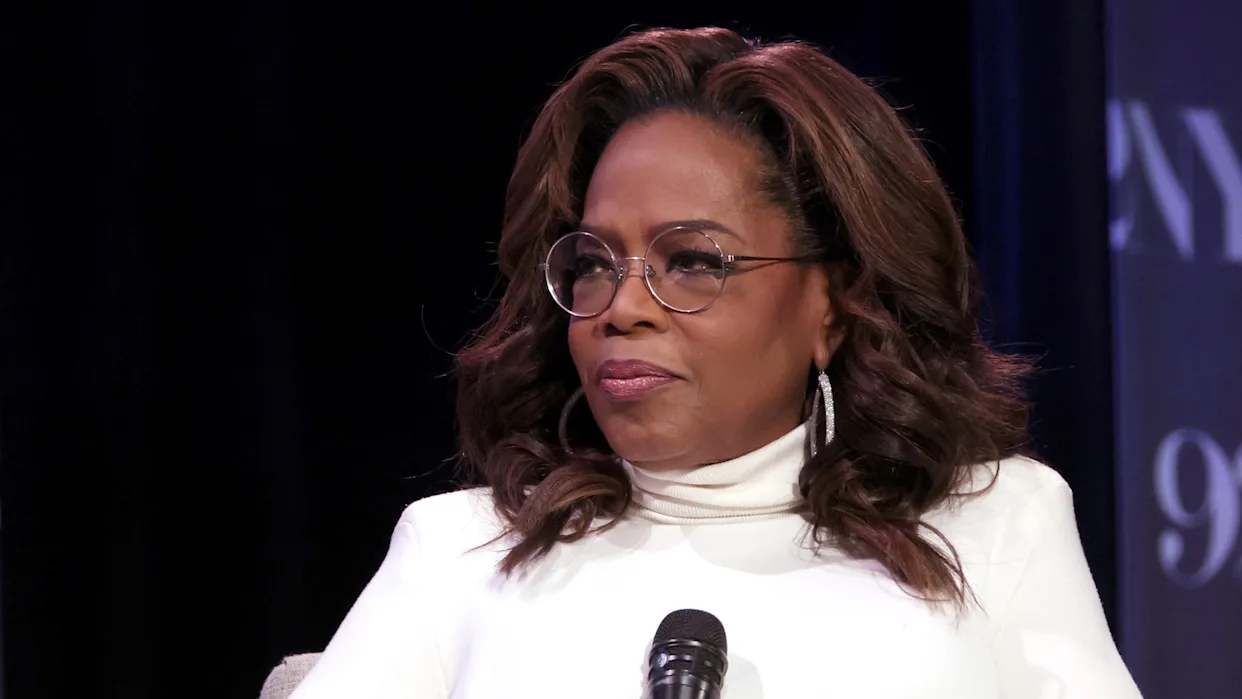
In a quiet Montecito garden, Oprah Winfrey sat down with Meghan Markle and Prince Harry for an interview that would ripple across the world. What aired was a tightly edited one hour and twenty-five minutes—an emotional, high-impact broadcast that quickly became one of the most talked-about moments in modern royal history.
But behind that polished version was a much longer conversation. And now, years later, attention is turning to what was left out—and why.
The Interview the World Saw—and What It Didn’t
The broadcast captured powerful claims and deeply personal revelations, including Meghan’s statement that there had been “concerns and conversations” within the royal family about how dark their son Archie’s skin might be. The implication was immediate and explosive, triggering global headlines and intense scrutiny of the monarchy.
What viewers did not see, however, was a clarification reportedly made during the full recording. According to accounts of the unaired footage, Prince Harry had stated that neither the Queen nor Prince Philip were involved in those conversations.
That distinction did not appear in the televised interview. Instead, it surfaced the following day, when Oprah addressed it during a separate appearance on CBS This Morning. By then, the story had already spread worldwide, shaping public perception in a lasting way.
Editing Choices and Their Impact

The gap between what was filmed and what aired has fueled ongoing debate about editorial decisions. With more than three hours of conversation condensed into a much shorter broadcast, nuance and context were inevitably reduced.
Critics argue that the omissions mattered. The final version presented a focused and emotionally charged narrative, while some of the complexity that might have softened its impact was left out.
Supporters, on the other hand, suggest that editing is a natural part of producing television, especially for a global audience. Still, the scale of the interview—and its consequences—has kept those decisions under scrutiny.
A Shift in Public Sentiment
In the years since the interview aired, public opinion surrounding Harry and Meghan has changed noticeably. What was once a wave of sympathy and support has, in some circles, shifted toward skepticism and fatigue.
Polls and commentary reflect this evolving sentiment, with growing debate over their roles, titles, and public presence. As the conversation has changed, so too has the tone of those once closely associated with them.
Oprah’s Subtle Distance
Amid this shift, Oprah’s own position appears to have evolved. Once seen as a key supporter who offered the couple a powerful platform, she has more recently shown signs of stepping back.
Comments made in public appearances, including a lighthearted but pointed remark about the “Sussexes,” have been interpreted by some as a signal of distance. Industry observers suggest that the once-close alignment may no longer be as strong as it appeared during the interview’s aftermath.
Nothing has been stated outright, but the change in tone has not gone unnoticed.
Pressure From Multiple Directions
At the same time, the couple’s broader situation has become more complex. Their media partnerships have faced reported challenges, and their relationship with the royal family remains strained.
Unresolved issues—such as ongoing debates about past claims and inconsistencies raised by critics—continue to shape public discussion. These questions, whether confirmed or contested, contribute to an environment where narratives are constantly being reexamined.
Within that context, the original interview has taken on new meaning. What once felt like a defining moment of revelation is now being revisited with a more critical lens.
The Power of Narrative
Oprah’s role in the interview has become a focal point in that reassessment. As a media figure known for shaping conversations and elevating personal stories, her editorial choices carry significant weight.
Some believe she was offering a platform to voices she saw as unheard. Others argue that the interview was crafted in a way that amplified certain elements while leaving others behind.
What remains clear is that the version presented to the public had a profound influence on how the story was understood.
An Unanswered Question
The full, unedited footage of that conversation has never been released. As a result, the complete context remains out of view, leaving room for interpretation and speculation.
Whether Oprah will ever address the specifics of those editing decisions is uncertain. For now, the discussion continues, shaped as much by what was omitted as by what was shown.
A Story Still Unfolding
The Montecito interview was meant to be a turning point—a moment of clarity and revelation. Instead, it has become part of a longer, more complicated narrative that continues to evolve.
As public sentiment shifts and new questions emerge, the legacy of that conversation remains unsettled. And as the spotlight moves, one thing stands out: the story is no longer just about what was said in that garden, but also about what was left unsaid—and how those choices continue to resonate.