When Silence Speaks Loudest: Hollywood, Power, and the Fallout of the Epstein Files
The entertainment world thrives on visibility. Careers are built on being seen, heard, and talked about. So when prominent figures suddenly go quiet—no statements, no appearances, no explanations—it raises a different kind of attention. Not the kind fueled by headlines, but the kind driven by absence.
In recent months, that silence has become impossible to ignore.
A Shift No One Could Ignore
When a massive wave of documents tied to Jeffrey Epstein was released by the U.S. Department of Justice, the reaction was immediate—but not always public. Millions of pages, including emails, photographs, and investigative materials, entered the public domain after years of legal pressure.
The release didn’t provide simple answers. Much of it was heavily redacted, leaving gaps that frustrated both lawmakers and the public. But even with those gaps, the scale of the material changed the atmosphere—especially in Hollywood.
Names began appearing in contact logs and correspondence. Not accusations. Not convictions. Just connections. And in an industry where perception often matters as much as reality, that alone was enough to shift behavior.
Some spoke carefully. Many said nothing at all.
The Comedians Who Kept Talking
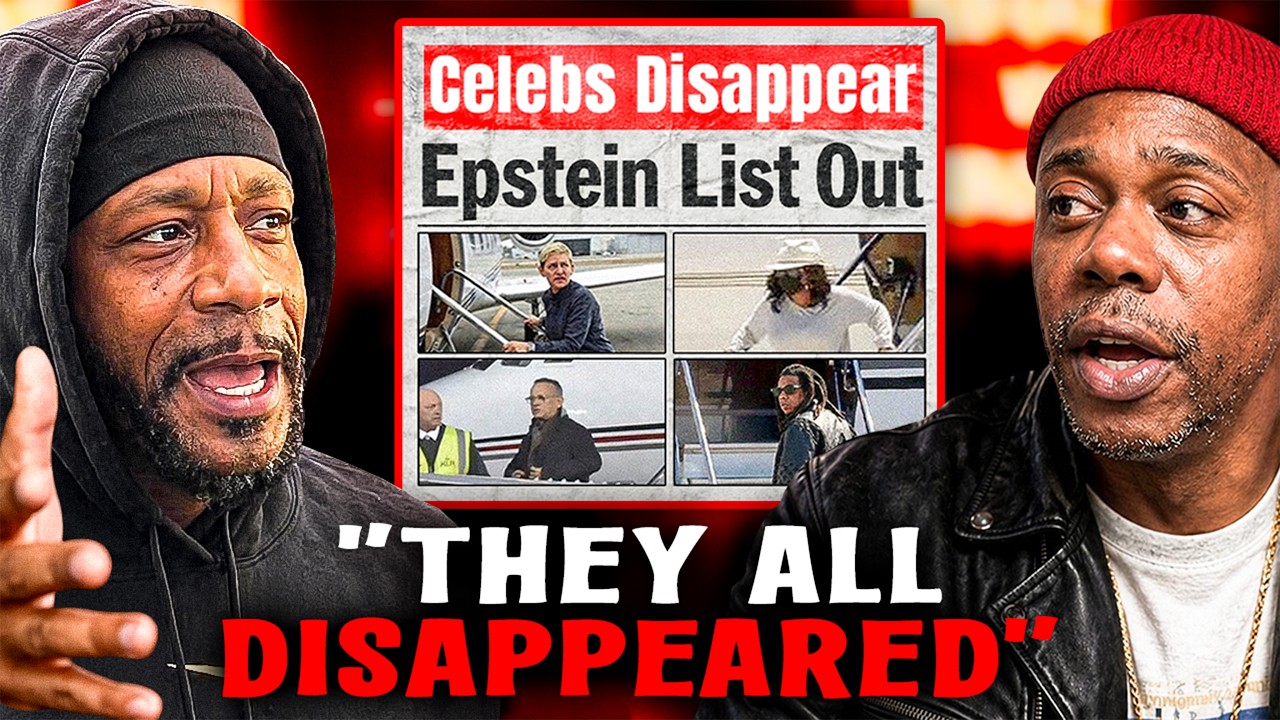
Long before the documents surfaced, Katt Williams and Dave Chappelle had been openly questioning how Hollywood operates behind the scenes.
At the time, their comments were easy to dismiss. Comedians with strong opinions aren’t unusual. But both men went beyond vague criticism. They described systems, patterns, and power structures that, they suggested, shaped careers and controlled access.
Williams, in particular, drew attention with a widely watched interview in early 2024. He spoke about decades in the industry, claiming he had witnessed how influence was maintained through loyalty, silence, and unspoken agreements. He framed that year as an “age of truth,” predicting that hidden dynamics would eventually surface.
Chappelle’s approach was different but consistent. Since walking away from a major television deal years earlier, he has repeatedly referenced pressures behind the scenes—moments where success came with conditions he wasn’t willing to accept. His later work continued to explore themes of control, image, and the cost of honesty.
At the time, those ideas sounded abstract to many. Now, they land differently.
When Information Becomes Influence
The sheer volume of released material meant that journalists, investigators, and the public would spend months—if not years—sorting through it. As more details emerged, something subtle but significant began happening in Hollywood.
Executives stepped back from projects. Talent agencies lost clients. Business partnerships quietly dissolved. Deals that once seemed inevitable were suddenly paused without explanation.
The pattern wasn’t about proven wrongdoing. The Department of Justice made it clear that appearing in the documents did not equate to guilt. But association alone carried consequences.
In an industry built on relationships, even indirect connections can reshape reputations overnight.
A Culture of Quiet Containment
For many public figures, the response followed a familiar playbook. Carefully worded statements emphasized that inclusion in the records did not imply misconduct. Others chose complete silence.
That silence, however, wasn’t random. It reflected a broader strategy. In the absence of charges, saying less often minimizes risk. Let the news cycle move on. Let attention shift elsewhere.
But that approach also highlights something deeper about the system Williams and Chappelle had described: when exposed, the instinct isn’t transparency—it’s containment.
And containment, by its nature, is quiet.
The Cost of Speaking—and Not Speaking
What makes this moment stand out is the contrast.
While some figures retreated from public view, Williams and Chappelle did the opposite. They continued speaking, performing, and addressing the same themes they had raised for years.
Williams has claimed he turned down major financial opportunities to maintain his independence. Chappelle famously walked away from a lucrative deal at the height of his early success. Both decisions once seemed puzzling, even self-sabotaging.
Now, they’re being reconsidered in a different light.
If the cost of participation includes silence or compromise, walking away may not look like loss—it may look like control.
Power, Perception, and Patterns
The documents also reinforce a broader reality: powerful networks rarely operate in isolation. They are built through introductions, favors, shared spaces, and mutual benefit.
Being part of those networks can open doors. Remaining part of them often requires discretion.
That doesn’t imply criminal behavior. But it does create an environment where relationships matter deeply—and where exposure, even indirect, can have ripple effects.
In that context, the recent wave of silence becomes more than coincidence. It becomes a signal.
A Conversation That Won’t Go Away
For years, discussions about Hollywood’s inner workings were easy to sideline. They could be dismissed as speculation, exaggeration, or conspiracy.
But millions of pages of official records are harder to ignore.
They don’t tell a single, simple story. Instead, they present fragments—connections, communications, glimpses into a much larger system. Interpreting those fragments will take time.
What they have already done, however, is force a conversation that can no longer be avoided.
The Sound of the Truth Emerging
In the end, this isn’t just about who appeared in a document or who chose to stay silent. It’s about how an entire culture responds when long-hidden information becomes public.
Some will wait for the storm to pass. Others will continue speaking, regardless of the consequences.
History tends to remember which is which.
For years, a few voices described an industry shaped by power, secrecy, and quiet agreements. Those descriptions were easy to overlook—until they weren’t.
Now, as more information continues to surface, one question remains:
How much of the story has already been revealed—and how much is still waiting to be understood?