Drake’s new album ICEMAN is already generating buzz, but one track in particular has sparked a wave of online debate.
After reports surfaced that Drake may have referenced both Nicki Minaj and Cardi B in the song “Don’t Worry,” fans quickly took to social media to dissect the lyrics and debate their meaning. The discussion intensified when Cardi B reportedly responded, accusing Drake of using the names of prominent female rappers to generate additional attention for his new music.
Alleged Lyrics Trigger Immediate Reactions
Although the lyrics in question have not been officially confirmed in detail, fan interpretations of “Don’t Worry” were enough to ignite widespread discussion across X, TikTok, Instagram, and entertainment outlets.
Many listeners believed Drake referenced Nicki Minaj and Cardi B as part of broader commentary on their influence in hip-hop. That interpretation alone was enough to send hashtags related to all three artists trending within hours.
Some fans viewed the mentions as a respectful acknowledgment of two of the most influential women in rap. Others saw them as a calculated attempt to stir controversy and boost interest in the album.
Cardi B Speaks Out
The conversation escalated when Cardi B reportedly addressed the alleged lyric references.
According to widely circulated comments, she criticized the use of her name as part of another artist’s narrative, particularly if it was intended to create buzz rather than show genuine respect.
“Don’t put my name in your song if it’s not about respect. I’m not a marketing tool for anybody.”
The statement quickly became the centerpiece of the online debate.
Supporters praised Cardi for speaking out about what they see as a recurring pattern in the music industry, where female artists are referenced in ways that draw attention but do not involve them directly.
Others argued that mentioning fellow artists is a longstanding part of hip-hop culture and should be understood as a common lyrical practice.
Nicki Minaj’s Name Adds Another Layer
Nicki Minaj’s reported inclusion in the track also renewed discussion about her role in hip-hop.
As one of the most influential female rappers of her generation, Nicki’s name has frequently appeared in lyrics by other artists, sometimes as a sign of respect and other times as part of more controversial narratives.
As with Cardi B, fans remain divided over whether such references should be seen as homage, critique, or strategic name-dropping.
A Bigger Conversation About Marketing in Hip-Hop
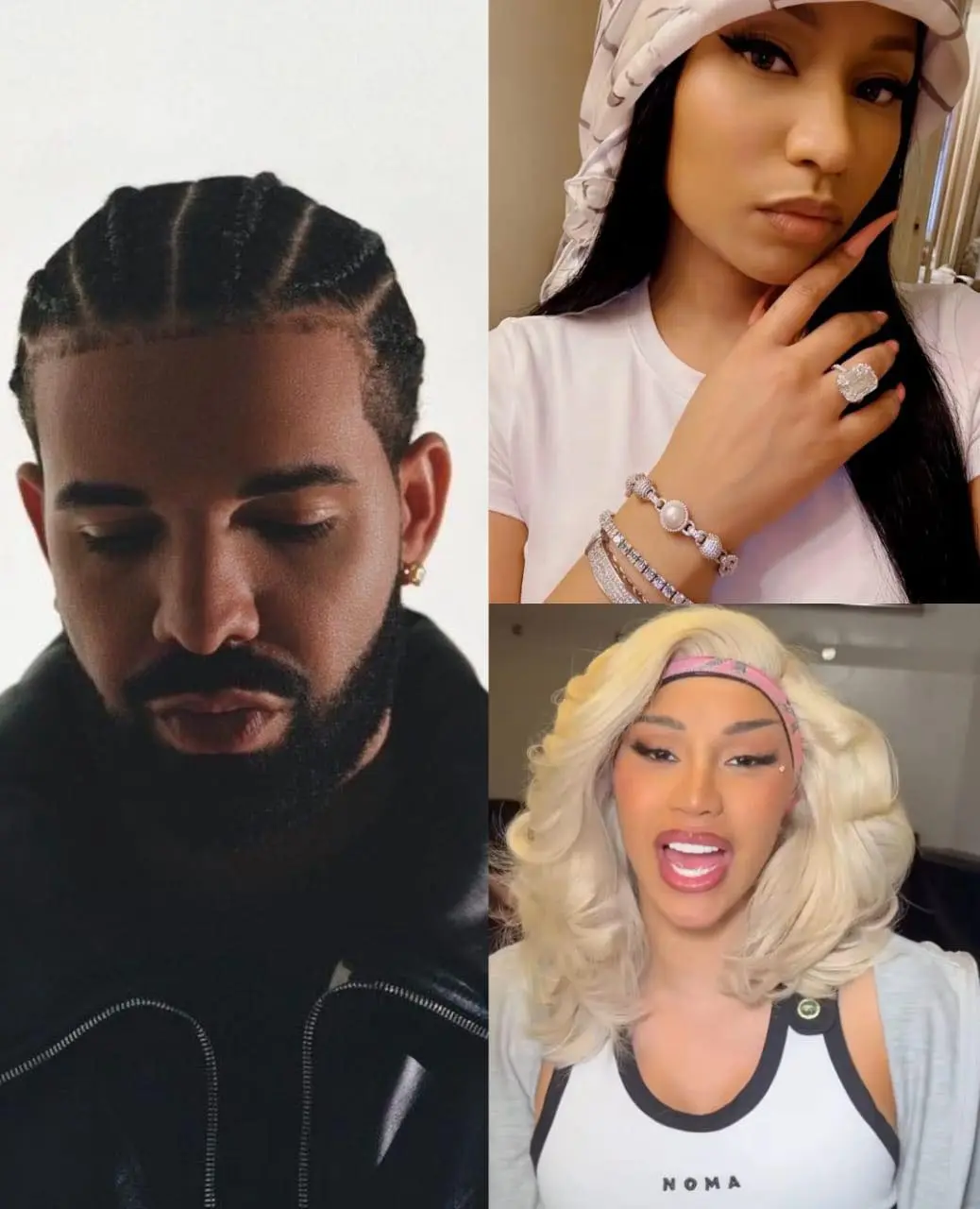
The controversy has also reignited broader discussions about how music and marketing intersect in the streaming era.
Some observers believe that referencing major celebrities with large fan bases is an intentional strategy to generate online attention and increase streams. In that view, controversy itself becomes a powerful promotional tool.
Others argue that reducing lyrical references to pure marketing overlooks the creative and cultural complexity of hip-hop.
Fan Culture Fuels the Debate
Fans of Drake, Cardi B, and Nicki Minaj have played a major role in amplifying the story.
Across social media, supporters have analyzed lyrics, shared interpretations, and defended their favorite artists. In many cases, the discussion has moved beyond the song itself and into larger conversations about respect, gender dynamics, and the responsibilities of major stars.
The speed of online discourse has only intensified the reaction, allowing interpretations to spread widely before any official clarification.
No Official Clarification From Drake
As of now, Drake has not issued a detailed statement about the intent behind the alleged references in “Don’t Worry.”
Nicki Minaj’s representatives have also not publicly commented on the matter.
That silence has left fans and commentators continuing to analyze the song and speculate about its meaning.
Final Thoughts
The response to Drake’s alleged references in “Don’t Worry” shows how quickly a few lyrics can evolve into a much larger conversation.
Cardi B’s reported statement has become the focal point of a debate about respect, representation, and the role of marketing in hip-hop.
As the discussion continues online, the situation reflects a defining reality of modern music culture: in the streaming era, every lyric can become a headline.