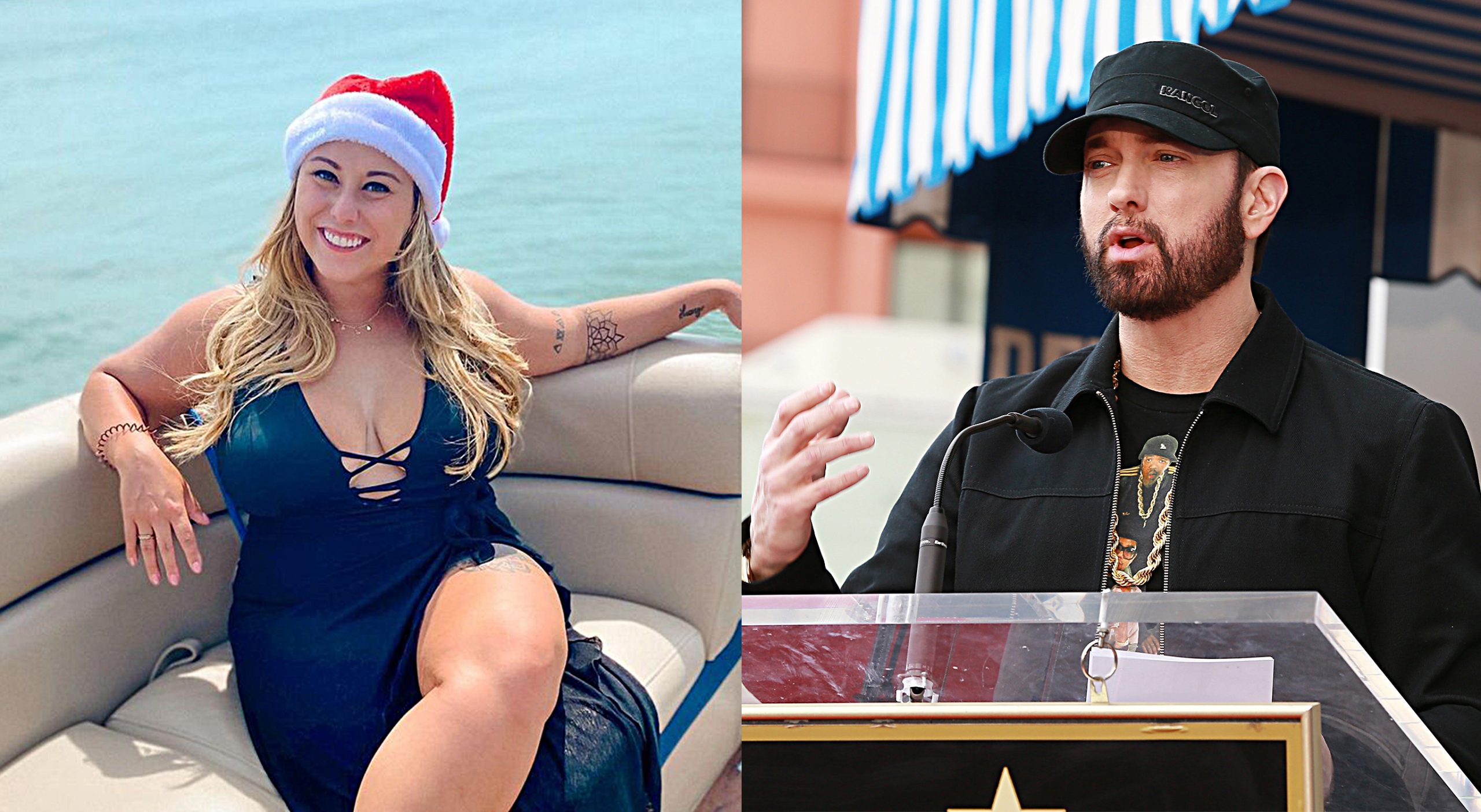
Eminem has spent decades protecting the Slim Shady identity that helped turn him into a global hip-hop icon, but his latest legal battle has taken an unexpected turn. Two reality television stars fighting to register the name Reasonably Shady are now prepared to sacrifice part of their trademark application rather than surrender their growing entertainment brand.
Robyn Dixon and Gizelle Bryant, best known for The Real Housewives of Potomac, have asked the US Trademark Trial and Appeal Board to remove cosmetics and candles from their application. However, the women remain determined to secure trademark protection for their podcast, merchandise and other commercial activities.
The development could hand Eminem a partial legal victory, but it would leave the biggest issue between the parties unresolved: whether Reasonably Shady can coexist with the rapper’s established trademarks.
For longtime Eminem fans, the significance of the Shady name requires little explanation. It represents one of the most influential alter egos in rap history, an identity that helped transform Marshall Mathers from a struggling Detroit rapper into an international superstar.
When The Slim Shady LP arrived in 1999, Eminem introduced mainstream audiences to a character defined by dark humour, controversial storytelling and unpredictable lyrical performances. The album earned him a Grammy Award for Best Rap Album and established the foundation for one of hip-hop’s most commercially successful careers.
The Shady identity eventually became considerably more than an artistic character. Eminem and his longtime manager Paul Rosenberg established Shady Records in 1999, creating a record label that would later play an instrumental role in the careers of artists including 50 Cent and D12.
That history helps explain why Eminem’s legal team takes the commercial use of the name seriously. Protecting Shady is not simply about preserving the title of a classic album. It is about maintaining control over an established entertainment brand with decades of cultural and commercial significance.
Dixon and Bryant, meanwhile, have built an entertainment business of their own.
Their Reasonably Shady podcast launched in 2021, covering relationships, lifestyle topics, celebrity culture and their experiences as reality television personalities. The programme developed an audience independently of Eminem’s music, eventually leading the hosts to pursue broader trademark protection in February 2022.
Eminem formally challenged their application the following year, arguing that consumers could potentially associate their brand with his existing trademarks.
What makes the latest development particularly interesting is that the dispute has expanded beyond the similarity between the names. Eminem’s lawyers have also questioned whether the women genuinely intended to manufacture and sell certain products included in their original application.
His legal team argued that there was insufficient evidence of preparations to launch a cosmetics or candle business. Their argument relied partly on testimony Dixon provided in 2023, when she acknowledged that there were no immediate plans to introduce those products.
Dixon subsequently explained that her testimony reflected the circumstances at that particular time, rather than the business intentions she and Bryant had when they originally submitted their application.
The distinction could be legally significant.
American trademark law allows businesses to apply for protection before introducing products to the market, provided they genuinely intend to use the trademark commercially. A company does not necessarily need to have finished products available when it submits an application, but its intentions must be legitimate.
Eminem’s team has challenged whether that requirement was satisfied. Dixon and Bryant maintain that their proposed expansion into beauty and lifestyle products was genuine, even though those plans did not materialise.
Their latest legal strategy appears designed to remove that particular argument from the wider dispute without accepting Eminem’s interpretation of their original intentions.
Rather than continuing to defend every product category, the women are prepared to accept an adverse ruling covering cosmetics and candles while preserving the remainder of their application.
It is a potentially important tactical decision. Continuing to defend product categories that are not central to their existing business could require additional legal expenditure, documentation and testimony without necessarily delivering meaningful commercial benefits.
Their podcast, however, presents a different situation.
Reasonably Shady is already an operating entertainment brand, rather than simply an idea for a future business. The women have an established audience and have previously pointed to existing merchandise, including clothing and mugs, when defending the legitimacy of their commercial activities.
The remaining application would also cover water bottles, paddleboards, broadcasts and live entertainment events. Consequently, even if Eminem succeeds in blocking the cosmetics and candle categories, substantial disagreements would remain.
One of the most fascinating aspects of the case is how two completely different entertainment industries have collided over a single word.
For Eminem, Shady represents a carefully developed identity associated with rap music, record production and entertainment. For Dixon and Bryant, the word reflects the conversational humour and personality-driven content associated with reality television.
Neither interpretation automatically resolves the legal question.
Trademark disputes generally involve more than determining whether two businesses use similar words. Factors such as commercial activities, consumer perceptions, distribution channels and the relationship between the respective goods and services can also matter.
Eminem’s argument is that the similarities could create confusion or interfere with the protection of his established brand. The podcast hosts, on the other hand, continue to pursue registration for an entertainment business with its own identity and audience.
The proceedings have already generated disagreements over legal costs, evidence and procedural arrangements. Earlier this year, the trademark board revised the case schedule, potentially extending proceedings into 2027.
That means the dispute could continue well beyond the latest developments, even if the board agrees to remove the contested beauty products.
Interestingly, Eminem’s determination to protect his Shady trademarks comes after the release of his 2024 album, The Death of Slim Shady (Coup de Grâce). Although the project explored his complicated artistic relationship with the character, the ongoing trademark proceedings demonstrate that Slim Shady remains commercially relevant regardless of its evolving role in his music.
From an editorial perspective, Eminem’s decision to defend the brand is understandable given its extraordinary history. Few alter egos in popular music have become so closely associated with an artist’s creative identity, business ventures and international recognition.
However, the existence of a famous trademark does not automatically settle every dispute involving similar terminology. Whether Reasonably Shady creates legally actionable confusion remains a question for the trademark board.
As of November 26, the board has not issued a decision on the latest request, meaning neither side can claim a definitive victory.
After more than three years of legal proceedings, Eminem and the Real Housewives stars remain locked in an unusual battle over one of hip-hop’s most recognisable names. Do you think Eminem is right to protect the Shady brand this aggressively, or should Dixon and Bryant be allowed to trademark Reasonably Shady for their podcast and merchandise?