The roar of the ’90s hip-hop scene was a symphony of swagger and soul, where beats banged like heartbeats and lyrics landed like lightning strikes. But beneath the basslines and bravado, a darker rhythm pulsed—one orchestrated not by artists, but by architects of ambition who turned cultural kinship into combustible conflict. Enter KRS-One, the Bronx-born philosopher-king of rap, whose recent revelations have cracked open a chapter long shrouded in smoke and mirrors: the real relationship between Big Daddy Kane and Tupac Shakur. In a no-holds-barred interview that’s rippling through the genre like a long-overdue remix, KRS-One doesn’t just debunk the beef; he dismantles the blueprint behind it, fingering Suge Knight as the maestro of manufactured madness. What emerges isn’t a tale of titans clashing, but of two lyrical lions quietly roaring in unison, their mutual respect muffled by an industry that profited from the pandemonium.
To understand the depth of this disclosure, we need to rewind to an era when hip-hop wasn’t just music—it was movement, a mirror to the margins where Black excellence wrestled with systemic shadows. Big Daddy Kane, the Brooklyn battle-rap virtuoso whose velvet voice and razor rhymes redefined lyricism in the late ’80s, wasn’t just a mic murderer; he was a messenger. Tracks like “Ain’t No Half-Steppin’” didn’t just dominate charts; they danced with the divine, weaving Supreme Mathematics and the Supreme Alphabet from the 5% Nation—a Harlem-born philosophy of self-knowledge, empowerment, and original people pride—into verses that vibed with the soul’s unspoken scripture. Kane, initiated into the teachings around 1981-82, let them lace his flow like hidden codes, turning “The Wrath of Kane” into a manifesto where history hummed beneath the hype.
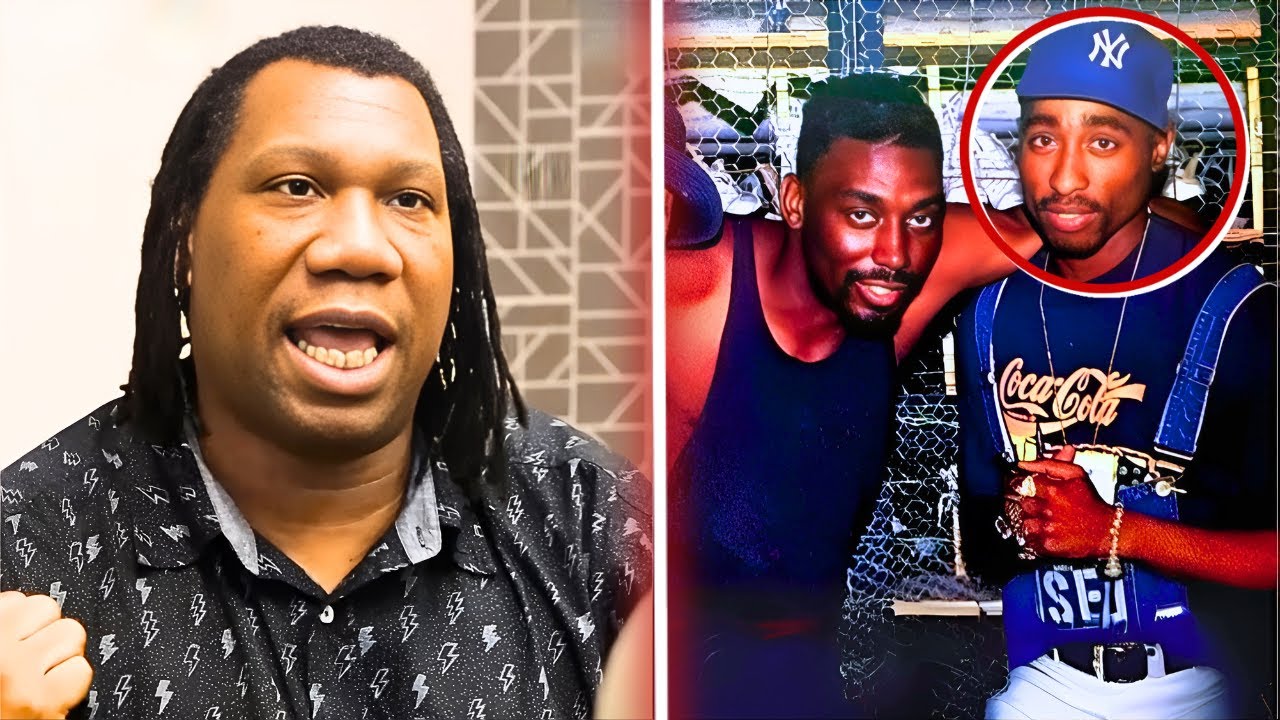
Tupac Shakur, the West Coast whirlwind whose words wounded and healed in equal measure, carried a similar cipher in his core. Raised by Black Panther revolutionary Afeni Shakur, Pac absorbed activism with his alphabet, his Baltimore youth steeped in the 5% ethos through street scholars and soul-searching sessions. He wasn’t formally five percenter, but the principles pulsed through his poetry—”Keep Ya Head Up” a hymn to uplift, “Changes” a clarion call for collective consciousness. Their shared syntax? Substance over spectacle, depth over dazzle—lyrics that didn’t just spit bars, but sparked souls. As Kane once defended Pac against the “not a lyricist” snipers: “Tupac is a lyricist… He spits deep lyrics that touch your soul.” It’s the kind of kinship that doesn’t need headlines; it thrives in the quiet corners of collabs, like the unreleased gem “Wherever You Are,” where Pac held court with a Cain-level legend, their flows fusing like forgotten fire.
But here’s where the harmony hits discord: the ’90s East-West war, that seismic schism that shook hip-hop to its foundations, wasn’t organic uprising—it was engineered entropy, a profit-propelled powder keg with Suge Knight as the spark. Death Row’s co-founder, the Compton colossus whose cigar-chomping charisma masked a Machiavellian grip, wasn’t content with West Coast dominance; he craved conquest. Enter Death Row East, a 1995 gambit to graft Bad Boy’s Bad Boy sheen onto his Bloods-backed empire. And who better to crown this coastal coup than Kane, the East’s eloquent emperor? Suge, flanked by Rottweilers in a Vegas Tyson-fight afterglow, dangled a $1 million advance like dragon bait: “You’re Big Daddy Kane, man—you’re a household name.” Kane, sensing the serpent in the smoke, clocked the cash as a collar. “I’ll let you know tomorrow,” he demurred, then ghosted on a 6 a.m. flight. No strings? In Suge’s web? The refusal wasn’t just rejection; it was rebellion, positioning Kane as a phantom in the feud—a neutral node the narrative needed to neutralize.

KRS-One, the Teacha whose “Criminal Minded” carved conscience into concrete, sees Suge’s scheme for the sinister symphony it was. “All of that that happened afterwards was a ploy… manufactured by Suge Knight,” he asserts, dissecting the strategy like a surgeon. Tupac’s 1995 rape conviction and Rikers stint set the stage; Suge bailed him for $1.4 million, but the strings were steel—sign to Death Row, or simmer in silence. Pac, fresh from the clink, inked the inkblot deal, his “Thug Life” ethos eclipsed by Suge’s shadow. The VIBE interview drop—”Thug Life is dead”—wasn’t just a confession; it was a conflagration, Suge stoking the flames with whispers of East Coast setups while Bad Boy’s Puff Daddy danced on the periphery, his video cameos a convenient caricature for Knight’s jabs at the Source Awards: “Any artist who want to stay a star and don’t want the executive producer all in the videos—come to Death Row.”
The beef wasn’t birthplace beef; it was boardroom bonanza. Suge’s blueprint? Divide to dominate—courting East icons like Kane to fracture the front, pitting Pac against Biggie in a proxy war that sold 30 million albums while souls slipped away. Kane’s dodge kept him clean, but the media mangled it into mystery: Why no shots fired? The answer? Respect. Kane clocked Pac’s profundity early—”deep lyrics that touch your soul”—defending him against the “not lyrical” libel while weaving 5% wisdom into his own weave. Pac, in turn, absorbed the elder’s ethos, his Panther-bred fire flickering with the same self-sovereign spark. Unreleased cuts like “Too Late Playa” (with Danny Boy) and “Wherever You Are” whisper what the world missed: verses volleying vulnerability, a bridge over the coasts the industry burned.

KRS-One, whose Boogie Down Productions bridged Bronx blocks with global gospel, watched the unraveling with weary wisdom. “Don’t believe the hype,” he echoes Public Enemy’s prophecy, lamenting how Pac and Biggie “got caught up” in a script they didn’t script. If Tupac rose revenant, KRS-One bets he’d nod: “They got caught up in all the hype.” The tragedy? Not just the bullets that felled them—Pac in Vegas ’96, Biggie in L.A. ’97—but the bullets dodged in boardrooms, where executives etched enmity for edits, pitting prophets against each other while pocketing the proceeds. Suge’s strategy? Socratic in its cynicism: Manufacture madness, monetize the melee. Kane’s “no” was a noble nullification; Pac’s pull into the peril a poignant parable of power’s pull.
Yet amid the manufactured melee, flickers of fellowship endured. Kane’s kinship with Pac wasn’t casual; it was cultural communion, both channeling 5% sacraments—knowledge as cipher, wisdom as weapon—into rhymes that redeemed the ragged. Kane’s initiation in ’81-’82 molded his manifesto, lessons from the 120 weaving through “Warm It Up, Kane” like hidden hymns. Pac’s Panther provenance primed him for the paradigm: Afeni’s activism an alphabet of awakening, Baltimore’s blocks a boot camp for the bold. Their unreleased union? A utopia unrealized, verses vaulted while vultures circled. As Kane reflected: “You have to be lyrical to touch someone’s soul… to make someone feel like, ‘Yo, I don’t know this man, but he knows my pain.’” Pac’s pain? Prophetic, piercing; Kane’s craft, catalytic. Together? A testament to what the industry interred.
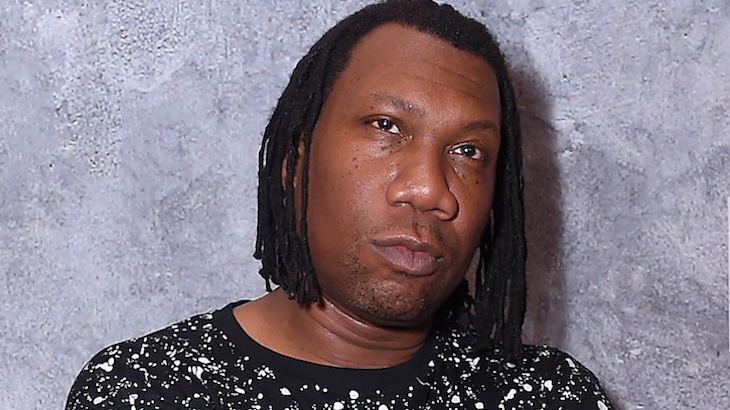
The East-West war’s wreckage? A requiem for rap’s renaissance, where rivalry robbed us of remixes that might have remapped the map. Suge’s shadow lingers—incarcerated since 2018 for manslaughter, his 28-year bid a bitter epilogue—but the echoes endure in KRS-One’s clarion call: “This place… can never side with, come under, understand the exploitation of our culture.” From Source Awards shade to VIBE’s veiled volleys, the ’90s were a decade of dollars over dignity, where Suge’s cigars smoked out the smoke signals of solidarity. Kane’s walkaway? Wisdom incarnate, a refusal to fuel the feud that felled friends. Pac’s plunge? A poignant cautionary, the price of proximity to power’s precipice.
Today, with hip-hop’s heirs honoring the harmony—Drake sampling Pac, Kendrick channeling Kane—the KRS-One kudos cut clean: Respect rekindled, rivalries recontextualized. If the beef was built on hype, the bond was bedrock—5% scripture scripting a scripture of their own. As KRS-One muses: “We ain’t supposed to go out like that.” No, we ain’t. And in retelling their tale, we rise—nation undivided, nation one. The real nation? The notes they never noted, the notes that now nod eternal.