Usher Raymond: The Prodigy, The Crown, and the Price of Silence.
There’s a question echoing through the music industry and among fans: Why aren’t more people mad at Usher? Why does his story—one of dazzling success, painful controversy, and lingering silence—feel so unresolved?
To answer that, you have to rewind through the triumphs and traumas, the meteoric rise and the complicated legacy of a man who went from prodigy to king, then watched his crown slip while the world debated whether his silence was survival or complicity.
The Making of a Legend
Usher Raymond IV was born on October 14, 1978, in Chattanooga, Tennessee. But it was Atlanta that shaped him. Raised by his mother, Jonetta Patton, Usher’s childhood was filled with church choirs and local talent shows.

His voice—silky, powerful, and unmistakable—turned heads from the earliest age. Jonetta saw his potential before anyone else, becoming his manager, protector, and champion.
By age 13, Usher was already a local sensation. In 1993, L.A. Reid of LaFace Records signed him, recognizing the star power radiating from the young singer.
Usher’s debut album dropped a year later, and while it wasn’t an instant smash, it was enough to prove the kid had something special.
The Flavor Camp Years
But the industry wanted more. They wanted grit, swagger, the kind of edge you couldn’t learn in the church pews. So in 1994, at just 14 years old, Usher was sent to live with Sean “Diddy” Combs in New York—a move that would haunt conversations for decades.
Diddy’s “Flavor Camp” was legendary for its wild parties, beautiful people, and excess. Usher, still a child, was thrust into a world where the rules were very different.

Years later, Usher described what he saw there with careful words—“very curious things.” The late nights, the parade of women, the atmosphere of indulgence.
In interviews, he’s never fully unpacked what happened, but the silence speaks volumes. His mother, Jonetta, eventually pulled him back to Atlanta, uncomfortable with the environment her son had been exposed to.
The Rise to R&B Royalty
Whatever Diddy’s camp taught Usher, it worked. By 1997, Usher released *My Way* and the world took notice. “Nice & Slow” hit number one, and Usher’s blend of smooth vocals and hip-hop edge became the blueprint for modern R&B.
The follow-up, *8701*, went five times platinum and produced hits like “U Remind Me” and “U Got It Bad.” His choreography, stage presence, and ability to connect with audiences drew comparisons to the likes of Michael Jackson and Prince.
![P. Diddy [feat. Usher & Loon] - I Need A Girl Part 1 (Official Music Video)](https://i.ytimg.com/vi/zXYb1OMhwBA/maxresdefault.jpg)
Then came 2004—and *Confessions*. The album sold over a million copies in its first week, dominated radio for months, and spawned four consecutive number-one singles.
Usher was everywhere: magazine covers, sold-out tours, and award shows. He became the face of a generation’s heartbreak and swagger, offering vulnerability wrapped in irresistible hooks.
The Price of Fame
But success at that level isolates you. The expectation grows heavier with each hit, each performance. The industry doesn’t let you rest at the summit; it demands you climb higher.
Usher’s personal life became public property. Relationships were dissected, decisions questioned, every move analyzed by a media machine hungry for drama.
In 2007, Usher married Tameka Foster, a stylist with two children from a previous relationship. The backlash was immediate.
Fans felt betrayed, as if Usher had stepped out of the role they had written for him. The marriage didn’t last long, and the ensuing custody battles and legal proceedings spilled into the tabloids.
The Fall from Grace
Usher’s next album, *Here I Stand*, debuted at number one but sold a fraction of what *Confessions* had.
The media shifted its focus from his music to his personal drama. The narrative changed from unstoppable force to troubled star. Once that story takes hold, it’s almost impossible to rewrite.
By 2010, Usher was trying to claw his way back with *Raymond v. Raymond*, an album that split his identity between the romantic and the player.
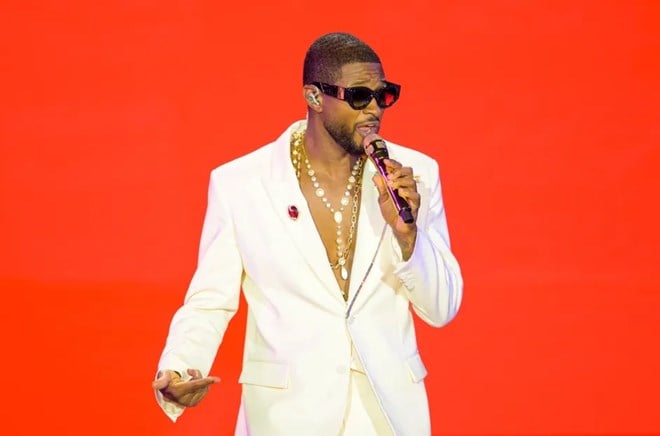
The single “OMG” gave him a brief flash of visibility, but the momentum didn’t hold. The lane he’d carved—smooth R&B with hip-hop credibility and pop appeal—was suddenly crowded.
Justin Timberlake and Chris Brown were dominating the space, and the industry wasn’t interested in nostalgia when there were fresh faces willing to work cheaper and cause less drama.
Breaking Ties and Industry Shifts
In 2012, Usher made a decision that left him truly untethered: he fired his mother as his manager. After nearly two decades of her guiding every move, he walked away from the only management he’d ever known.
The reasons were complicated—family wounds, creative differences, the tension between protection and control. But the fallout was immediate.
Industry relationships fractured, continuity vanished, and Usher found himself starting over in his thirties with a team lacking the loyalty and history that had carried him through the early years.
The label pushed him toward whatever was trendy, trying to rebrand a man in his thirties as if he were still the twenty-something who’d owned 2004.
The fit was wrong. Songs felt forced, collaborations calculated rather than organic, and audiences could smell the desperation.
Chart performance became inconsistent, and the sustained heat that had once felt like his birthright was now something he had to chase.
Scandal and Survival
The tabloids didn’t make it easier. In 2017, a lawsuit surfaced—Usher was accused of exposing a woman to herpes, a case that eventually settled for over a million dollars.
It wasn’t career-ending, but it added to the noise. Another headline that had nothing to do with his music and everything to do with the parts of his life he couldn’t control.
Usher wasn’t a hitmaker anymore. He was a tabloid fixture, a cautionary tale, the king who couldn’t hold the throne. When the radio goes quiet and the phones stop ringing, you’re left with one question: do you fight or do you disappear?
Reinvention and Legacy
Usher chose to fight, but on different terms. In 2018, he signed with Scooter Braun’s management, linking up with the mogul behind Justin Bieber’s global success.
It wasn’t about chasing radio hits anymore; it was about building something sustainable, playing to his strengths rather than competing with artists half his age.
Las Vegas became the stage for his reinvention. In 2021, Usher launched a residency at Dolby Live that felt less like a nostalgia act and more like a victory lap.
Sold-out shows, massive production values, and audiences eager to celebrate what he’d always been. The numbers told the story—an estimated $100 million in gross revenue. Usher fit the crown perfectly.
The Super Bowl, The Raids, and the Return of Old Questions
Then came February 2024 and the Super Bowl halftime show. Usher delivered a performance that reminded everyone why his name still carried weight. The medley of hits, the energy, the legacy—he was an icon, not a comeback story.
But just when the story felt complete, the past came knocking. Federal agents raided Diddy’s properties, and suddenly, every old interview and cryptic comment resurfaced. The arrest on trafficking charges sent shockwaves through the industry.
Footage of Usher’s 2016 Howard Stern interview—where he described seeing “very curious things” at Diddy’s place—went viral. The internet dissected every frame, every pause, every omission.
Usher went quiet. No statements, no interviews, just silence—the kind that can mean a thousand things depending on who’s listening. That silence became its own story, fuel for the internet’s endless appetite for answers he might never give.
Can You Separate the Music from the Man?
Usher’s catalog kept streaming. Confessions kept racking up certifications. The music existed separate from the man, separate from the questions—a legacy built on melodies and memories that couldn’t be erased by uncomfortable truths. But can they be separated? Should they be?
That’s the question no one wants to answer, because it forces you to confront how many of your favorite songs, performances, and memories are tied to people who carry trauma they’ll never fully unpack in public.
Usher never called out Diddy’s camp, never pointed fingers the way the world wanted him to after the raids. He just lived with it, whatever it was, and built a career on foundations that might have been cracked from the beginning.
The Real Confession
Maybe that’s the realest confession of all: survival and complicity can look identical from the outside. You can be both victim and beneficiary. The industry doesn’t give you the luxury of being one or the other.
Usher’s story isn’t just about a boy who became a king. It’s about the price of that crown and whether you can ever really take it off. Because sometimes the world doesn’t let you forget where you came from, even when you wish it would.
In the end, Usher’s legacy is more than platinum records and sold-out shows. It’s the story of a prodigy whose journey through triumph and trauma asks us all to look deeper—at the music, at the man, and at the uncomfortable truths we’d rather ignore.