An Unexpected Gesture: The Viral Claim About Rihanna’s $300,000 Donation—and What We Know for Certain
In a digital era where emotion travels faster than evidence, few stories have spread as quickly—or as powerfully—as the claim that Rihanna donated the entire $300,000 proceeds from a recent event to orphanages, calling it “the easiest thing in my life.” The story surged across X within hours, propelled by admiration, gratitude, and the belief that it revealed the true character of one of the world’s most influential artists.
Fans were moved. Colleagues expressed respect. Headlines praised what was described as a rare and noble act of generosity. Yet as the story traveled from admiration to assumption, an essential question emerged: what is confirmed, and what remains unverified?
What Is Confirmed
It is indisputable that Rihanna has a long, documented history of philanthropy. Through the Clara Lionel Foundation (CLF)—established in 2012 in honor of her grandparents—she has consistently funded education, emergency response, healthcare access, and children’s welfare initiatives across multiple countries. The foundation has partnered with global organizations and delivered millions of dollars in aid over the past decade.
It is also confirmed that Rihanna has frequently donated event proceeds, personal funds, and business earnings to charitable causes, often without publicity. Multiple past contributions—ranging from disaster relief to scholarships—were revealed only after third parties confirmed them.
Equally factual is that Rihanna recently published an emotional post on X, reflecting on personal growth, responsibility, and the weight of influence. The post resonated widely, reaching millions and prompting intense discussion across social media platforms.
What Is Not Officially Confirmed
At this time, there is no official statement from Rihanna, her representatives, or the Clara Lionel Foundation confirming a $300,000 donation tied to a specific event or indicating that the entire proceeds were directed to orphanages. No verified documentation, press release, or institutional acknowledgment has been issued.
This distinction matters—not because the story lacks emotional value, but because accuracy is essential when reporting charitable acts, especially those that inspire public trust and imitation.
Why the Story Felt Believable
The reason the claim spread so quickly is not accidental. It aligns seamlessly with Rihanna’s established values. She has repeatedly stated that success, to her, is meaningless unless it translates into tangible impact.
In past interviews, Rihanna has described giving as “instinctive” rather than performative. She has emphasized that wealth creates responsibility, not distance, and that compassion should not require applause. Within that context, a quote such as “the easiest thing in my life” feels authentic—even if it remains unverified in this specific instance.
The Power of Symbolism Over Confirmation
What makes this moment noteworthy is not solely whether the $300,000 donation occurred exactly as described, but how strongly people wanted the story to be true.
The reaction revealed a collective hunger for examples of ethical success—proof that global fame does not have to erode empathy. Fans shared the story not out of sensationalism, but out of hope. For many, it reinforced the belief that influence can be exercised with humility rather than dominance.
In that sense, the narrative functioned symbolically: it reflected what Rihanna represents to the public more than what could be immediately proven.
Rihanna’s Consistent Pattern of Action
Even without confirmation of this specific donation, Rihanna’s track record supports a broader truth. She has repeatedly converted attention into action and visibility into resources for others. From funding education programs to responding swiftly to humanitarian crises, her philanthropy has never been episodic or reactionary.
Notably, she has also avoided leveraging charitable acts as marketing tools. Many of her donations were disclosed by beneficiaries, not by her team—a pattern that lends credibility to claims of quiet generosity, even when details remain private.
Why Responsible Reporting Still Matters
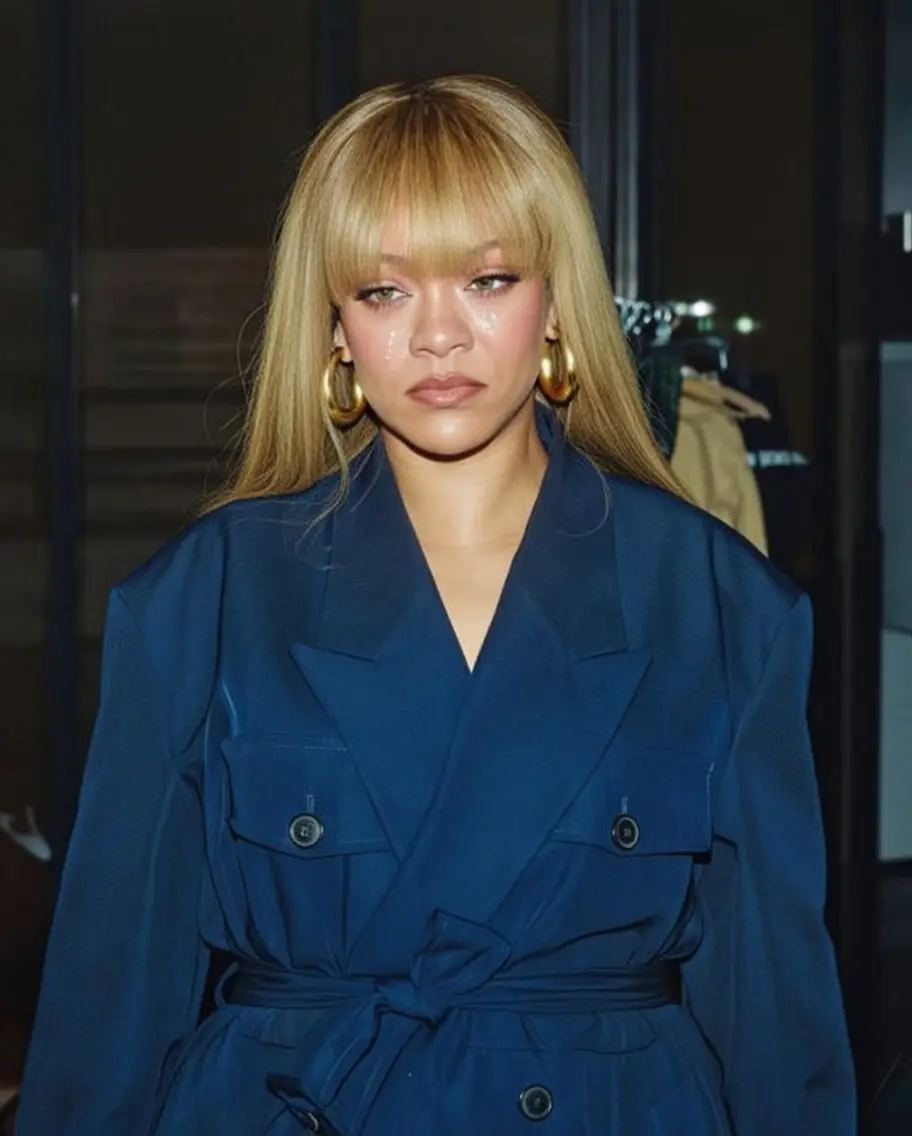
At the same time, it is essential to resist transforming admiration into assumption. Celebrating generosity should not come at the expense of factual integrity. When unverified claims are repeated as certainty, they risk creating unrealistic standards—even for those we admire.
Responsible journalism does not diminish inspiration; it strengthens it. A confirmed act of kindness carries more weight than a viral rumor, no matter how well-intentioned.
A Broader Truth Beyond the Headline
Whether or not this specific $300,000 donation occurred exactly as claimed, the larger truth remains unchanged: Rihanna has consistently used her platform to improve lives beyond her own. She has demonstrated that success can be a tool rather than a shield, and that compassion does not require spectacle.
In a culture often defined by excess, her example—real and documented—stands apart. She has shown that values are not declared in moments of crisis, but practiced quietly over time.
Conclusion: Inspiration Rooted in Reality
The viral story of Rihanna donating $300,000 to orphanages captured the world’s attention because it aligned with something deeply human: the desire to believe that power can be gentle and success can be generous.
Until confirmed, the claim should be treated with care. But the admiration it sparked is not misplaced. It reflects a reality already proven across years of consistent action.
In the end, Rihanna’s legacy is not built on any single donation—verified or not—but on a sustained commitment to turning influence into impact. And that, regardless of headlines, remains a fact.