50 Cent vs. Oprah: Fame, Feuds, and the Fight Over Hip-Hop’s Place in Mainstream America
In the world of celebrity feuds, few have been as persistent, strategic, and revealing as the ongoing tension between Curtis “50 Cent” Jackson and media mogul Oprah Winfrey.
What began as a simple rejection quickly evolved into a public battle about race, respectability, and the power dynamics of American media.
As allegations and investigations swirl around some of Oprah’s closest associates, 50 Cent’s campaign against her has taken on new urgency—and new meaning.
The Dream and the Rejection
For 50 Cent, the early 2000s were a time of meteoric rise. His debut album, “Get Rich or Die Tryin’,” shattered records and established him as a force in hip-hop.
But mainstream acceptance, in his eyes, meant one thing: an appearance on The Oprah Winfrey Show.

For a man who’d survived nine gunshots and a childhood in Jamaica, Queens, Oprah’s stage represented ultimate validation—not just for himself, but for his grandmother, Oprah’s biggest fan.
When his team pitched the idea, Oprah’s producers delivered a crushing blow. They rejected him outright, citing his violent lyrics and misogynistic content.
For 50 Cent, the refusal wasn’t just about a missed TV spot—it felt like a public declaration that his artistry and journey weren’t worthy of recognition.
He saw it as a stamp of disapproval from the queen of American television, a message that hip-hop culture was inherently problematic.
Controversy as Currency
Rather than accept the snub quietly, 50 Cent turned to what he knew best: controversy. If Oprah wouldn’t give him positive attention, he’d force her to acknowledge him through negative headlines.
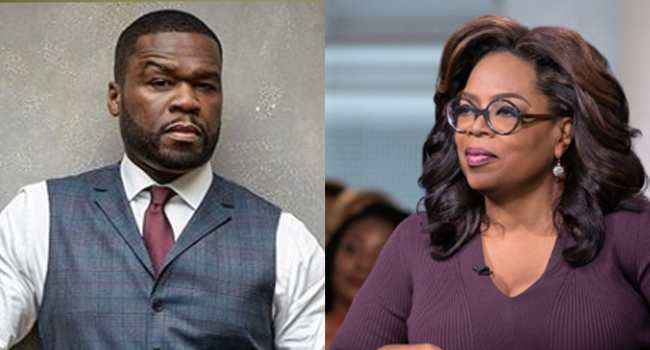
He launched a campaign against her, criticizing her audience as “older white women” and accusing her of ignoring authentic Black voices.
He famously named his dog Oprah and his cat Gayle, turning the feud into comedic fodder and tabloid gold.
50 Cent’s strategy was calculated. He understood that in entertainment, being hated is better than being ignored.
Hatred creates conversation, and conversation creates relevance. By making himself Oprah’s public enemy, he ensured his name would be part of the cultural dialogue—whether she liked it or not.
The Deeper Pattern: Oprah’s Relationship with Black Artists
But the feud wasn’t just about personal rejection. 50 Cent began to highlight what he saw as Oprah’s pattern: platforming stories that destroy Black icons while remaining silent or protective around powerful white men accused of real crimes.
The saga reached a turning point with Oprah’s treatment of Michael Jackson.
In 1993, her interview at Neverland Ranch was watched by millions, but Jackson’s family and fans felt her questioning was accusatory, pressing him on rumors about his appearance and his relationships with children.

After Jackson’s death, Oprah threw her support behind the documentary “Leaving Neverland,” which featured unproven allegations of abuse.
She interviewed the accusers and promoted the film, despite the fact that Jackson had been acquitted in court and the accusers had previously testified in his favor.
Meanwhile, Oprah’s response to the Harvey Weinstein scandal was tepid. Despite decades of whispers about Weinstein’s predatory behavior, Oprah maintained a warm public friendship, appeared at events with him, and offered only soft, evasive statements when the truth finally emerged.
She did not use her platform to amplify the voices of Weinstein’s victims or promote documentaries about his crimes.
Hypocrisy and Selective Outrage
For 50 Cent, the contrast was glaring. Oprah seemed to have boundless energy for attacking Black men based on allegations, but little interest in holding white predators accountable—even when the evidence was overwhelming.
The silence around Weinstein, compared to the enthusiasm for “Leaving Neverland,” was deafening.
He accused Oprah of “selective moral outrage,” arguing that her platform was a tool for public destruction of Black artists while white men received private consideration and protection.
This, he argued, was not just hypocrisy—it was a deeper pattern of behavior that needed to be exposed.
New Allegations and the Diddy Connection
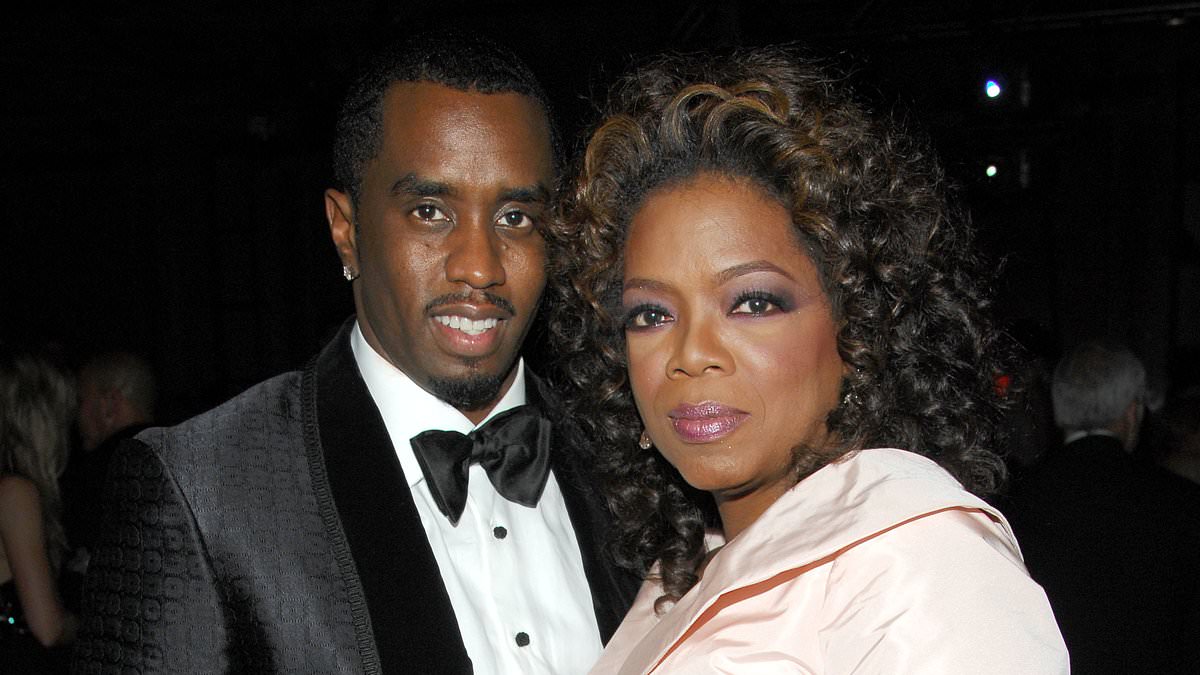
The feud took on new significance as federal investigations and witness testimony began to surface, implicating figures in Oprah’s inner circle.
Alleged victim Ally Carter claimed to have been trafficked and abused at parties hosted by Sean “Diddy” Combs, with secret tunnels connecting celebrity homes—including Oprah’s.
Carter’s affidavit named Oprah as a regular attendee at these gatherings, suggesting direct involvement in criminal activity.
While these claims remain unproven and the subject of ongoing investigations, 50 Cent seized on the moment, positioning himself as a whistleblower rather than just a critic.
His relentless social media campaign against Diddy and Oprah, including the release of a documentary on Diddy’s alleged crimes, was framed as a public service—preparing audiences for revelations that might shake the foundations of Hollywood.
The John of God Scandal
Oprah’s endorsement of Brazilian spiritual healer João Teixeira de Faria, known as John of God, added fuel to 50 Cent’s fire.
Oprah’s glowing coverage transformed John of God into a global phenomenon, but in 2018, he was convicted of sexually assaulting hundreds of women and running a criminal enterprise that included selling babies born to imprisoned girls.
Oprah’s response was a brief statement expressing sympathy, but she failed to acknowledge her role in legitimizing and empowering a mass predator.
For 50 Cent, this was the ultimate example of Oprah using her platform to elevate dangerous men while attacking innocent ones.
When the truth emerged, she refused to take responsibility for the damage her endorsements caused.
Supporting Black Women and Exposing Exploitation
50 Cent’s campaign against Oprah isn’t just about his own experience. He has positioned himself as an advocate for Black artists and women whom Oprah has allegedly wronged.
He supported Taraji P. Henson after she revealed being underpaid for “The Color Purple,” offering her better opportunities and criticizing Oprah’s role in the pay disparity.
He revived Mo’Nique’s career after she was blackballed for refusing to campaign for “Precious” without compensation.
He also pointed to Oprah’s cult-like spiritual teachings, her alleged use of mind control techniques, and her suppression of critical thinking as further evidence of a carefully constructed facade hiding something much darker.
Consistency and Courage
What makes 50 Cent’s position powerful is his consistency. While other celebrities fear Oprah’s influence and avoid controversy, 50 Cent has never backed down.
He has made it clear that his criticism is not about personal vendetta—it’s about justice for those who have suffered at the hands of powerful media figures.
He has become the voice for Black artists destroyed by Oprah’s platform and for victims of predators she protected. Until Oprah faces real consequences for her actions, 50 Cent has vowed to keep speaking her name.
The Reckoning
The war that began with a simple rejection has become something much bigger—a reckoning that could reshape the legacy of one of America’s most powerful media icons.
Whether or not the allegations against Oprah are ever proven in court, the conversation 50 Cent has ignited about race, power, and accountability in media will not be easily silenced.
His feud with Oprah is no longer just about hip-hop or television appearances. It’s about demanding honesty, transparency, and justice from those who shape our culture—and refusing to let silence or selective outrage protect the powerful from scrutiny.