Before the Shots Were Fired: The Conversation That Still Haunts Tupac’s Inner Circle 🎤
Nearly thirty years after the night the world lost Tupac Shakur, the story still feels unfinished.
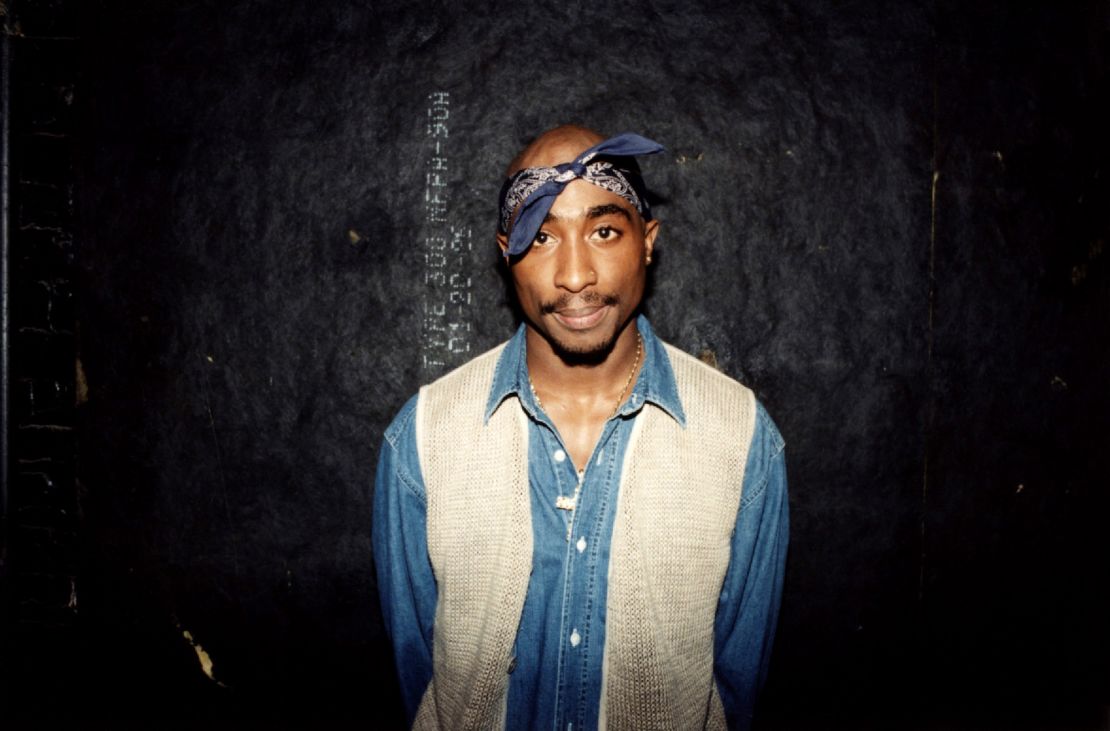
The music, the interviews, the poetry — they remain frozen in time.
But the hours leading up to September 7, 1996 continue to carry a different kind of weight.
They live in the memories of the people who were around him then — friends, crew members, industry figures — individuals who witnessed not the legend, but the man behind it.
In recent years, as those close to Tupac have grown older, more reflective, and more willing to speak about the past, a recurring theme has surfaced: Tupac wasn’t just moving through life at full speed — he was living with a sense that danger wasn’t abstract.
It was close.
Personal.
Inevitable.
That awareness didn’t begin that night in Las Vegas.
It had followed him for years.
By 1996, Tupac was already one of the most recognizable and controversial figures in music.
He had survived legal battles, public feuds, and, most notably, a prior shooting in 1994 that left him deeply suspicious and emotionally scarred.
Friends from that era often describe him as someone who carried both defiance and vulnerability at the same time — fearless in public, but increasingly aware of how fragile life around him had become.
According to those who have reflected on that final day, Tupac’s mood before the Tyson fight in Las Vegas wasn’t unusual on the surface.
He was energized, social, moving through the environment with the charisma people expected.
But some close to him later suggested there was also an undercurrent — a seriousness, a tension just beneath the confidence.

One longtime friend has recalled in interviews that Tupac had spoken often about fate, about not expecting to grow old, about feeling that his life was moving fast for a reason.
Those weren’t cinematic last words delivered minutes before tragedy — they were patterns in conversation, thoughts shared over time, ideas he returned to again and again.
That’s important.
History often compresses memory into one dramatic sentence, one prophetic quote, one “final message.
” Real life is rarely that clean.
Instead, it’s a series of conversations, moods, and instincts that only seem meaningful in hindsight.
People close to Tupac have described him that day as reflective but also focused on the moment — the fight, the atmosphere, the energy.
Las Vegas was loud, electric.
The night didn’t feel like an ending.
It felt like another chapter in a life already moving at an impossible pace.
Then, after the fight, everything shifted.
The altercation at the casino.
The departure.
The car ride.
The shots.
In the years since, those who knew him have carried a unique burden: replaying ordinary moments that became extraordinary simply because of what followed.
A laugh in a hallway.
A quick exchange.
A look that might have meant nothing — or everything.
When a friend later says, “He told me something before it happened,” it’s rarely about a literal prediction.
It’s about recognizing, too late, the emotional state someone was in.
The mindset.
The awareness that danger was always circling his world.
Tupac often spoke about mortality in his music.
Not in abstract poetry, but directly.
Songs filled with references to death, legacy, and the idea that time might be short.
To outsiders, that was artistic intensity.
To people around him, it sometimes felt like something heavier — a man processing the reality of the life he was living.
Those reflections have led some friends to say that nothing about the tragedy shocked them — not because they expected that exact moment, but because they knew the environment, the pressure, and the conflicts surrounding him were unsustainable.
Fame at that level compresses years into months.
Every decision magnified.
Every feud public.
Every movement watched.
Add youth, ambition, and unresolved tension, and the atmosphere becomes combustible.
In interviews over the years, people from Tupac’s inner circle have emphasized something else: he was also hopeful.
Creative.
Talking about projects, ideas, expansion.
He wasn’t a man planning an exit.
He was someone who believed he could outrun the storm, even while acknowledging it existed.
That contradiction defines his legacy.
He could speak about death in one breath and future plans in the next.
He could seem invincible and fragile at the same time.
Friends describe him as emotionally open, someone who shared thoughts freely, who processed life out loud.
So when people now look back and say, “He told me things,” they’re often talking about those ongoing conversations — about pressure, loyalty, betrayal, survival — not a single coded message.
The tragedy is that hindsight turns normal dialogue into prophecy.
The human mind searches for signs, warnings, clues that could have changed the outcome.
But violence, especially in that era’s music landscape, moved faster than reflection.
By the time the shots rang out on that Las Vegas street, there were no more conversations left to interpret.
Tupac was rushed to the hospital, fought for days, and passed away on September 13, 1996.
He was 25.
The silence that followed became as powerful as the music that came before.
Every interview, every recollection from a friend, feels like another piece of a puzzle people still hope to complete — not because it will change the past, but because understanding brings a kind of emotional closure.
But maybe the truth is simpler and harder at the same time.
Tupac didn’t leave behind a secret code or a final revelation.
He left behind a life lived at maximum intensity, spoken about openly, feared and embraced in equal measure.
The words he shared with friends before that night were likely the same words he had been sharing all along — about loyalty, survival, ambition, and the cost of the world he was navigating.
The tragedy isn’t that he predicted the end.
It’s that a voice that powerful didn’t get the chance to finish the conversation.