More than a decade after the highly publicized assault involving Chris Brown and Rihanna, an image of the singer’s neck tattoo has reignited widespread debate about their turbulent past. The tattoo, which Chris Brown debuted years after the 2009 incident, appears to resemble a woman’s face with heavy bruising—imagery that many observers have argued mirrors Rihanna’s injuries from the night of the assault. Brown has denied that the tattoo is meant to depict Rihanna, but critics and fans alike continue to revisit the controversy whenever the image resurfaces online. The renewed attention stems from a viral post claiming Brown “beat Rihanna and then went ahead to get a neck tattoo of her bruised face,” a statement that has triggered intense conversations about whether the tattoo was an insensitive coincidence, a deliberate symbol, or merely a misunderstood piece of art. As discussions spread, the image has become a focal point in the ongoing reassessment of celebrity accountability, the long-term impact of public violence, and the ways digital memory continues to revive events long after they have faded from headlines.
The original assault in 2009 left Rihanna with visible injuries documented in widely circulated photographs, sparking global outrage and reshaping much of the public’s perception of Brown for years afterward. Despite Brown’s apologies, legal consequences, and attempts to rebuild his image, any incident tied to the assault has repeatedly resurfaced in cultural conversation, often overshadowing his musical accomplishments. When the neck tattoo appeared, many were quick to draw a connection between the image and the past incident, noting the similarities between the artwork and Rihanna’s documented injuries. Brown’s representatives insisted at the time that the tattoo was inspired by a stylized depiction of a skull blended with a woman’s face, referencing a design from a cosmetic brand rather than Rihanna. They emphasized that Brown would never memorialize the assault in such a way. Nevertheless, controversy persisted, fueled by online interpretation, side-by-side comparisons, and longstanding public scrutiny of the artist’s behavior.
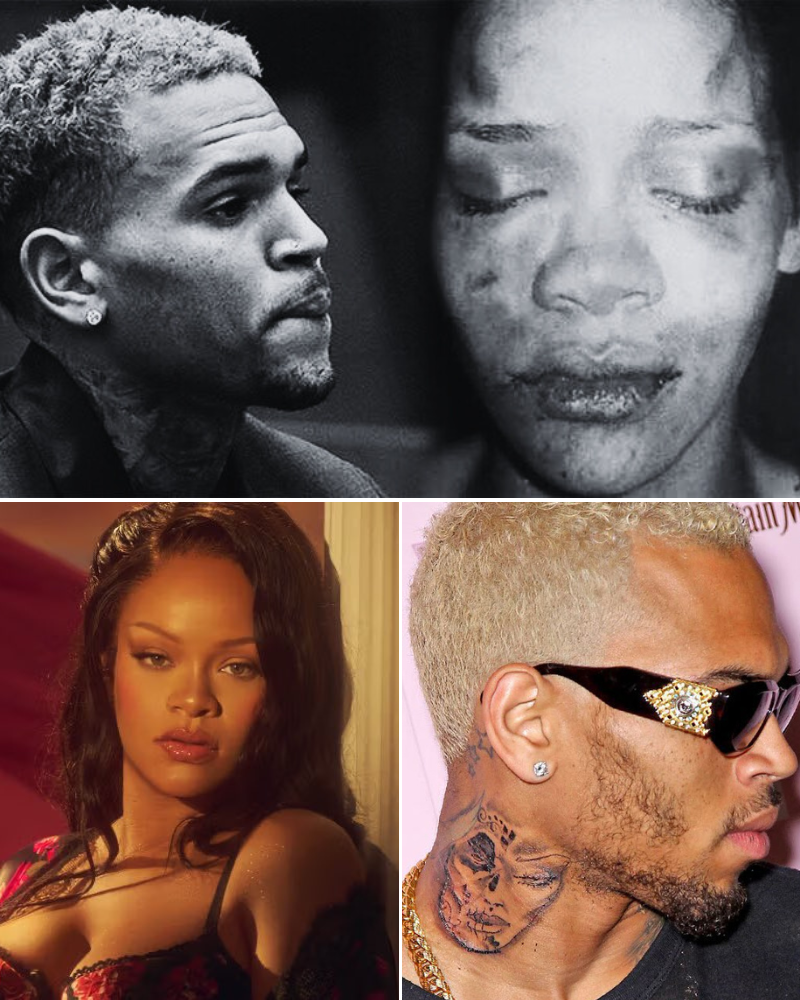
For Rihanna, the assault became a defining moment in her early career, though she has since spoken openly about healing, growth, and maintaining boundaries. Over the years, she has acknowledged that revisiting the trauma publicly was difficult but necessary, particularly given her influence and the number of young fans who looked to her for strength. Her journey from survivor to global icon has often been framed as a story of resilience, independence, and reinvention. Meanwhile, Brown’s attempts to rehabilitate his image have faced periodic setbacks whenever past controversies resurface. The tattoo debate has resurfaced at various points, usually triggered by fans posting older photos or revisiting archived news stories. Social media has played a significant role in keeping the topic alive, with each resurfacing triggering waves of renewed criticism, debate, and speculation. Many commentators have questioned whether Brown fully understands the impact of his actions, while others argue that the public’s fixation on the tattoo demonstrates how difficult it can be for public figures to move forward from past wrongdoing.
The resurfaced controversy has also sparked broader conversations about how society handles forgiveness, redemption, and accountability for public figures. Some argue that Brown has served his legal consequences and has the right to move forward with his life without the constant revival of past events. Others contend that symbols with potential to evoke trauma—intentional or not—should be approached with greater sensitivity, particularly when a case involved physical harm, public humiliation, and long-term emotional fallout. The tattoo remains a flashpoint for these broader debates, functioning less as a standalone image and more as a cultural reminder of a widely publicized act of violence. As online discussions continue to circulate, the tattoo serves as a case study in how celebrity actions—past and present—remain subjects of public examination. What remains clear is that the intersection of art, reputation, and personal history will always evoke strong reactions when tied to such a traumatic and well-known event. Whether Brown intended the tattoo as art unrelated to Rihanna or whether the resemblance is more than coincidental, the image continues to shape how many view his legacy, and it ensures that the story of that night in 2009 remains an unclosed chapter in the public consciousness.