During her recent sold-out concert in Phoenix, Cardi B found herself at the center of another viral rumor — this time fueled by TMZ, which claimed the rapper used her performance to take a public shot at NFL star Stefon Diggs. According to TMZ, Cardi subtly dissed Diggs onstage, continuing a narrative suggesting tension between the two. But Cardi B quickly stepped in to shut the speculation down.
In a direct response posted online, Cardi clarified that her comments were not aimed at Stefon Diggs or anyone else. Instead, she explained that she was simply introducing a song the way she always does — adding a bit of flair, humor, or dramatic effect before performing. “Dear blogs,” she wrote, “when I perform a song I always introduce the song with a lil razzle dazzle… not everything is a shot or personal. I’m actually repeating lyrics from the songs… Relax.”
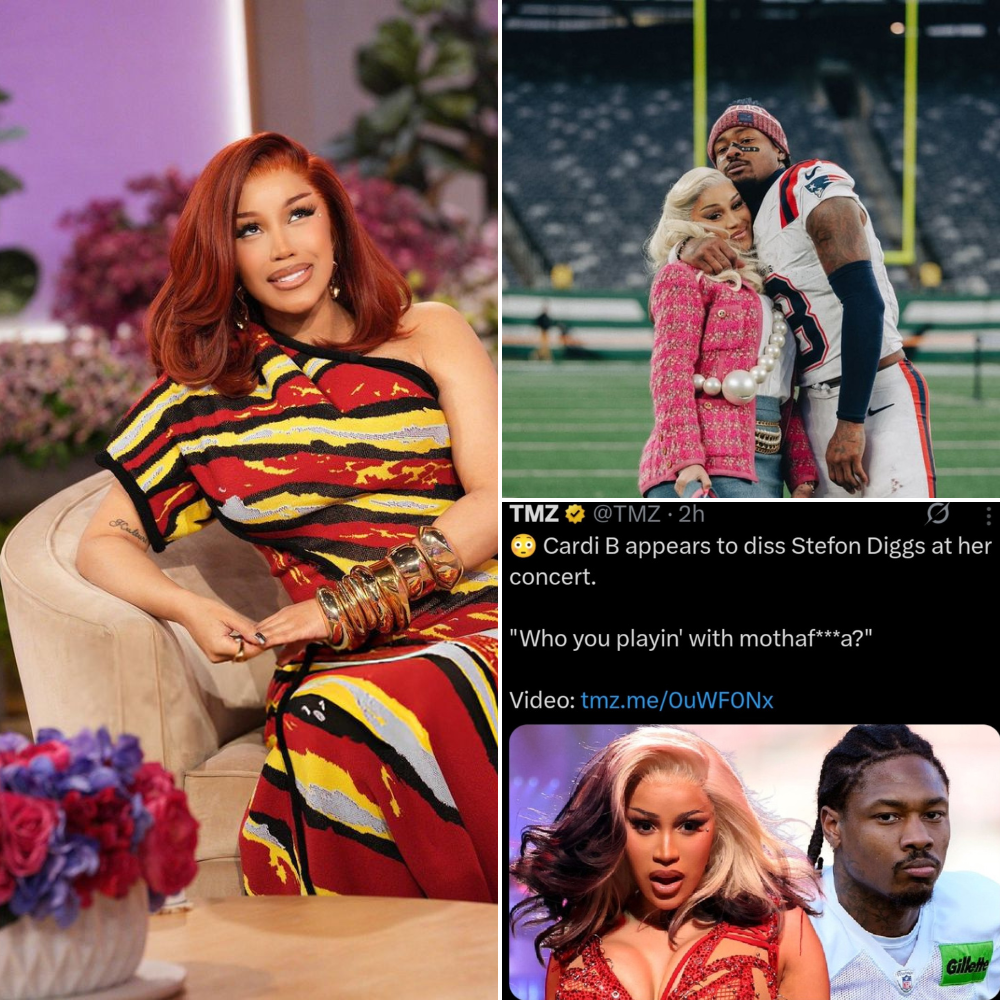
Her message quickly went viral as fans rushed to defend her, criticizing entertainment outlets for twisting a casual performance moment into a conflict story. Clips from the Phoenix show circulated widely, with viewers pointing out that her onstage statements were directly tied to the lyrics she was about to perform — not targeted commentary about Diggs.
According to the timeline of events, Cardi introduced a song with a short spoken line, similar to the style she has used for years. Some blogs latched onto it, interpreting it as a subtle jab at Diggs, whom Cardi was rumored to have “happily dumped” weeks prior. But Cardi’s clarification made it clear that nothing in her performance was intended as a personal attack.
Industry watchers note that this kind of rumor cycle is not new for Cardi B, who frequently addresses misinformation spread about her, especially when headlines attempt to create drama where none exists. She has been vocal about how often her words or actions are taken out of context and transformed into narratives she never intended to fuel. The speed at which this particular rumor spread highlights the ongoing appetite for exaggerated celebrity storylines — particularly when they involve relationships, breakups, or perceived shade.
Cardi’s Phoenix performance drew thousands of fans and received positive praise across social media for its energy, sharp choreography, and seamless mix of her hit tracks. Many who attended expressed surprise at seeing a simple concert moment turned into a viral accusation. Several fans commented that her explanations matched what they witnessed: a typical Cardi-style setup to a song.
As for Stefon Diggs, he has not made any public comment regarding the situation. Cardi did not address him directly beyond clarifying that the alleged diss never existed. Her focus remained squarely on media outlets that she feels have misrepresented her actions, reinforcing her ongoing frustration with sensationalist reporting.
Her statement — straightforward and unbothered — ended the rumor quickly:
She wasn’t shading anyone.
She wasn’t sending a message.
She wasn’t doing anything except performing.
What happened next was predictable: the narrative shifted. Fans began calling out the role of entertainment blogs in manufacturing gossip, noting that Cardi’s concerts are full of theatrical introductions that match the tone of the song. Others joked that blogs were “speedrunning drama creation” just to generate clicks.
Despite the short-lived controversy, Cardi B’s handling of the situation only reinforced her reputation as an artist who refuses to let others control her narrative. As she continues her run of live performances, fans expect more “razzle dazzle” — and fewer attempts by blogs to turn her stage banter into a storyline.
For now, the rumor is dead, the concert footage speaks for itself, and Cardi’s message remains firm:
Not everything is a shot.
Not everything is a subtweet.
And sometimes, a performance is just a performance.