For more than two decades, American Idol has thrived on a simple idea: viewers help decide who becomes the next music star. But in its latest season, the iconic singing competition is expanding that concept in a major way—turning the show into something closer to a nationwide online campaign.
With a brand-new voting system that extends far beyond traditional text and website ballots, the series is inviting fans to influence the competition through social media. The change could reshape not only how contestants win, but also how fandom forms around them.

A Hawaiian Stage and a New Round of Competition
The twist debuted during an episode filmed in Hawaii, where the remaining singers performed in a newly introduced stage of the competition known as the Ohana Round. The word “ohana,” famously associated with Hawaiian culture, emphasizes family and community—an appropriate theme for a round where contestants performed not just for judges, but also for fellow competitors and loved ones.
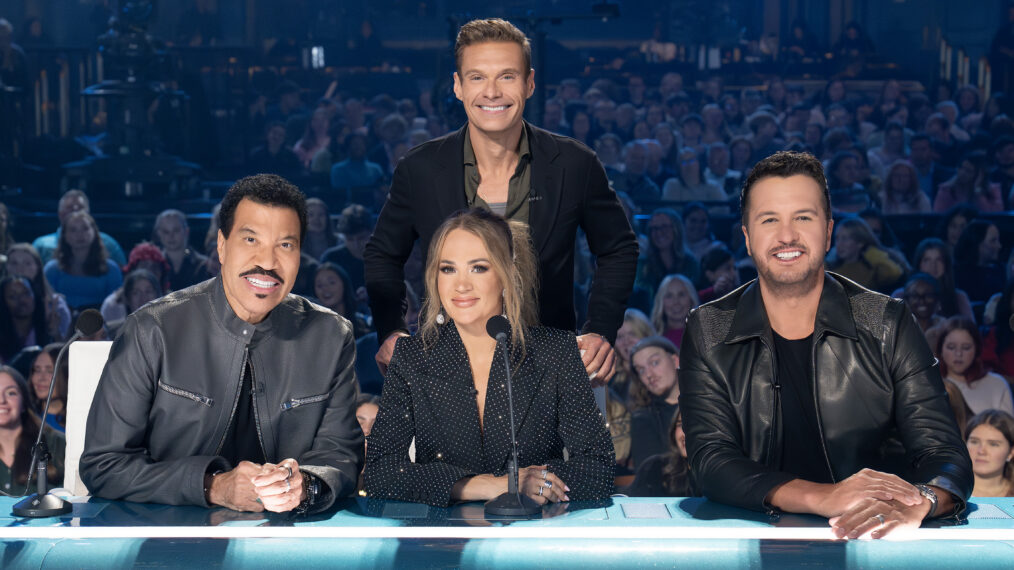
The performances were evaluated by the show’s judging panel:
-
Carrie Underwood
-
Luke Bryan
-
Lionel Richie
Alongside industry guests and supporters in the audience, the judges narrowed the field to the Top 20 contestants, marking a pivotal moment before the show transitions to audience-driven decisions.
The headline change isn’t the location or the round—it’s how fans vote.
Historically, viewers could support contestants through online ballots or text messages. Now, American Idol is integrating social media platforms directly into the voting process.
Fans can now vote by commenting on official posts on:
-
Facebook
-
Instagram
-
TikTok
Here’s how it works:
-
Visit the official American Idol account on one of the platforms.
-
Find the pinned voting post.
-
Comment with the first name of the contestant you want to support.
-
Each valid comment counts as one vote.
Viewers can submit up to 10 votes per contestant per platform, meaning dedicated fans can cast dozens of votes across multiple channels.
The result: voting becomes less like filling out a ballot and more like participating in an online conversation.
Why This Changes the Game
Adding social media to the voting process does more than increase convenience—it transforms the competition into something resembling a digital campaign.
Contestants no longer rely only on performance nights. Success could also depend on:
-
Viral moments from performances
-
Fan communities organizing votes online
-
Shareable clips spreading across social feeds
-
Influencers or celebrities boosting contestants
In other words, the next American Idol winner might not just be the best singer—they might also have the most energized online fandom.

Meet the Top 20 Contestants
After the Hawaii performances, the competition was narrowed to the following Top 20:
-
Jordan McCullough
-
Brooks Rosser
-
Kyndal Inskeep
-
Philmon Lee
-
Madison Moon
-
Braden Rumfelt
-
Jake Thistle
-
Jesse Findling
-
Ruby Rae
-
Genevieve Heyward
-
Lucas Leon
-
Hannah Harper
-
Chris Tungseth
-
Julian Kalel
-
Rae
-
Daniel Stallworth
-
Abiyomi
-
Kutter Bradley
-
Makiyah
-
Keyla Richardson
From this point forward, audience engagement will play a central role in determining who advances.

A Preview of the Next Phase
The Top 20 will perform again in Hawaii in upcoming episodes before the show transitions to live broadcasts later in the season. Once live shows begin, the results will depend heavily on audience votes.
This format increases suspense in several ways:
-
Voting can surge around viral performances.
-
Fan campaigns can rapidly shift rankings.
-
Social media trends could influence the competition week to week.
A breakout moment online could propel a contestant from underdog to frontrunner almost overnight.
The Rise of the “Fandom Factor”
Reality competitions increasingly rely on passionate fan communities. But integrating social platforms directly into the voting system accelerates that trend.
Instead of quietly submitting votes, fans now:
-
Comment publicly
-
Rally others to participate
-
Share clips and campaign for their favorites
The result is something closer to a national fan movement, where support becomes visible and contagious across the internet.
![American Idol' Reveals Top 20 & Platinum Ticket Winners [SPOILER]](https://countryrebel.com/wp-content/uploads/2026/03/Idol-24-Top-20.png)
What This Means for the Future of Reality TV
If the experiment works, it could reshape how talent competitions operate.
Shows might begin to treat social platforms not just as marketing tools but as core parts of the competition itself. Voting, promotion, and fan engagement could merge into one real-time ecosystem.
For American Idol, that shift represents a return to its original promise—letting the public decide the next star—but with a modern twist.
In the age of viral clips and digital fandoms, the path to victory may run straight through the comment section.