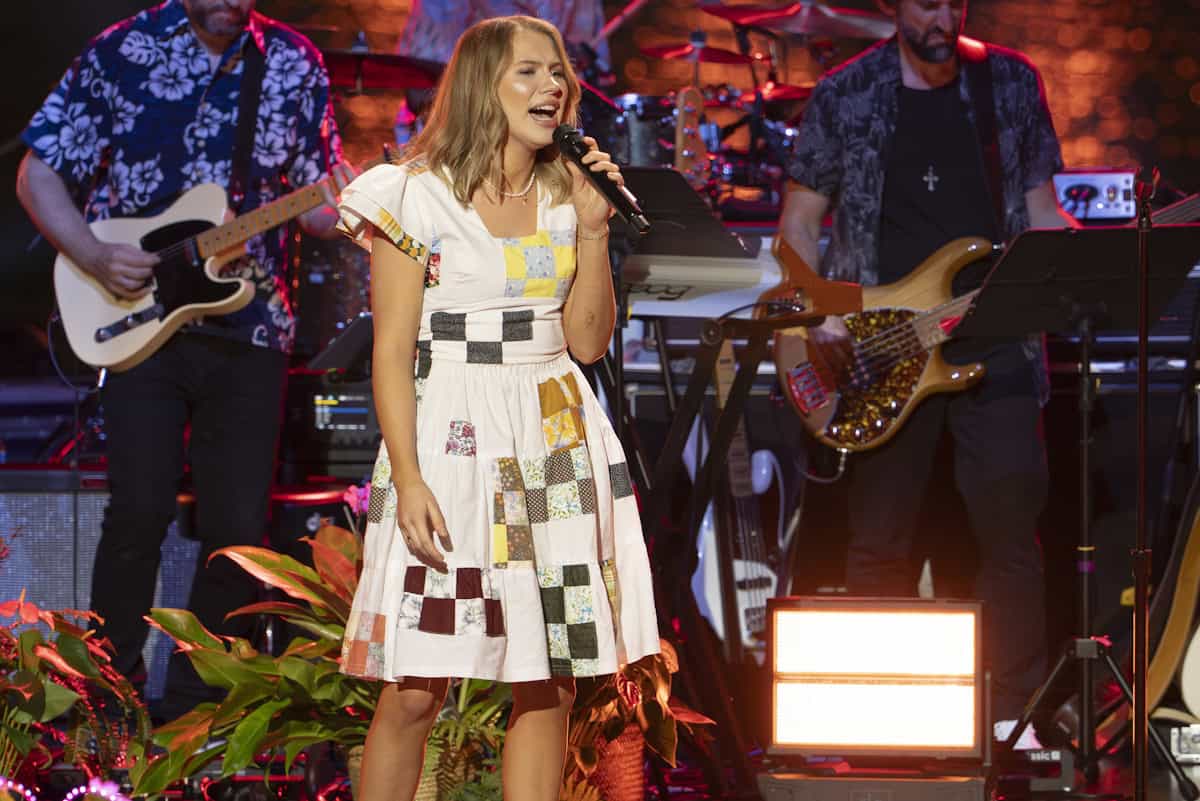
In televised competitions, talent is rarely the limiting factor. What separates contenders isn’t just vocal ability—it’s the moment they stop performing safely and start connecting honestly. That shift was on full display when American Idol contestant Hannah Harper stepped onto the stage without her guitar and, in doing so, unlocked a new dimension of her artistry.
Her performance wasn’t just a strong showing—it was a case study in artistic risk, identity, and growth under pressure.
The Comfort Trap: When Skill Becomes a Safety Net
For artists rooted in tradition—like Harper’s bluegrass background—performance often comes with built-in structure. You stand, you play, you sing. The instrument becomes both a tool and a shield.
That’s the paradox: the very thing that helps you perform can also limit how fully you express.
By setting aside her guitar, Harper removed her safety net. It exposed her—not just vocally, but physically and emotionally. Suddenly, every gesture, every pause, every glance mattered more. And while that kind of exposure can feel destabilizing, it also creates space for something more compelling: presence.

Stage Presence Isn’t Movement—It’s Intention
There’s a common misconception that “opening up” on stage means moving more—bigger gestures, more energy, more spectacle. But what Harper demonstrated is something subtler and more powerful.
Presence isn’t about how much you move. It’s about why you move.
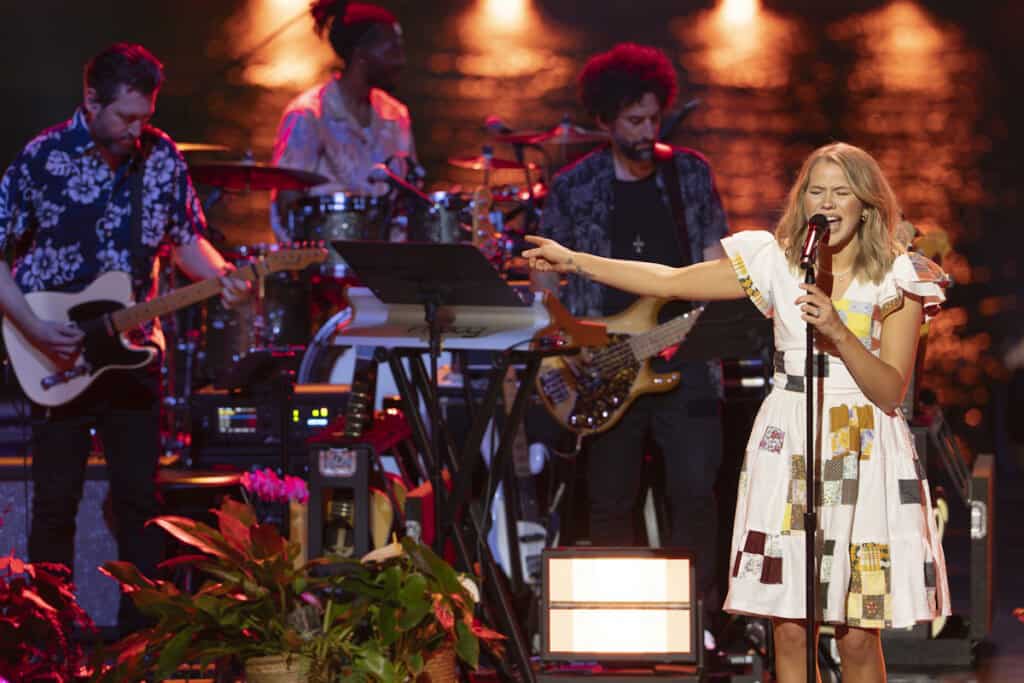
During her rendition of Ain’t No Grave, originally associated with artists like Johnny Cash, Harper didn’t suddenly transform into a high-energy pop performer. Instead, she leaned into the emotional core of the song. Her gestures felt intentional, her stillness felt grounded, and her voice carried a new weight.
That shift—from controlled delivery to emotional communication—is what audiences respond to instinctively.
The Turning Point: From Singing to Storytelling
One of the most telling reactions came from Lionel Richie, who noted that Harper moved beyond singing into something closer to preaching. It’s a striking distinction.
Singing delivers notes.
Storytelling delivers meaning.
At a certain point in her performance, Harper wasn’t just executing a song—she was embodying it. The audience mirrored that shift, responding not with polite applause but with visible engagement. Heads nodded. Energy built. The connection became reciprocal.
That’s the inflection point every performer chases: when the audience stops observing and starts participating emotionally.
Authenticity Over Imitation: A Subtle but Critical Lesson
Mentor-turned-judge Keke Palmer highlighted a key truth that often gets lost in competition formats: originality isn’t about doing something no one has ever done—it’s about doing what only you can do.
Harper didn’t abandon her roots. She didn’t try to mimic pop stylings or overcorrect into something unnatural. Instead, she expanded her range while staying grounded in her identity.
That balance—evolution without imitation—is where sustainable artistry lives.
The Inner Battle: Getting Out of Your Own Head
Even seasoned performers struggle with self-awareness on stage. Carrie Underwood offered a candid reflection, recalling how overthinking physical movements once disrupted her own performances.
It’s a familiar trap:
-
You become aware of your hands
-
Then your posture
-
Then your facial expressions
-
And suddenly, you’re no longer in the performance—you’re analyzing it in real time
Harper showed glimpses of breaking through that mental noise. When she stopped monitoring herself and leaned into the song’s message, everything clicked. The performance felt less rehearsed and more lived-in.

The Role of Emotional Anchors
Another understated but powerful element: Harper’s connection to her family in the audience.
Performers often search for techniques to manage nerves—breathing exercises, visualization, repetition. But sometimes the most effective anchor is human. A familiar face can cut through anxiety faster than any technical method.
In Harper’s case, that emotional grounding didn’t make her performance smaller—it made it more open. More vulnerable. More real.
Growth You Can See (and Hear)
Judge Luke Bryan pointed out something audiences intuitively recognize: progression.
It’s not just about hitting notes better each week. It’s about expanding range—not only vocally, but emotionally and stylistically. Harper’s performance revealed new textures in her voice, including a subtle grit that hadn’t been as prominent before.
That kind of growth signals readiness—not just to advance in a competition, but to evolve into a complete artist.
Why This Moment Matters Beyond One Performance
Harper’s breakthrough reflects a broader truth about creative development:
-
Comfort builds consistency
-
Discomfort builds transformation
Many artists plateau not because they lack ability, but because they stay within the boundaries of what already works. Harper stepped outside those boundaries—and in doing so, discovered something audiences hadn’t fully seen yet.
The Takeaway for Performers and Creators
Whether you’re a singer, speaker, or creator of any kind, the lesson here is clear:
-
Your “safe zone” is valuable—but incomplete
-
Growth requires visible risk
-
Authenticity resonates more than perfection
-
Connection beats technical precision every time
Harper didn’t just perform a song. She crossed a threshold—from controlled execution to emotional communication.
And once an artist reaches that point, there’s no going back to playing it safe.