
There are performances on American Idol that entertain—and then there are the ones that quietly shift the atmosphere in the room. During the Top 20 round, Hannah Harper delivered the latter, transforming a prime-time television stage into something far more intimate and rooted in history.
This wasn’t a performance built for spectacle. It was built for meaning.

A Sound Carried Through Generations
From her first note, Harper leaned into the traditions of Appalachian gospel—a style shaped not by commercial polish, but by community, faith, and lived experience. The influence of the Appalachian Mountains could be felt in every phrase: unembellished, grounded, and emotionally direct.
This genre isn’t about vocal gymnastics. It’s about testimony.
Harper understood that distinction and honored it. Instead of adapting her sound to fit the modern competition mold, she invited the audience into a musical tradition that predates the industry itself—one born in small churches, front porches, and gatherings where music was less about performance and more about connection.
Choosing Restraint Over Spectacle
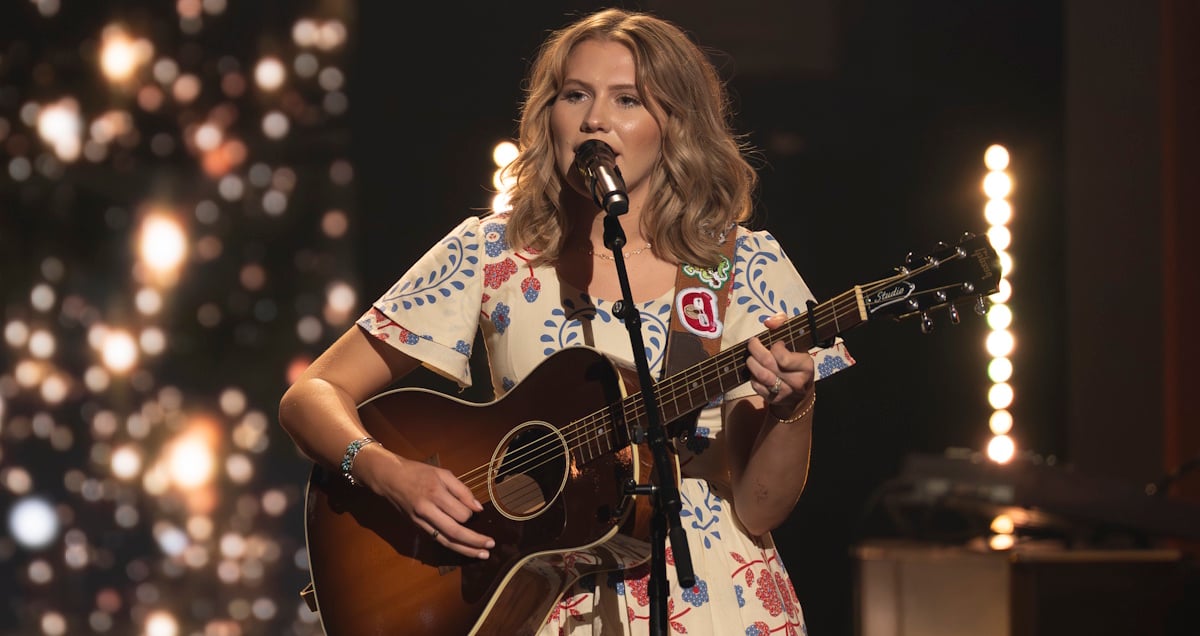
In a show often defined by high-impact arrangements and visual production, Harper’s decision to strip things back was striking.
No dramatic staging.
No overproduced instrumentation.
No attempt to “modernize” the moment.
What she offered instead was clarity—a voice that carried warmth and conviction without distraction. That restraint became the performance’s greatest strength. It allowed every lyric, every pause, and every emotional inflection to land with precision.
In a competition environment, that kind of confidence is rare. It requires trusting that authenticity can hold attention just as powerfully as spectacle.
The Emotional Architecture of Gospel
Gospel music, particularly from Appalachian roots, follows a different emotional blueprint than mainstream pop. It builds gradually, often prioritizing storytelling over immediate impact.
Harper’s performance mirrored that structure. Rather than chasing a single climactic note, she created a steady emotional rise—drawing viewers in line by line, phrase by phrase.
By the time she reached the final moments, the connection was already established. The power didn’t come from a dramatic finish; it came from the cumulative weight of everything that came before it.

Why the Judges—and Viewers—Leaned In
The reaction in the room was immediate, but not explosive. It was something quieter: attention, stillness, reflection.
The judges recognized what Harper brought to the stage wasn’t just vocal ability—it was cultural presence. In a competition that often celebrates versatility, she demonstrated something equally valuable: identity.
At home, audiences responded for a similar reason. In an era of highly produced music, there’s a growing appreciation for performances that feel untouched—where emotion isn’t filtered or optimized.
Social media reactions reflected that shift. Viewers didn’t just praise her voice; they praised her choice. Staying true to a traditional sound on a national platform felt, to many, like a risk worth taking.

A Different Kind of Storytelling
What Harper achieved in that Top 20 moment goes beyond genre. She reframed what storytelling can look like on a competitive stage.
Instead of presenting a narrative through backstory packages or dramatic arrangements, she embedded it directly into the music. The story wasn’t explained—it was felt.
That approach creates a different kind of engagement. It asks the audience not just to listen, but to experience.
The Power of Cultural Authenticity in Modern Competitions
Shows like American Idol thrive on variety, but authenticity is what creates memorability. When contestants bring distinct cultural influences into their performances, they expand the show’s musical landscape.
Harper’s Appalachian gospel performance did exactly that. It introduced—or reintroduced—viewers to a sound that doesn’t often occupy mainstream space, reminding audiences that American music is built from many regional traditions, not just current chart trends.
Moments like this serve a dual purpose: they showcase talent while preserving and elevating musical heritage.
What This Performance Signals Moving Forward
As the competition continues, Harper’s Top 20 performance sets a clear expectation: she isn’t chasing trends—she’s defining her lane.
That doesn’t mean she won’t evolve. But it does suggest that whatever direction she takes, it will remain anchored in authenticity.
And in a competition where identity can sometimes blur under pressure, that clarity may be her greatest advantage.
Final Note
Hannah Harper’s performance wasn’t loud, flashy, or engineered for viral impact. It didn’t need to be.
By bringing Appalachian gospel to a national stage, she created a moment that felt both deeply personal and widely resonant—a reminder that the most powerful performances don’t always come from pushing forward.
Sometimes, they come from reaching back—and bringing something meaningful with you.