Few topics generate as much intensity—and confusion—as the ongoing public fascination with Jeffrey Epstein.
Add a platform like The Joe Rogan Experience, and the result is almost guaranteed to go viral: bold claims, dramatic reactions, and lists of powerful names that seem to confirm long-held suspicions about elites.
But there’s a critical distinction that often gets lost in these moments:
Being mentioned is not the same as being implicated.
This article cuts through the noise to explain what’s actually happening—and why so many people are getting it wrong.
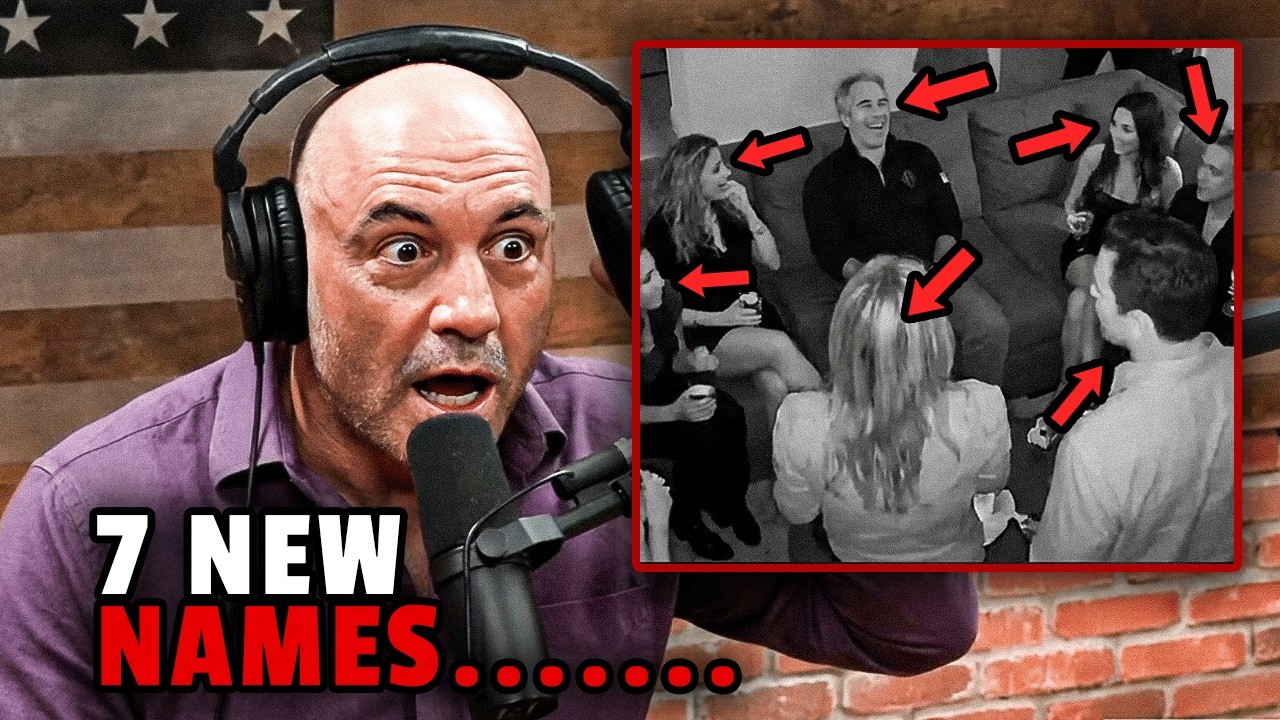
The Illusion of “Explosive Revelations”
Headlines like “Rogan collapses after hearing names” are engineered for maximum impact. They suggest shock, exposure, and hidden truth finally coming to light.
In reality, most of these moments are:
-
Reactions to already public or partially known information
-
Interpretations of incomplete documents
-
Conversations that mix fact, speculation, and opinion
Podcasts thrive on exploration, not verification. When Joe Rogan reacts strongly to something, it reflects curiosity or surprise—not confirmation of wrongdoing.
What the “Epstein Files” Actually Represent
Documents tied to Epstein—whether court records, depositions, or contact logs—are complex and often misunderstood.
They can include:
-
Phone books or contact lists
-
Flight logs
-
Email references
-
Third-party mentions
Here’s the key point:
Inclusion in these materials does NOT mean involvement in criminal activity.
High-profile individuals—from politicians like Bill Clinton to business leaders like Bill Gates—have been publicly discussed in connection with Epstein over the years.
But:
-
Some had limited or indirect contact
-
Some have denied knowledge of his crimes
-
Some were included through association, not participation
Lumping all names together as equally culpable is inaccurate and misleading.
Why Name Lists Feel So Convincing
When multiple recognizable figures are mentioned in the same context, it creates a powerful psychological effect.
It suggests:
-
A coordinated network
-
Shared intent
-
Hidden collaboration
But this is often a cognitive shortcut.
In reality, Epstein operated across elite circles—finance, politics, academia, and entertainment. That means his network was broad, not necessarily unified.
Being in the same orbit does not mean being part of the same actions.
The Rogan Factor: Influence Without Verification
Rogan’s platform is uniquely influential because it combines:
-
Long-form discussion
-
High-profile guests
-
A tone of open inquiry
Guests like Eric Weinstein or Lawrence Krauss often explore big, systemic ideas—power structures, institutional failures, hidden networks.
These conversations can be valuable. They raise questions mainstream coverage sometimes avoids.
But they also come with a risk:
Speculative frameworks can start to feel like established reality.
Let’s clarify a few common points that frequently get distorted:
✔️ Verified
-
Epstein was convicted of sex crimes and had connections to powerful individuals
-
Investigations and document releases have revealed aspects of his network
-
His case raised serious questions about accountability and institutional failure
-
That all named individuals were involved in criminal acts
-
That there is a single, coordinated global “network” operating with shared intent
-
That every document release confirms conspiracy-level structures
The Problem With Escalating Language
Terms like “demonic,” “global network,” or “elite rituals” appear frequently in viral content.
They serve a purpose: to heighten emotional engagement.
But they also:
-
Blur the line between evidence and interpretation
-
Reduce complex realities into simplified narratives
-
Make it harder to distinguish credible claims from exaggeration
Serious issues—like exploitation and abuse—deserve serious analysis, not dramatization.
The Wexner, Gates, and Clinton Discussions
Figures like Les Wexner, Bill Gates, and Bill Clinton are often central to these narratives.
Here’s what’s important:
-
Wexner had a documented financial relationship with Epstein
-
Gates has acknowledged meetings with Epstein and called them a mistake
-
Clinton has denied knowledge of Epstein’s crimes and faced scrutiny over travel logs
These are legitimate areas of public interest and investigation.
But turning them into definitive proof of coordinated wrongdoing goes beyond available evidence.
Why People Don’t Trust the “Official Story”
Skepticism doesn’t come out of nowhere.
The Epstein case includes:
-
Lenient early legal outcomes
-
Questions about how he maintained influence
-
Ongoing curiosity about the full scope of his connections
These factors create a vacuum—and in that vacuum, alternative narratives thrive.
The problem is not skepticism itself.
It’s what fills the gap when skepticism isn’t paired with evidence.
The Real Issue: Accountability vs. Amplification
There are two very different goals that often get conflated:
1. Accountability
Demanding transparency, justice, and thorough investigation
2. Amplification
Spreading dramatic claims without verification
The first is necessary.
The second can undermine the first.
When everything becomes a conspiracy, nothing can be clearly proven.
Final Thought: Curiosity Needs Precision
The Epstein case remains one of the most disturbing and complex scandals in modern history. It deserves scrutiny, persistence, and careful analysis.
But viral moments—whether on podcasts or social media—are not the same as evidence.
When you hear that Joe Rogan reacted to “shocking names,” the most important question isn’t who was mentioned.
It’s:
What, exactly, has been proven?
Until that question is answered with clarity and credible sources, everything else remains what it often is in the digital age—
A story still being shaped, not a truth fully revealed.