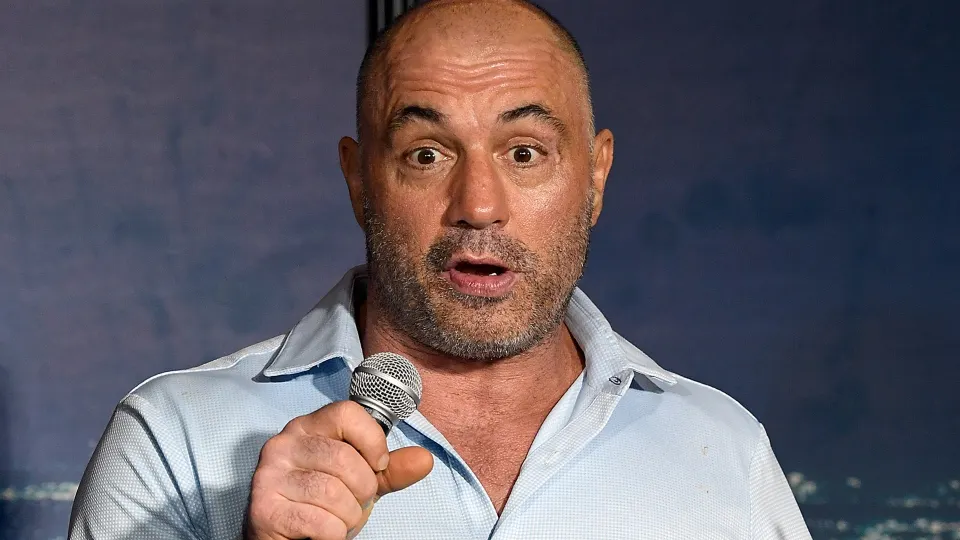
Few topics ignite public reaction faster than claims about Hollywood’s hidden culture—especially when amplified by a voice as influential as Joe Rogan. His recent commentary has once again pulled attention toward long-standing concerns about exploitation, power imbalances, and silence within the entertainment industry.
But as with many viral discussions, it’s essential to separate what is well-documented, what is broad commentary, and what risks being overstated or misinterpreted.

The Core Issue: Power and Access in Entertainment
At the heart of Rogan’s comments is a theme that is neither new nor unfounded: power in Hollywood has historically been concentrated in the hands of a few gatekeepers.
Producers, directors, and executives often control:
-
Casting decisions
-
Career opportunities
-
Industry access
This imbalance has, in documented cases, led to abuse.
The most prominent example remains Harvey Weinstein, whose conviction exposed a pattern of coercion and assault that had been enabled for years by silence and fear. His case became a defining moment for the MeToo movement, which brought forward hundreds of testimonies across the industry.
So when Rogan talks about exploitation, he’s touching on something real—but the way those ideas are extended matters.

“Casting Couch” Culture: Fact vs. Generalization
The idea of “casting couch” dynamics—where performers are pressured into inappropriate situations for roles—has been reported and investigated for decades.
However, there’s an important distinction:
-
Documented cases exist, and they are serious
-
But they do not define every interaction or the entire industry
Painting all of Hollywood as uniformly predatory oversimplifies a complex ecosystem that includes thousands of professionals, most of whom operate ethically.
When Commentary Expands Into Speculation
Joe Rogan’s style often blends observation with open-ended speculation. That format encourages discussion—but it can also blur boundaries.
For example:
-
Referencing “powerful elites” without specifics
-
Suggesting widespread complicity
-
Grouping individuals together without verified links
This can unintentionally create guilt by association—particularly when names like Oprah Winfrey are mentioned without evidence of wrongdoing.
It’s one thing to critique systems. It’s another to imply individual involvement without substantiation.

Child Actors and Vulnerability: A Real Concern
One area where concern is widely shared—and supported by documented cases—is the vulnerability of young performers.
Child actors often face:
-
Intense pressure to succeed
-
Financial dependence on adults
-
Limited autonomy in decision-making
Advocacy efforts and regulations have improved protections over time, but gaps still exist. Industry watchdogs continue to push for stronger safeguards, particularly around working conditions and psychological well-being.
This is a legitimate conversation—and one that doesn’t require exaggeration to be taken seriously.

The Tragedy of Stephen ‘tWitch’ Boss
The mention of Stephen ‘tWitch’ Boss often appears in broader discussions about industry pressure. His death was a deeply tragic event that brought attention to mental health struggles—even among those who appear successful and stable.
However, there is no verified evidence linking his death to the kinds of systemic exploitation being discussed. Connecting unrelated tragedies to broader theories can distort both the facts and the individual’s legacy.
Why These Narratives Resonate
Rogan’s commentary gains traction because it taps into existing public sentiment:
1. Proven Scandals
Cases like Weinstein have shown that abuse can exist behind powerful institutions.
2. Distrust of Elites
Audiences are increasingly skeptical of wealth, fame, and influence.
3. Storytelling Simplicity
It’s easier to believe in a single “hidden system” than to navigate complex, nuanced realities.
The Risk of Overcorrection
While exposing real abuse is critical, there’s a parallel risk:
-
Expanding valid concerns into universal claims
-
Treating speculation as confirmation
-
Damaging reputations without evidence
This doesn’t just harm individuals—it can also weaken legitimate accountability efforts by muddying the waters.
What Accountability Actually Looks Like
Real change in Hollywood hasn’t come from viral theories—it has come from:
-
Investigative journalism
-
Legal action
-
Survivor testimony
-
Institutional reform
The MeToo movement is a clear example: it succeeded because claims were documented, corroborated, and pursued through proper channels.
Final Thought: Truth Needs Precision
There are serious issues within the entertainment industry. Power imbalances, exploitation, and silence have all been proven in specific cases.
But addressing those issues effectively requires precision—not amplification of every claim.
Joe Rogan raises questions that resonate. The challenge is ensuring those questions lead to clarity, not confusion.
Because when everything is framed as a hidden conspiracy, it becomes harder to identify—and confront—the real problems that actually exist.