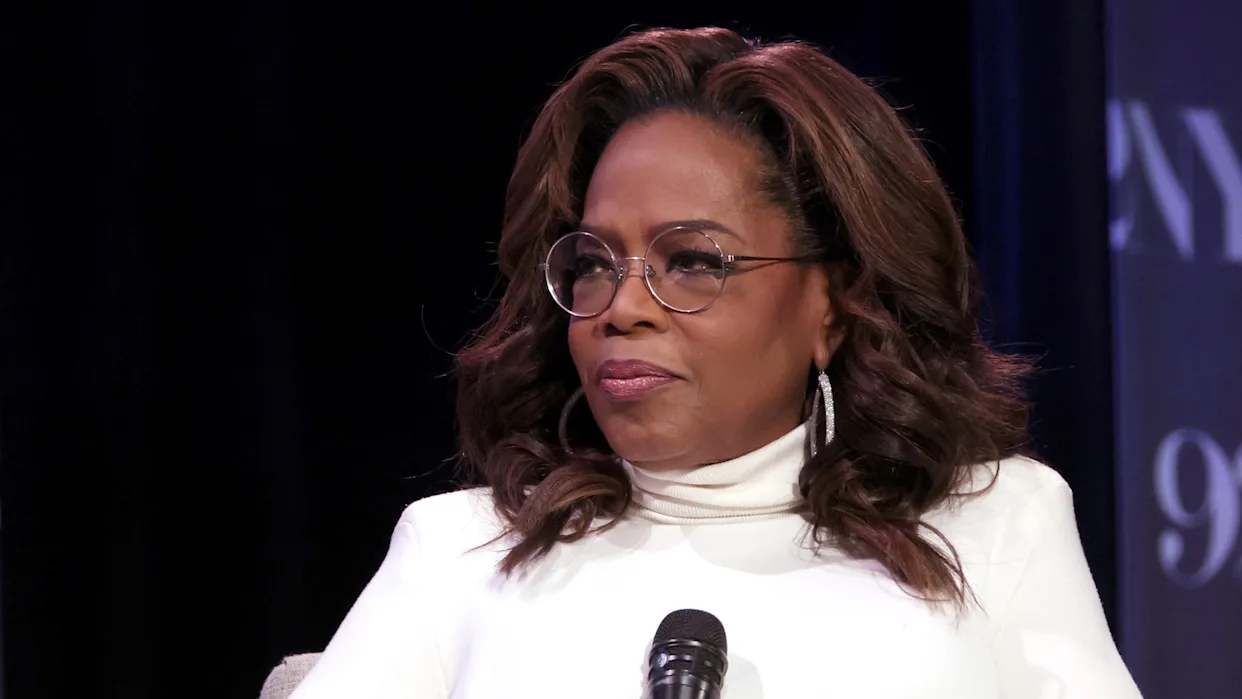
A recent wave of discussion has emerged following comments from Jamie Lee Curtis about beauty standards, celebrity influence, and the broader systems shaping how people view their bodies. Her remarks, which include references to Oprah Winfrey’s long-standing role in conversations around weight and self-image, have reignited debate about the intersection of media, business, and personal identity.
While the claims circulating online are often framed in dramatic terms, the core of Curtis’s message centers on how beauty narratives are created, marketed, and consumed.

A Critique of Influence and Messaging
Curtis’s perspective focuses on Oprah Winfrey’s cultural impact over decades.
As a highly influential media figure, Oprah has played a significant role in shaping public conversations about weight, discipline, and self-worth. Curtis argues that these messages have not remained static, but have evolved over time in ways that align with broader industry trends.
From earlier emphasis on willpower and lifestyle changes to more recent discussions around medical approaches, Curtis sees these shifts as part of a larger system that continuously reframes the problem—and the solution.
Changing Narratives Over Time
One of the central points in Curtis’s critique is how narratives around weight and health have changed.
In earlier years, the focus was often placed on discipline and personal responsibility. More recently, the conversation has included medical perspectives, with greater attention given to biological and genetic factors.
Curtis’s argument is not about any single approach, but about how each shift can become part of a cycle where new solutions are introduced as older ones lose traction.

A System That Extends Beyond One Person
While Oprah is a key figure in the discussion, Curtis’s comments point to something broader.
She describes an industry that includes media platforms, brands, and professionals who collectively shape beauty standards. In this system, personal struggles can become widely shared narratives, often tied to products or solutions that promise change.
Her concern is that these messages, even when presented with empathy, can reinforce the idea that something about the body needs to be fixed.
Personal Experience Adds Context
Curtis’s own experiences in Hollywood play a major role in how she views the issue.
She has spoken about the pressure to alter her appearance early in her career, describing how a single comment about her looks led to cosmetic surgery and, eventually, a period of personal struggle. For her, these experiences illustrate the deeper impact of industry expectations.
This personal context shapes her broader critique of how beauty standards are created and maintained.

Addressing Speculation and Misinterpretation
Some online discussions have connected Curtis’s comments to unrelated controversies, including references to widely publicized cases.
However, these connections are not supported by confirmed evidence. Even within the discussion, it is acknowledged that appearing in peripheral references does not imply wrongdoing.
This distinction is important, as it separates verified information from speculation that can spread quickly online.
A Broader Conversation About Beauty and Identity
At its core, Curtis’s message is about questioning how beauty standards are formed and who benefits from them.
She encourages a closer look at the systems that influence self-perception, particularly when those systems are tied to commercial interests. Her focus is not on rejecting choice or medical options, but on understanding the environment in which those choices are presented.
An Ongoing Debate
The response to Curtis’s comments reflects the complexity of the issue.
Some see her critique as a necessary challenge to long-standing norms, while others interpret it as an oversimplification of a more nuanced reality. What is clear is that her remarks have prompted renewed discussion about the relationship between media influence, personal identity, and the business of beauty.
As the conversation continues, it remains centered on a broader question: how much of what people believe about themselves is shaped by systems they rarely stop to examine.