The Fall of Ellen’s “Be Kind” Empire
For years, Ellen DeGeneres built one of the most polished images in entertainment. She danced onto the stage, made audiences laugh, handed out gifts, and ended each show with the same message: be kind to one another.
It worked. The image was powerful, profitable, and nearly untouchable.
But once former employees began describing a very different reality behind the scenes, that carefully built persona started to crack. Suddenly, the woman long presented as daytime television’s queen of kindness was facing claims of bullying, fear, racism, and misconduct connected to the workplace built around her name.
The gap between the brand and the allegations became impossible to ignore.
How Ellen built an empire
Before the catchphrases and the massive daytime success, Ellen DeGeneres was a comedian working her way up. She took ordinary jobs, learned how to read people, and slowly built a stand-up career that eventually took her to national television.
Her early success came from being relatable. She seemed awkward, funny, approachable, and familiar. Then came a defining turning point in 1997, when she publicly came out at a time when doing so carried real professional risk.
The backlash was severe. Her sitcom was cancelled, and she spent years largely shut out by the industry. But when she returned in 2003 with The Ellen DeGeneres Show, the comeback was bigger than anyone expected.
The show quickly became a cultural force. Ellen danced, joked, played games, surprised guests, and leaned hard into one repeated idea: kindness.
That message became more than part of the show. It became the foundation of her entire public identity.
When kindness became a product
At her peak, Ellen wasn’t just a host. She was a brand.
Her message extended far beyond television. Kindness became merchandise, marketing, and a business model. The emotional surprises, the generosity on camera, the warm audience moments—all of it reinforced the same image.
She was not simply seen as entertaining. She was seen as good.
That may have been the most powerful part of her success. Criticizing Ellen did not feel like criticizing a celebrity. It felt, to many people, like attacking kindness itself.
For a long time, that shield held.
The cracks people missed
Even before the workplace allegations exploded, there were moments that made some viewers uncomfortable.
Certain celebrity interviews stood out in hindsight. Taylor Swift appeared visibly uneasy during a segment that pushed her to discuss her dating life when she was trying to focus on her music. Dakota Johnson famously pushed back on Ellen during an awkward exchange about a birthday party invitation, creating a moment that felt less playful than tense. Mariah Carey was put in an uncomfortable position during an on-air pregnancy discussion that later looked far darker after Mariah revealed she had suffered a miscarriage around that time.
At the time, those moments were often brushed off as Ellen being cheeky, sharp, or simply doing her job.
Later, they looked different.
When former employees started talking
The real turning point came when former staff began speaking publicly about what it was allegedly like to work on Ellen’s show.
The stories painted a picture completely at odds with the public image. Former employees described a workplace shaped by fear. There were allegations of cruelty, intimidation, racism, and misconduct. Some said people were punished for ordinary human needs, including taking time off for personal loss or medical issues.
What had once been whispered became public, and once those accounts started surfacing, the image of Ellen as universally kind became much harder to maintain.
An internal investigation followed. Executive producers were removed. Ellen apologized and said she was devastated to learn things had happened that should not have happened.
But by then, the damage was done.
The question that wouldn’t go away
The apology did not settle the central issue. It sharpened it.
How could someone whose entire brand was built on kindness not know what kind of environment existed under her own name?
That question became the heart of Ellen’s downfall. It was not just about whether bad behavior happened. It was about whether the public had been sold a version of her that was never real to begin with.
That is where the contrast in this story becomes so striking.
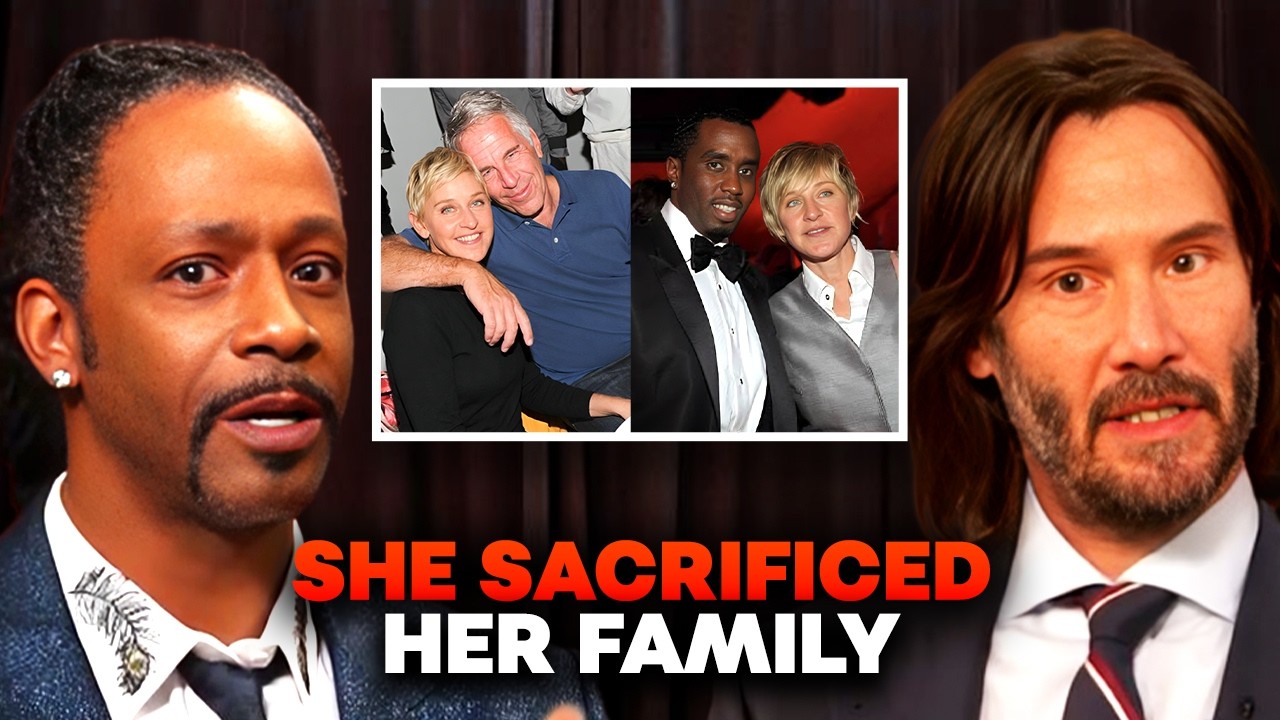
Katt Williams and the idea of the manufactured image
Katt Williams has spent years talking about how the entertainment industry creates polished public identities that often have little to do with reality. In that view, Hollywood does not simply promote people. It manufactures characters.
A celebrity is given a label. Kind. Relatable. Funny. Safe. That image is then reinforced through publicity, appearances, and carefully controlled moments. Anything that threatens the image is buried, denied, or managed until the brand feels stronger than the person behind it.
Seen through that lens, Ellen’s career starts to look less like a contradiction and more like a case study.
The kindness was not just a personality trait. It was a product.
Why Keanu Reeves becomes part of the comparison
Keanu Reeves sits at the opposite end of that contrast.
He does not sell kindness as a slogan. He does not build campaigns around it. He does not ask audiences to see him as a moral example.
And yet, stories about his generosity have followed him for years.
People talk about how he treats crew members, how he shares credit, how he behaves in ordinary public moments, how he moves through the world without needing attention for it. The stories tend to come from other people, not from him.
That difference matters.
Ellen’s kindness was public, repeated, branded, and monetized. Keanu’s reputation comes from small moments that were never designed to become part of a larger image campaign.
That contrast makes Ellen’s fall feel even sharper.
What collapsed was more than a show
When The Ellen DeGeneres Show ended after 19 seasons, it was not just the conclusion of a long-running series. It marked the collapse of a public identity that had once seemed unbreakable.
The ratings had fallen. The trust had eroded. The image no longer held.
Even attempts to reenter the spotlight were met with skepticism. The public had already seen too much, and the distance between the brand and the allegations had become part of how people understood her career.
What collapsed was not only a television empire. It was the belief that the version of Ellen sold to millions of viewers had been authentic.
The real lesson in the contrast
That is why the comparisons to Katt Williams and Keanu Reeves land so strongly.
One warns that Hollywood builds masks and sells them as truth. The other shows what it looks like when kindness is not a performance, not a slogan, and not a business strategy.
Ellen’s story now feels like a reminder that authenticity cannot be manufactured forever. A public image can be protected for years, sometimes decades. But once enough people begin telling the same darker story, the shine disappears.
And once that happens, no slogan is strong enough to save the brand that depended on it.
What Ellen’s downfall represents
Ellen’s rise was built on likability, resilience, timing, and a masterfully controlled public persona. Her fall came when too many people began saying that the person behind the persona was not who audiences thought she was.
Whether people see her as a hypocrite, a product of a broken industry, or both, the larger lesson remains the same.
A smile can be marketed. A reputation can be engineered. A catchphrase can become a fortune.
But eventually, people start asking whether any of it was real.