Why Tina Knowles’ Actions Are Adding to the Questions Around Jay-Z
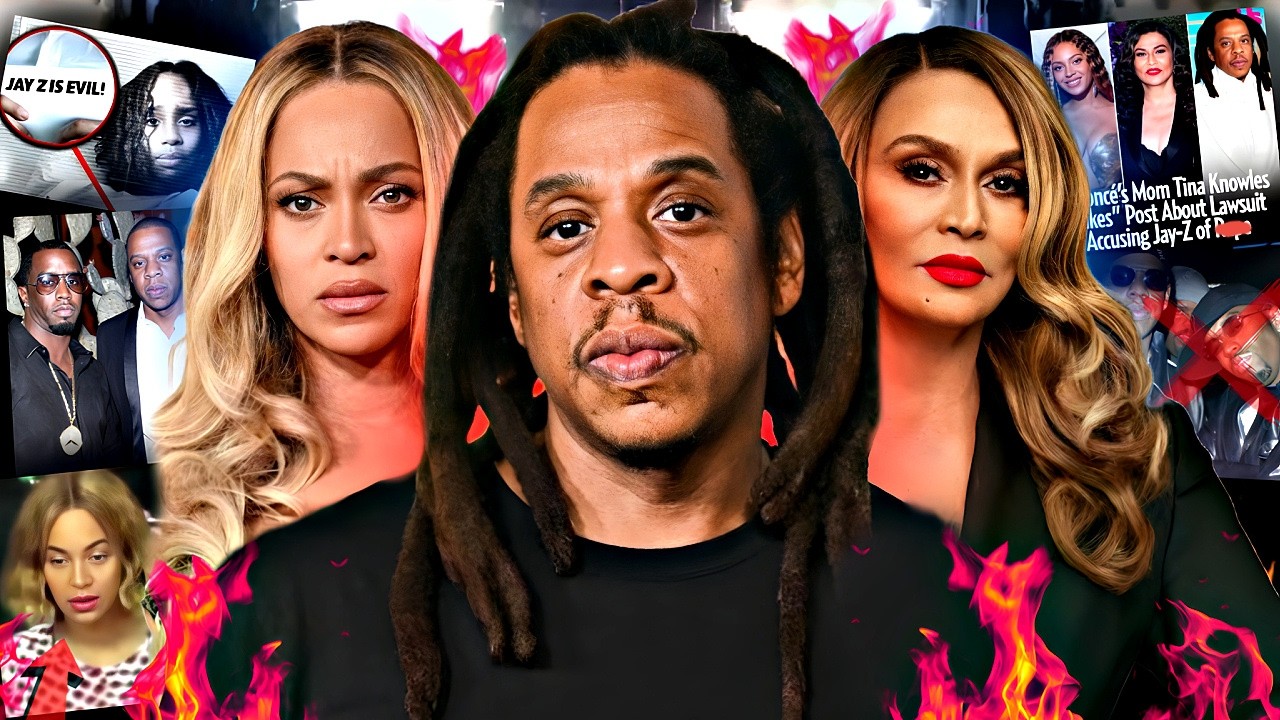
In celebrity culture, sometimes it is not a direct statement that gets people talking. Sometimes it is a like, an unfollow, or a moment that feels just a little too revealing to ignore. That is what has happened here, as Tina Knowles’ online activity has become part of a larger conversation about Jay-Z, his public image, and the growing scrutiny around his past associations and legal troubles.
What makes the situation so charged is not just what was said publicly, but the possibility that Tina’s actions may have reflected something deeper.
Jay-Z’s Effort to Reclaim the Narrative
At the center of the story is the idea that Jay-Z is trying to regain control of how the public sees him.
After being named in a civil lawsuit connected to allegations involving a 13-year-old girl, his reputation took a major hit. The lawsuit was later dropped two months after he was added, but the damage to his public image did not simply disappear. His connections to Diddy and the wider cloud of controversy surrounding that world only made things worse.
In a GQ interview, Jay-Z described that period as one of heartbreak and uncontrollable anger. He said the allegations were false and spoke about how deeply the experience affected him. He also made it clear that he had no intention of settling, saying he would rather fight than take responsibility for something he said he did not do.
The interview was framed as a defense of his name, his values, and his family. But for some people, it also raised new questions.
The Interview Moment That Stood Out
One part of Jay-Z’s comments drew especially strong attention.
While speaking about rules, morality, and the codes he said he learned from the street, he made a remark about doing bad things but still having lines that were never crossed. He emphasized that women and children were off-limits and described those boundaries as important to him.
For critics, that language felt jarring. Rather than simply denying the accusation, they focused on the phrasing and treated it as a revealing glimpse into the way he thinks about right and wrong. That moment quickly became part of the wider narrative that his words were not landing the way he may have intended.
Instead of closing the conversation, it added more fuel to it.
Then came the moment that intensified everything.
A post about the allegations against Jay-Z appeared on Instagram, and Tina Knowles’ account appeared to like it. That alone was enough to set off a wave of speculation. Out of everyone who might have interacted with that post, Beyoncé’s mother was one of the last people anyone expected to see connected to it.
Tina later denied liking the post and said her account had been hacked. She insisted that anything out of character should not be taken as her doing and defended her family strongly.
But not everyone believed that explanation. Critics argued that when celebrity accounts are hacked, the result is usually obvious spam, scams, or strange posts, not a single like on a news update. That is why the moment continued to draw so much attention.
To many people, it felt too specific to dismiss easily.
The Unfollow That Added More Suspicion
The questions did not stop with the like.
The story also points to Tina reportedly unfollowing Jay-Z on Instagram, which only added to the sense that something was off. In the eyes of critics, that made the explanation of a hack even harder to accept. If the like had been accidental or fake, why had there also been visible distance in other ways?
That is where the speculation really took off. People began asking what Tina and the rest of Beyoncé’s family may truly think of Jay-Z behind the scenes, and whether old tensions have never fully gone away.
The suggestion is not that Tina openly confirmed anything, but that her behavior may have hinted at private feelings she never intended to reveal publicly.
Old Questions About Family Tension Return
This moment has also reopened older conversations about Jay-Z’s relationship with Beyoncé’s family.
The mention of the 2014 elevator incident hangs in the background of the story, reinforcing the idea that there may have been long-standing issues inside the family that the public has only seen in fragments. Once Tina’s online activity became part of the discussion, it gave people a reason to revisit the possibility that trust has never been fully repaired.
From there, the story expands into broader claims about Jay-Z’s associations, including the repeated efforts by critics to connect him to other powerful and controversial figures.
The Weight of His Associations
A major part of the criticism in this account focuses on Jay-Z’s relationship to people like Diddy and Harvey Weinstein.
The argument is that even if some allegations remain unproven or were later dropped, the repeated appearance of Jay-Z’s name in stories involving deeply troubling accusations has created a pattern that people find difficult to ignore. The story points to claims tied to anonymous tips, civil filings, and old associations that continue to circulate in public discussion.
This is presented as part of the reason people remain skeptical of his attempts to move forward. In that view, the issue is not just one case or one lawsuit. It is the larger image of a man who keeps finding himself near scandal and then pushing back by framing himself as the victim of false narratives.
That skepticism is what makes Tina’s apparent actions feel so significant to those already questioning him.
Public Sympathy Versus Public Distrust
Jay-Z has also spoken about the impact these accusations had on his children, especially Blue Ivy, who was 12 at the time, along with his younger twins. He framed that part of the ordeal as especially painful, raising the question of how a family explains such accusations to children.
That appeal to family and emotional harm is clearly meant to humanize him. But the response described here suggests that not everyone is moved by it. Some people see those comments as sincere. Others view them as part of an effort to regain sympathy and redirect the conversation away from the allegations themselves.
That divide is central to the entire story. Jay-Z is trying to present himself as someone wrongly accused. His critics are arguing that he is carefully reshaping the public narrative while avoiding harder questions about his history and associations.
The Comeback Question
Another piece of the story focuses on Jay-Z’s return to the spotlight through concerts, interviews, and a broader public reemergence.
The planned Yankee Stadium shows are described as part celebration, part image reset. To some people, they are simply nostalgia events tied to the anniversaries of major albums. To others, they look like a reputational strategy designed to remind people of his legacy and move attention away from the darker claims surrounding him.
That is why his recent public appearances are being read so differently. Every move now seems open to interpretation. A concert is no longer just a concert. An interview is no longer just an interview. Everything gets folded into the question of whether he is trying to restore his image.
Why Tina’s Role Feels So Important
The reason Tina Knowles’ actions matter so much in this narrative is that they seem to come from inside the circle.
Critics can always speculate, and strangers online can always assume the worst. But when someone as close to the family as Tina appears to signal doubt, even indirectly, people pay attention in a different way. It feels more personal, more revealing, and harder to brush aside.
Whether that interpretation is fair or not, it has clearly become the emotional core of this story.
A Story Built on Public Clues and Private Questions
In the end, this is a story driven less by confirmed answers than by signs people believe they have spotted in plain sight.
Jay-Z is pushing back hard against allegations he says are false. Tina Knowles says her account was hacked and continues to defend her family. But the like, the unfollow, the past tensions, and the timing of it all have combined to create a version of events that many people find hard to ignore.
That is why the questions remain. Not because everything has been proven, but because in a world where every click and every silence gets analyzed, even the smallest public action can start to feel like a confession.