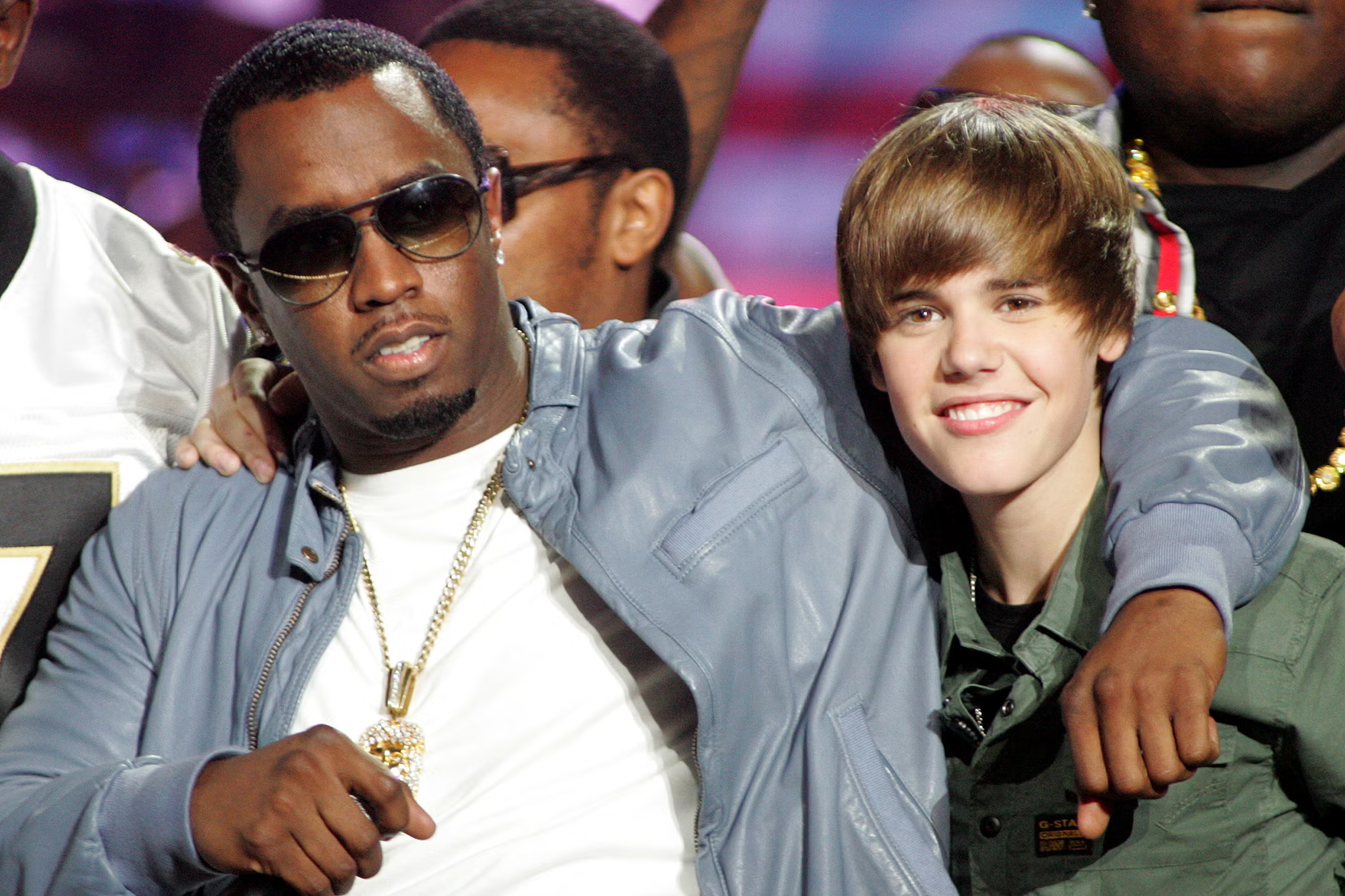
Behind the Spotlight: The Questions Surrounding Usher, Justin Bieber, and the Industry Machine

Some stories do not explode all at once. They build slowly, piece by piece, until people start looking back and seeing the same moments in a completely different light.
That is what is happening here. What once looked like mentorship, loyalty, and career-building now feels far more complicated. At the center of the conversation are Usher, Justin Bieber, Diddy, and the growing suspicion that what was presented publicly may have hidden something much darker behind the scenes.
The deeper people look, the harder it becomes to ignore the patterns.
A Calm Response That Raised More Questions
The story begins with Usher speaking carefully about Diddy, saying he has nothing negative to say about him. On the surface, it sounds like respect, loyalty, or maybe just an unwillingness to add fuel to an already intense public conversation.
But the tone is what makes people stop. Instead of sounding casual, it comes across as guarded. It feels less like simple appreciation and more like protection.
That is what shifts the mood. Because once that response is placed next to everything else being said about the industry, it starts to feel like part of a much bigger picture.
What It Means to Be Young in That World
Usher also speaks about how difficult it was being young in the industry, not knowing where to turn, and being surrounded by people who claimed to care but could quickly turn their backs.
That admission matters because it gives the story emotional weight. It suggests confusion, vulnerability, and an environment where trust was never simple. And once that is out in the open, it raises an obvious question: if he knew how manipulative and unstable that world could be, then what did he understand about the people and spaces he later brought others into?
That is where Justin Bieber enters the story.
The Shift From Mentorship to Suspicion
Justin Bieber’s rise was public. Usher helped bring him in, supported his career, and became one of the major names associated with his early success. That part has always been clear.
What people are now focusing on is what happened after that. The story argues that Usher did not just mentor Justin. He placed him in Diddy’s orbit at a young age, and that decision now looks far more troubling than it once did.
Old footage that may have seemed harmless at the time is now being viewed differently. What was once brushed off as industry bonding is being reexamined frame by frame, with people noticing changes in Justin’s energy and expression that they now interpret as discomfort.
That change in perspective is what drives the whole article. It is not just about what happened, but about how differently it all looks in hindsight.
Justin Bieber’s Struggles in a New Light
The story ties those early experiences to the way Justin later seemed to unravel. His addiction struggles, emotional instability, pull toward faith, early marriage, and attempts to step away from the spotlight are all framed as signs of someone trying to recover from something deeper than fame alone.
That is a major turning point in the piece. It suggests that the damage was not simply the result of celebrity pressure, but possibly the result of experiences he has never fully explained.
His later protectiveness toward younger artists is used to support that idea. When he speaks about wanting to shield someone like Billie Eilish, it is presented not as ordinary advice, but as the reaction of someone who understands from personal experience what can happen when a young artist enters the machine unprotected.
Katt Williams and the Industry Pattern
Katt Williams is brought in as the person who says the quiet part out loud. His role in the story is not just to stir the pot, but to frame the issue as systemic.
He talks about collecting information, understanding secrets, and rejecting offers that seemed attractive on the surface but came with hidden expectations. He describes turning down huge amounts of money because he believed there was something attached to those deals that he was not willing to accept.
That changes the focus from individual behavior to a broader system. The implication is that what happened was not random and not isolated. It was part of a structure in which mentorship, power, and access may have come with unspoken conditions.
Once that idea is introduced, every relationship in the story begins to look different.
The Repeating Pattern
One of the strongest ideas in the piece is repetition.
First there is a young Usher being sent into Diddy’s world. Then, years later, there is Justin Bieber entering that same circle. In both cases, the story points to later signs that the experience may have changed them in lasting ways.
That repetition is what makes the situation feel bigger than one rumor or one allegation. It suggests a cycle. It suggests that the same kind of access, influence, and silence may have been operating across generations.
And once people begin to see that pattern, they stop asking whether one moment looked strange and start asking how many people knew what was really happening.
Silence, Loyalty, and the Cost of Speaking
The article spends a lot of time in the uncomfortable space between loyalty and silence.
On one side, there is the argument that the industry runs on relationships and that people protect the figures who helped build their careers. On the other side is the much harsher question of whether silence becomes its own form of complicity when troubling patterns continue unchecked.
That is why Usher’s careful public comments matter so much in this story. It is not just that he has avoided saying anything explosive. It is that his restraint, in the middle of so much speculation, makes people wonder what he is choosing not to say.
And in an environment where every old clip and interview is now being reinterpreted, silence starts to feel less neutral.
Why People Keep Digging
What keeps this story alive is the feeling that the public is only seeing fragments.
There are old interviews where questions seem to hit a nerve. There are resurfaced clips that suddenly feel loaded. There are lawsuits, allegations, insider claims, and years of rumors that never fully disappeared. None of it provides a complete picture, but together it creates the sense that something larger has been buried beneath polished public narratives for a long time.
That is what makes the story so hard to shake. It is not offering neat answers. It is building pressure around unanswered questions.
The Story Beneath the Story
At its core, this is not just about Usher, Justin Bieber, or even Diddy. It is about a system built on access, influence, silence, and control.
The article argues that what the public once accepted as mentorship may have been something much more complicated, and that the people closest to it may have known far more than they ever admitted. If that is true, then the damage goes beyond any one artist. It becomes a story about how an entire culture protects itself.
That is why Katt Williams’ comments land so hard in this telling. He is not presented as someone making random noise. He is presented as someone pointing to a structure that many people benefited from and few were willing to challenge.
And that is what leaves the biggest mark. The possibility that behind the careers, the loyalty, and the polished industry language, there were truths people chose not to confront until it became impossible to look away.


