
In a competition built on reinvention, the boldest move isn’t always trying something new—it’s returning to something familiar and proving how much you’ve changed.
That’s exactly what Hannah Harper did on the latest American Idol live show, transforming a song that once introduced her to the judges into a performance that now defines her as a serious contender.
Revisiting the Past Without Repeating It
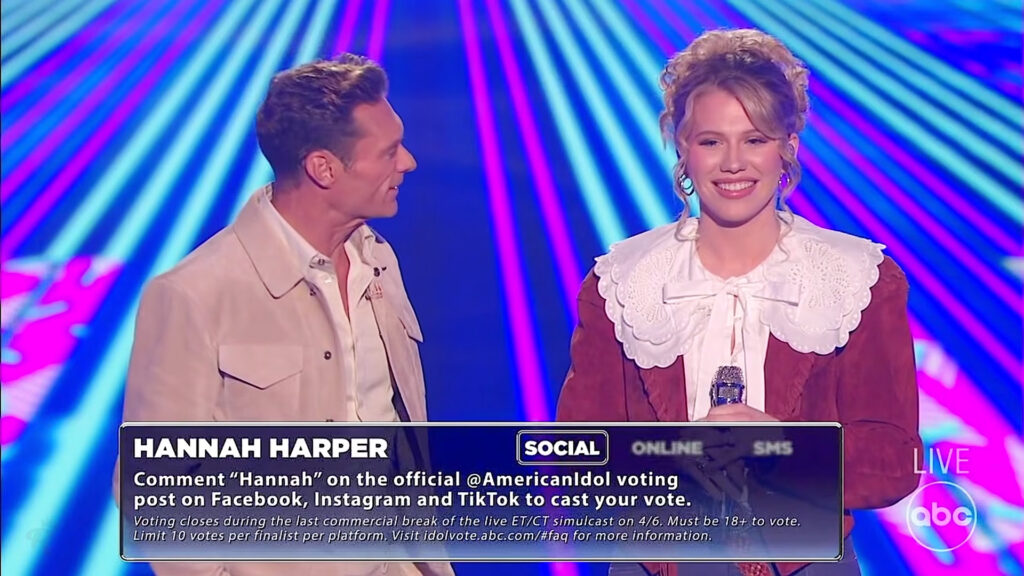
Reality TV singing competitions thrive on “full-circle” moments, but they often risk feeling predictable. Harper avoided that trap by treating her audition song not as a comfort zone, but as raw material.
Her original rendition of “Heads Carolina, Tails California” served as a clean, straightforward introduction—pleasant, controlled, and safe. This time, she flipped the script. The tempo was faster, the energy more assertive, and the performance carried a sense of ownership that simply wasn’t there before.
The difference wasn’t just musical. It was psychological.
Returning to the same song in a high-stakes live round sends a message: I’m not the same artist you met before.
The Art of Growth on a Public Stage
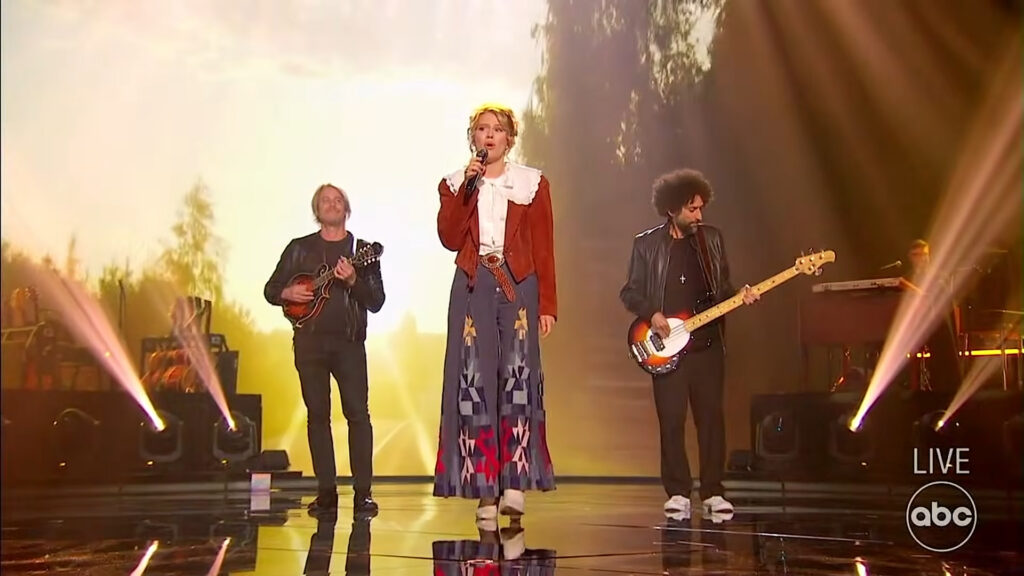
What made the performance compelling wasn’t just technical improvement—it was visible evolution. Harper’s vocals felt more dynamic, but more importantly, her presence told a different story.
Earlier in the season, she carried a hint of hesitation, like someone still measuring her place in the competition. On this stage, she moved with intention. She interacted with the moment instead of just delivering it.
That shift—from performing a song to inhabiting it—is often what separates strong contestants from potential winners.
Why Familiar Songs Are High-Risk, High-Reward
Choosing a song the audience already associates with you is a gamble. Viewers inevitably compare versions, and judges listen with sharper expectations. A weaker performance can feel like regression.
But when it works, it amplifies growth in a way no new song can.
Harper’s updated take didn’t erase the original—it reframed it. The contrast between the two performances created a narrative arc that audiences could feel in real time. It wasn’t just about singing better; it was about becoming more.
Judges See More Than Notes
The judges’ reactions reflected more than simple approval. Their feedback pointed to something deeper: a performer beginning to trust herself.
Carrie Underwood’s praise highlighted the synergy between voice and song choice, but her emphasis on Harper “coming out of her shell” speaks to a recurring theme this season. Talent alone isn’t enough—connection matters.
Luke Bryan’s response underscored how the new arrangement aligned with Harper’s strengths, while Lionel Richie’s comments reinforced the ultimate goal of any contestant: making a song feel personal, even when it’s well-known.
Together, their feedback painted a clear picture—Harper isn’t just improving, she’s becoming more distinct.
The Strategic Side of Performance Choices

This wasn’t just an artistic decision; it was a strategic one.
The Judges’ Song Contest adds another layer of pressure, forcing contestants to balance personal identity with external guidance. Harper’s choice to revisit a song suggested confidence—not just in her abilities, but in her trajectory.
It also demonstrated an understanding of storytelling within the competition. Every performance contributes to a larger narrative, and Harper used this moment to remind viewers where she started—and how far she’s come.
Momentum Matters in the Live Rounds
As the competition narrows and stakes rise, consistency becomes just as important as standout moments. Harper’s performance didn’t feel like a peak—it felt like part of an upward trend.
That’s critical.
Contestants who build momentum tend to resonate more deeply with audiences, not because of a single unforgettable performance, but because viewers can track their evolution week by week.
Harper is positioning herself as one of those contestants.
More Than a Performance—A Turning Point
In a season filled with strong voices, what sets contenders apart is clarity of identity. Hannah Harper’s latest performance suggests she’s beginning to define hers.
It wasn’t just a song. It was a statement about growth, confidence, and artistic direction.
And in a competition where every note counts, that kind of clarity might be what carries her all the way to the finale.