It wasn’t flawless. It wasn’t polished. And that’s exactly why everyone is still talking about it.
When Kyndal Inskeep stepped onto the “American Idol” stage for the high-pressure Judges’ Song Contest, the stakes had never felt higher. With the competition tightening and expectations soaring, every note mattered—and this time, something felt different.

At first, her performance of the Goo Goo Dolls’ “Iris” held steady. The emotion was there. The intention was clear. But beneath the surface, there were subtle cracks—small moments where things didn’t land quite the way she wanted. It wasn’t a collapse. It was something quieter. Something more human.
And viewers felt it.

As the song built, so did the tension. This wasn’t the effortless, commanding Kyndal fans had come to expect. This was a performer fighting to hold onto control in real time. A risk. A struggle. A moment unfolding without a safety net.
Then came the most unexpected part of all—not during the performance, but after it.
Kyndal didn’t pretend. She didn’t hide behind a smile or brush it off.
She told the truth.
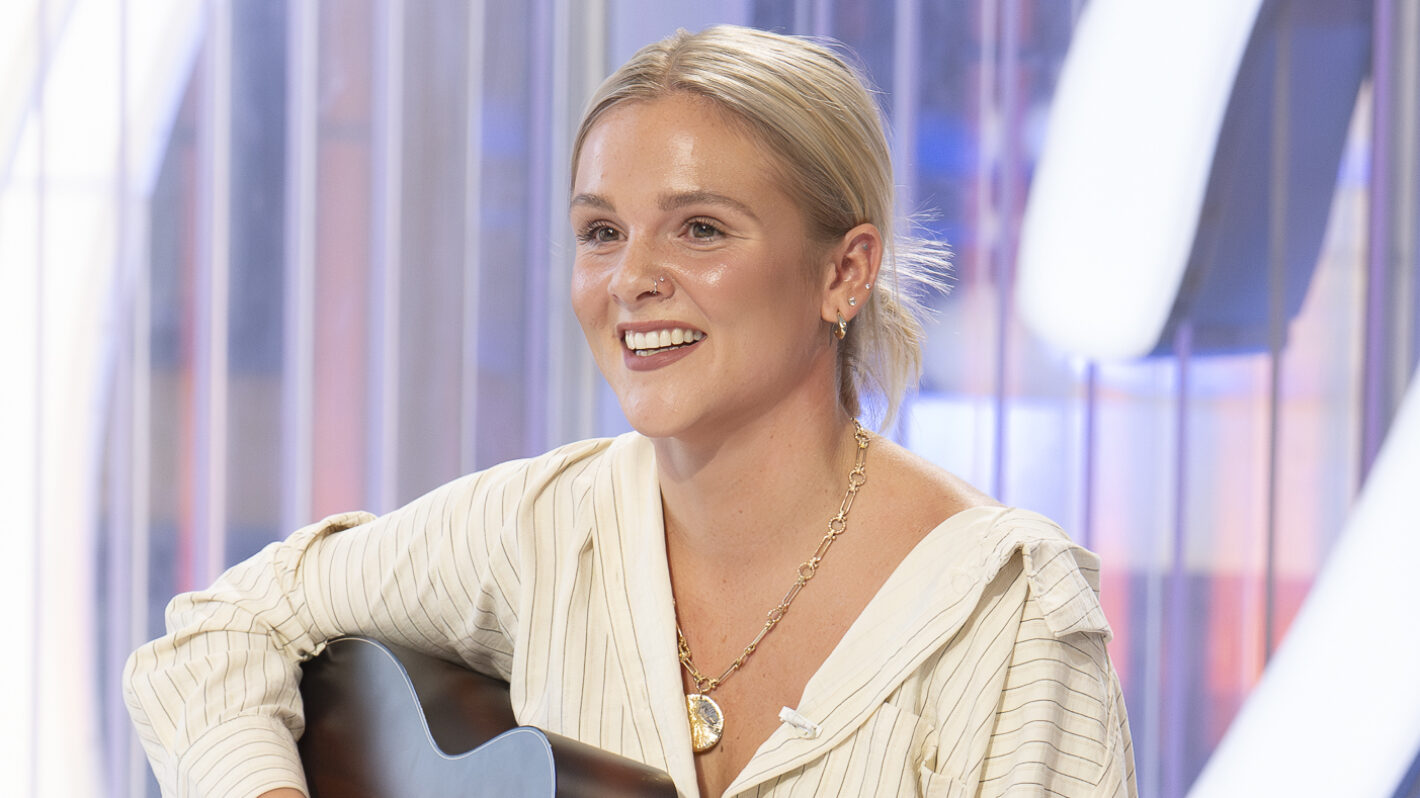
“Not my favorite performance I’ve ever done,” she admitted candidly after the show, breaking from the polished perfection audiences often see on stage. In that moment, she didn’t just critique herself—she revealed the reality of competing at this level.
The pressure, she explained, is relentless. Each week brings new expectations, new supporters, and a growing fear of letting people down. “There’s a lot of intensity,” she shared, acknowledging the emotional weight that comes with every live performance.
And this time, the challenge was even tougher.

The song wasn’t her choice. Like the rest of the contestants, Kyndal had to pick from a list provided by the judges—songs from an era she barely remembers. In fact, she even guessed wrong—twice—about which judge selected “Iris” for her.
“This was a judges’ pick,” she said. “It’s not like I know this song like the back of my hand.”
Add to that the reality of live television—no autotune, no safety net—and the difficulty becomes even clearer. What audiences hear is exactly what happens in that moment, for better or worse.
Still, despite her disappointment, Kyndal’s response wasn’t defeat—it was determination.

She spoke about the challenge of blocking out the noise, of trying to recreate the same comfort she feels singing at home or on social media while standing under blinding lights in front of millions. “It’s really hard,” she admitted.
But she didn’t crumble.
Instead, she reset.
“I’m ready to bring it next week,” she said with renewed focus, making it clear that one imperfect performance won’t define her journey.
And maybe that’s why this moment is resonating so deeply.
Because in a competition built on perfection, Kyndal Inskeep gave something far more powerful: honesty.
Even Ryan Seacrest pointed out how calm and comfortable she appears on stage—a perception Kyndal herself couldn’t help but laugh at. “I seem comfortable? … Yeah, we’re going to go with that,” she joked, offering a glimpse into the nerves she keeps hidden.
Now, fans aren’t just replaying her performance—they’re replaying her reaction to it.
Not because it was perfect.
But because it was real.
And in a season where every vote counts, that kind of authenticity might just be her greatest strength yet.