The Girl Who Vanished From the Story
It began as something many people saw, reacted to, and then moved past.
A powerful man in the music industry appeared on Instagram Live and announced that he had adopted a little girl. The moment was treated like a heartwarming surprise. People watched, smiled, and accepted it at face value. But over time, that moment started to look very different.
What first seemed unusual now looks, in this telling, like the beginning of a much darker set of questions.
A Public Moment That Never Fully Made Sense
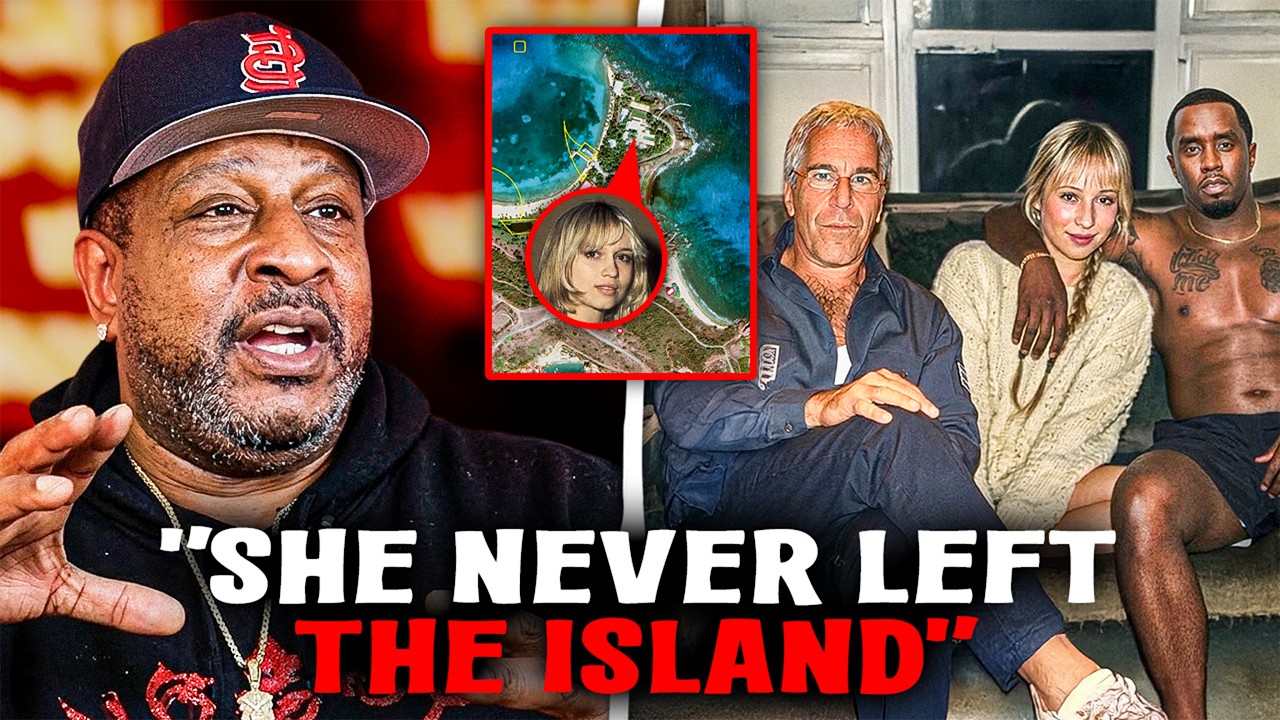
The child introduced to the world was Ava Baron Combs. She appeared in videos, photos, and family moments, often alongside Diddy’s daughters. People online pointed to older images showing that she had been around the family for years, suggesting she was not a stranger suddenly entering the picture.
Still, the public story around her never seemed clear.
The idea that she had been adopted was presented casually, almost playfully, during a live stream. There was no formal legal process shown, no official documentation, and no clear explanation of how such an arrangement had actually happened. What viewers got instead was a performance of family, framed as something sweet and spontaneous.
That alone raised questions. But the deeper issue was not just whether the adoption was legally real. It was what kind of environment this child had been brought into.
The Story Ava Told
In one video, Ava is asked to explain how she became part of the family. The story, as told there, is strange and unsettling. She describes being on the street and being brought in by Diddy, who then decided to make her part of his household.
Whether the story was meant as a joke or not, it created a disturbing image. A child is presented as someone simply taken in by a powerful adult, without any of the safeguards that are supposed to protect children. No agency. No court. No oversight. Just trust.
According to the account in the video, Ava’s biological parents were close to Kim Porter and moved within Diddy’s inner circle. That meant Ava was not coming from nowhere. She was a child with connections to the people closest to him, brought into a world that was already built on loyalty, access, and silence.
The Questions Around the Household
As more people began revisiting the footage, attention shifted from the announcement itself to the way Diddy behaved around the children in those videos.
A sleepover clip in particular drew scrutiny. Viewers began asking why a grown man was acting the way he was in that setting, why his demeanor seemed off, and why the dynamic felt uncomfortable rather than paternal. The concern was not based on one single moment, but on the overall tone people believed they were seeing.
That discomfort only deepened once his former bodyguard, Gene Deal, entered the conversation.
Deal does not frame what he saw as chaos or random bad judgment. He describes a pattern. In his view, Diddy did not simply influence the children around him. He brainwashed them. He shaped their reality so completely that they no longer had a clear sense of what normal looked like.
That idea becomes central to everything that follows.
Then Ava Disappeared
The most haunting part of the story is not how Ava entered the public eye. It is how she left it.
After the federal raids, after the indictment, and after law enforcement entered Diddy’s homes, Ava reportedly vanished from public view. Her social media went quiet. Her name stopped appearing. There were no public statements from her family and no explanation from Diddy’s camp.
She was simply gone.
For people already suspicious of what they had seen, that silence became impossible to ignore. A girl who had once been visible in family photos, livestreams, and public moments suddenly seemed to disappear at the exact moment the broader world began looking more closely at what was happening behind closed doors.
A Child Without Clear Protection
One of the most troubling themes in this account is Ava’s uncertain status within the household.
If there was no legal adoption, then what was she? If she was treated like a daughter, spending time inside the home and moving through private family spaces, what protections existed for her? And if she saw or heard things that mattered, what would it mean for her now?
Legal commentators in the transcript suggest that someone in Ava’s position could potentially matter a great deal if the case ever reached full trial. A child who spent time in that environment might have observed things others did not. She could, in theory, become a witness. But first, she would have to be found, protected, and willing to speak.
That possibility turns her disappearance into something bigger than an unanswered personal question. It makes it a potentially critical gap in a much larger case.
Theories, Patterns, and Fear
The transcript moves beyond Ava herself and into a much broader picture of exploitation, control, and manipulation. It argues that Diddy’s world was not random or impulsive, but structured. According to that view, people were drawn in through access, dependency, compromised situations, and the threat of exposure.
Within that framework, children and young people are described not as protected individuals, but as vulnerable targets inside a system built to control them.
The account also connects Ava’s disappearance to online speculation about other missing-person cases, though it makes clear there has been no official confirmation linking them. Even so, the speculation persists because, in this version of events, people believe the pattern matters more than any single fact in isolation.
The argument is that powerful men do not just lose track of children in their orbit. If someone disappears, there is a reason.
The Family Dynamic at the Center
Gene Deal’s comments go even further. He describes Diddy’s behavior toward the children around him as deeply manipulative and rooted in a larger pattern of control. In his view, this was not limited to one child or one relationship. He says the same dynamic affected multiple children in the family and shaped the way they understood themselves and each other.
He suggests that what looked like family closeness was often something more troubling, with blurred boundaries and an insistence on possession rather than care.
The transcript also ties this pattern back to Diddy’s own upbringing. It paints a picture of a home where the normal boundaries that are supposed to protect children were never firmly in place. According to this telling, the environment that formed him later became the model he imposed on others.
That does not make the situation simpler. It makes it more tragic.
A Silence That Feels Loud
What lingers most is not only the accusation, but the quiet around it.
The children with famous last names remain visible. They appear in courtrooms, in headlines, and in the public record. But the girl introduced in a livestream, the one without clear legal status in the family, seems to have slipped out of view entirely.
That absence is what gives the story its force.
If so much was visible in plain sight—on videos, at parties, in family clips—then how many people saw what was happening and said nothing? How many looked at the same moments and chose not to ask what kind of child was being placed in that world?
And if Ava is ever found and chooses to speak, what would she say about the home she entered, the people around her, and the moment she disappeared from public view?
Those are the questions this story leaves behind. And in this telling, they are the only ones that really matter.