
The competition just tightened—and with it, the margin for error all but disappeared.
On the latest American Idol episode, what began as a night of nostalgia quickly turned into one of the season’s most decisive eliminations. The Top 12 took the stage for the high-stakes Judges’ Song Contest, but by the end of the night, only 11 remained.
And the way it unfolded said as much about strategy as it did about talent.
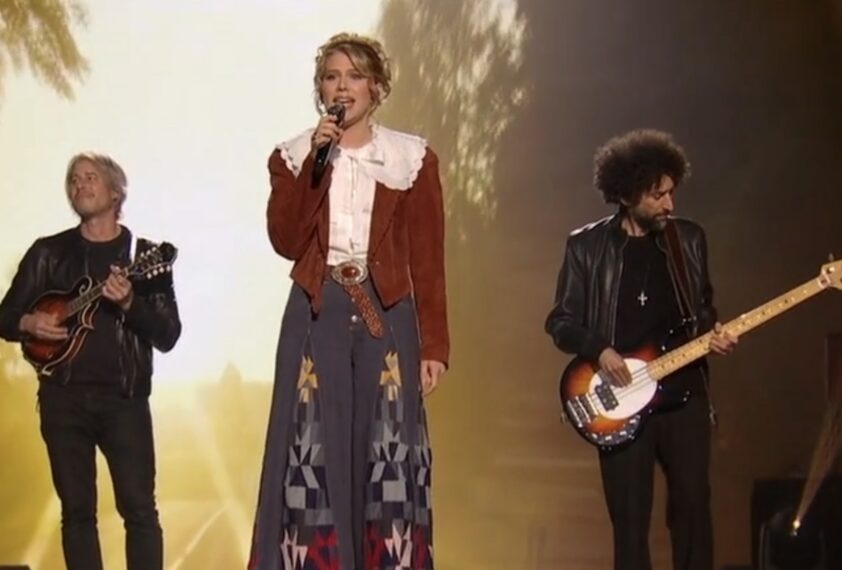
A Night Built on Risk—and Interpretation
This round wasn’t just about singing well. It was about navigating someone else’s vision.
Each contestant was handed a curated selection of songs chosen by judges Carrie Underwood, Luke Bryan, and Lionel Richie—tracks rooted in the 1990s, a decade rich with emotional ballads and genre-defining hits. But there was a twist: contestants didn’t know which judge picked which song.
That uncertainty mattered.
Choosing a song meant trusting instinct over strategy, and interpreting not just the music, but the intention behind it. The strongest performances of the night weren’t necessarily the most technically perfect—they were the ones that felt claimed.

The Elimination That Narrowed the Field
As the results rolled in, the competition delivered a familiar but still jarring reality: not everyone can move forward, no matter how strong the night feels overall.
Rae and Jesse Findling landed in the bottom two, placing immediate pressure on both contestants. With Lionel Richie earning the power to save one artist—thanks to his song selections being most frequently chosen—the decision added another layer of drama.
In the end, Findling’s journey came to a close.
It wasn’t just an elimination. It was a reminder of how thin the line has become between advancing and going home.
The Top 11: A Lineup Taking Shape
What remains now is a group that feels increasingly defined—not just by vocal ability, but by identity.
Hannah Harper continues to build momentum, bringing both familiarity and reinvention to her performances. Jordan McCullough and Daniel Stallworth offer distinct vocal textures that stand out in a crowded field. Contestants like Kyndal and Brooks lean into emotional storytelling, while performers such as Philmon Lee and Keyla Richardson bring edge and intensity that diversify the lineup.
There’s no longer a “filler” contestant at this stage. Each artist represents a lane, a style, and a potential audience.
And that makes every vote more competitive.
Why This Round Matters More Than It Seems
At first glance, moving from Top 12 to Top 11 might not feel like a dramatic shift.
But structurally, this is where the competition changes.
The safety net is shrinking. The judges’ influence is starting to recede. And audience voting begins to carry more weight with each passing week. The artists who survive now aren’t just performing well—they’re connecting consistently.
That’s a different skill entirely.
What’s Coming Next: A Test of Legacy and Range
Next week’s theme raises the bar even higher.
The Top 11 will take on songs from Rock & Roll Hall of Fame inductees—a catalog filled with iconic tracks that come with built-in expectations. These are songs audiences already know, often deeply, which makes reinterpretation both an opportunity and a risk.
Sing it too safely, and it fades into the background.
Change it too much, and it risks losing its essence.
Finding that balance is where contenders separate themselves from the pack.
Adding to the anticipation, the official Rock & Roll Hall of Fame Class of 2026 will also be revealed during the broadcast, tying the performances to a broader celebration of music history.
Momentum vs. Survival
At this stage, the competition splits into two groups: those building momentum and those fighting to stay afloat.
Momentum creates narrative. It gives audiences a reason to invest week after week. Contestants like Harper, who are showing clear progression, benefit from that arc.
Survival, on the other hand, is reactive. It’s about avoiding missteps, hoping to outlast others rather than outshine them.
The challenge now is clear: shift from surviving to defining.
The Stakes Are Only Getting Higher
With a live vote determining who advances to the Top 9, the next episode won’t just test vocal ability—it will test relevance, adaptability, and emotional connection in real time.
There’s less room to recover.
Less time to experiment.
And far more pressure to deliver something that feels both familiar and unforgettable.
Because at this point in American Idol, talent gets you noticed.
But identity is what keeps you there.