
Every season of American Idol produces a breakout star.
This season, it may have produced something else entirely—a breakout controversy.
Carrie Underwood, once celebrated as one of the show’s most beloved success stories, now finds herself at the center of a growing debate. Some viewers are calling her the “villain” of Season 24. Others are defending her as the only judge willing to say what needs to be said.
But beneath the headlines and fan reactions, something more interesting is happening.
This isn’t just about Carrie Underwood.
It’s about what audiences expect from American Idol in 2026.

How Carrie Underwood Became the Most Polarizing Judge on the Panel
Underwood didn’t dramatically change overnight—but her presence this season feels sharper, more defined.
Her feedback is more direct. Her critiques are less softened. And unlike earlier rounds, she’s no longer balancing honesty with reassurance in the same way.
That shift has created friction.
Moments where she delivered blunt feedback—especially when contrasted with the more supportive tone of Lionel Richie and Luke Bryan—have stood out. Add in audience boos and viral clips, and a narrative formed quickly:
Carrie Underwood as the “tough” judge who goes too far.
But that label oversimplifies what’s actually happening.
The Return of Real Critique—And Why It Feels Uncomfortable
For years, American Idol has leaned toward encouragement. Judges often prioritize confidence-building over criticism, especially in early and mid-rounds.
Underwood’s approach disrupts that pattern.
She’s offering feedback that feels closer to industry reality—where performances are judged quickly, and not always gently.
The result?
Some viewers see it as refreshing honesty.
Others see it as unnecessary harshness.
The divide isn’t really about tone.
It’s about expectation.
Her Response: Not Backing Down—Leaning In
What makes this situation more compelling is how Underwood is handling it.
She’s not softening her approach. If anything, she appears to be doubling down.
Reports suggest she views the criticism—and even the audience boos—as part of the process. Not a signal to retreat, but a sign that she’s making an impact.
That mindset reframes the narrative.
Instead of being pushed into the “villain” role, she’s choosing to occupy it—on her own terms.
And in reality television, that’s a powerful position.

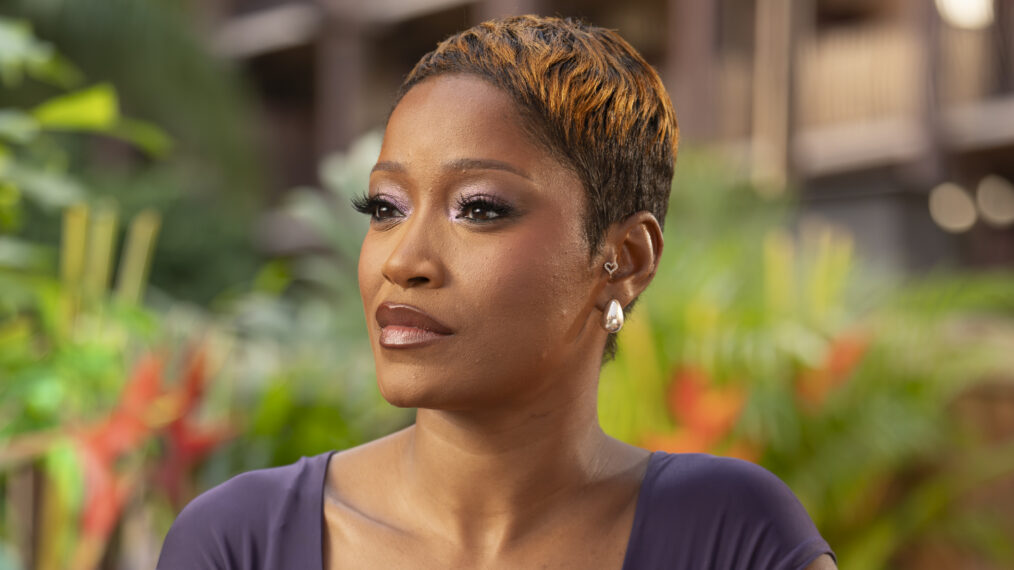
Enter Keke Palmer—And a Completely Different Vision of the Show
At the same time, Keke Palmer’s guest appearance introduced a contrasting energy that fans immediately embraced.
She’s dynamic, expressive, and highly engaging. Her feedback feels uplifting, her reactions feel spontaneous, and her presence adds a sense of fun to the panel.
Naturally, comparisons followed.
Some fans began calling for her to replace Underwood entirely, praising her as a better fit for the show’s tone.
But this comparison reveals something deeper:
Viewers aren’t just reacting to two personalities.
They’re choosing between two different versions of American Idol.
Two Styles, Two Philosophies
The debate essentially comes down to this:
Carrie Underwood’s style:
- Direct, sometimes blunt
- Focused on growth and realism
- Willing to challenge contestants publicly
Keke Palmer’s style:
- Energetic and encouraging
- Focused on connection and confidence
- Designed to uplift both contestants and audience
Neither approach is inherently right or wrong.
But they create very different experiences—for both contestants and viewers.

Why the Show May Not Change Anything
Despite the online chatter, a major shake-up in the judging panel is unlikely—at least for now.
Why?
Because controversy works.
Debate keeps the show in conversation. It drives engagement across social media. It makes viewers tune in—not just for performances, but for reactions, disagreements, and moments of tension.
In that sense, Underwood’s role isn’t a liability.
It’s part of the show’s current momentum.
The Real Question: What Do Viewers Want From a Judge?
This moment forces a bigger question:
Should American Idol be a supportive platform—or a realistic one?
Should judges prioritize encouragement—or honesty?
The answer may not be one or the other.
In fact, the most compelling version of the show might be one that balances both—where warmth and critique coexist, rather than compete.
More Than a “Villain” Storyline
Labeling Carrie Underwood as the “villain” is an easy narrative.
But it misses the bigger picture.
She’s not just being controversial.
She’s redefining what her role on the panel looks like—and, in doing so, forcing the show (and its audience) to reconsider what they expect from it.
And that’s why this conversation isn’t fading.
Because it’s not just about one judge.
It’s about the identity of American Idol itself—and where it’s headed next.