
Hollywood, Power, and the Stories We Tell Ourselves
Every few years, a narrative surfaces that tries to connect some of the biggest names in entertainment into a single hidden storyline—one involving power, control, and alleged industry-wide conspiracies. The latest version links Dave Chappelle, Jim Carrey, and Michael Jackson to claims about a so-called “industry monster,” with Oprah Winfrey positioned at the center.
It’s a compelling story. It’s also one that blends fragments of truth with speculation, reinterpretation, and, in some cases, unsupported conclusions. To understand why this narrative is gaining traction, we need to separate what’s واقعی, what’s interpretive, and what’s purely conjecture.
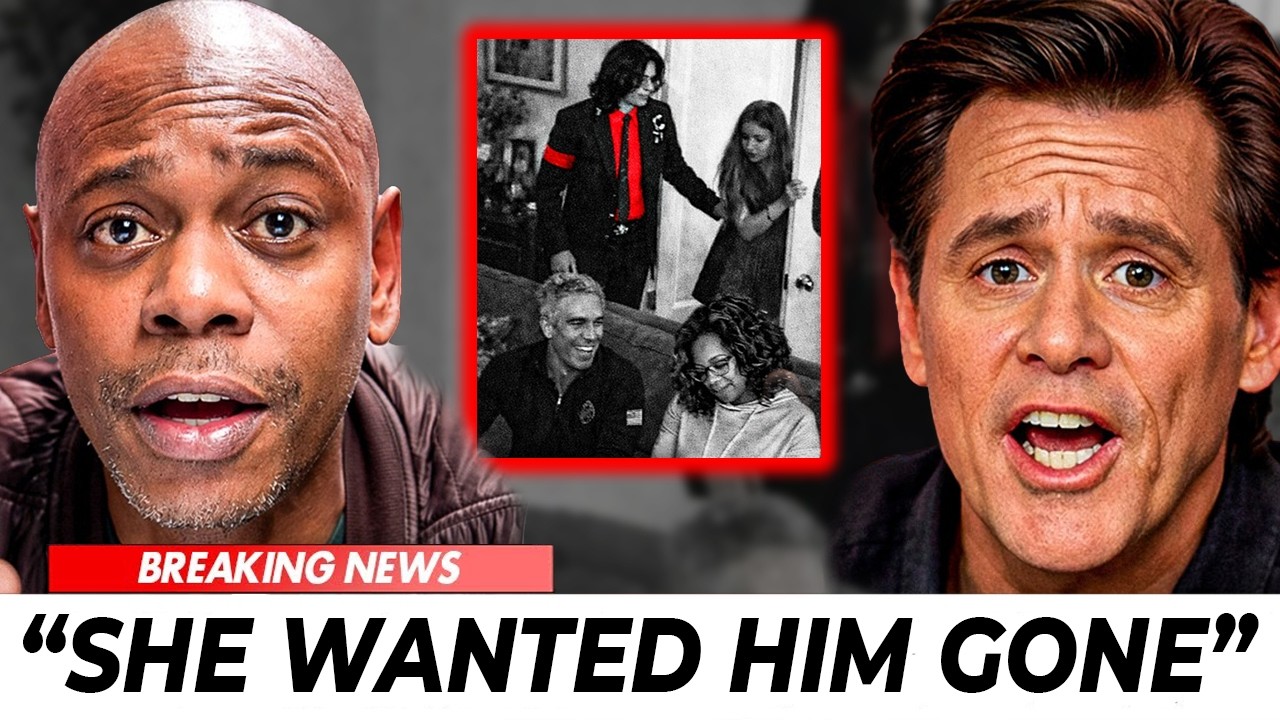
Stories about powerful industries hiding dark truths tend to resonate for a reason. Hollywood is, by nature, opaque. Decisions happen behind closed doors. Careers rise and fall quickly. And when something doesn’t make sense publicly, people look for deeper explanations.
Add real-world scandals—like those tied to Harvey Weinstein or Jeffrey Epstein—and the environment becomes fertile ground for broader theories. If wrongdoing existed in some corners, people begin to wonder how far it extends.
But there’s a critical difference between acknowledging systemic issues and constructing a single, coordinated “master plan” behind unrelated events.
Dave Chappelle: Walking Away vs. Being Silenced
Dave Chappelle did, in fact, walk away from a massively lucrative deal at the height of his show’s success. At the time, media coverage often framed his departure as erratic or puzzling.
Years later, Chappelle explained his decision differently: he felt uncomfortable with the direction of his work and the pressures surrounding it.
That’s an important conversation about creative control and industry expectations. But there is no verified evidence that his departure was part of a coordinated attempt to silence him or label him “crazy” as a strategic takedown.
His experience reflects tension with the industry—not proof of an organized system targeting “dangerous” voices.
Michael Jackson and the Sony Dispute
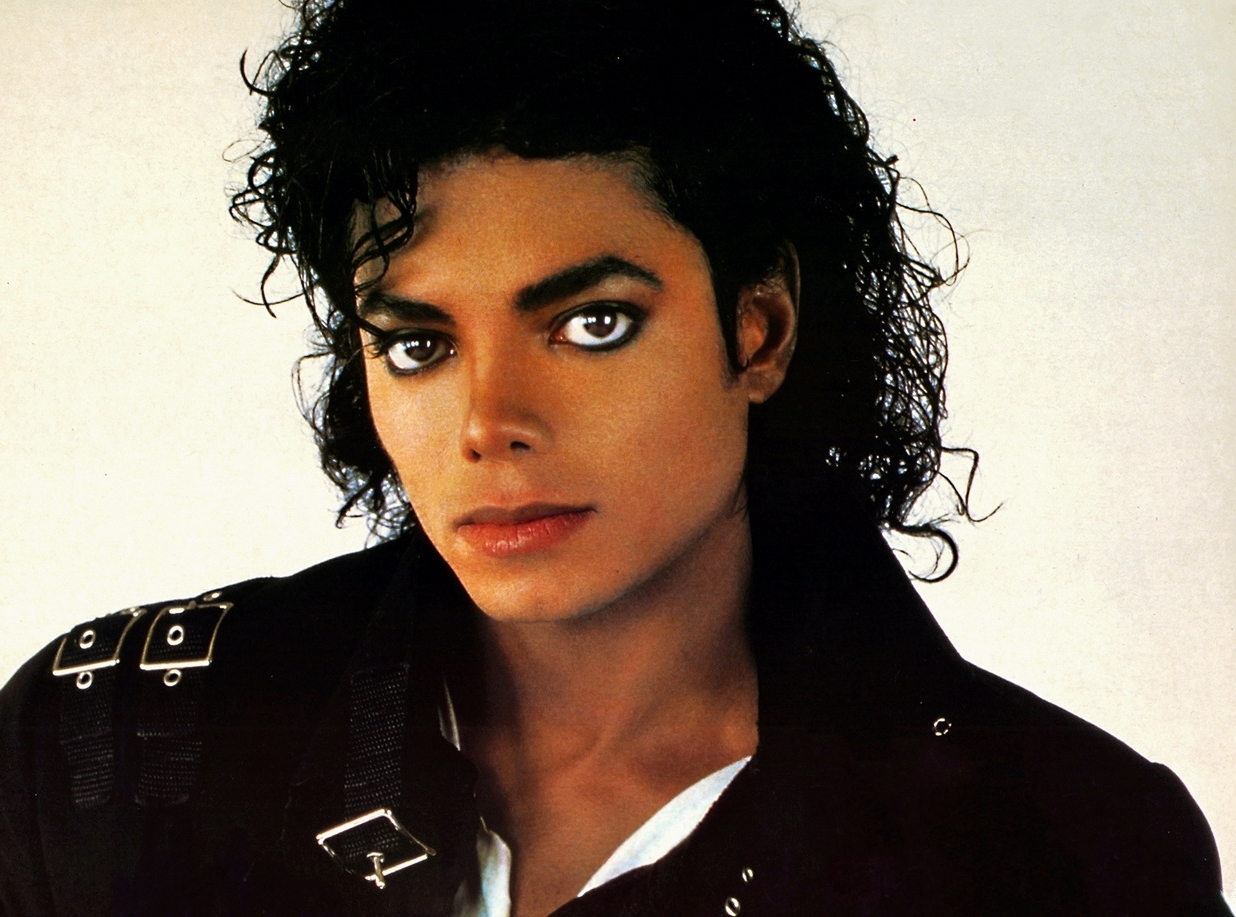
Michael Jackson publicly criticized Sony and executive Tommy Mottola in the early 2000s. That conflict is well documented and rooted in business disagreements over music rights and promotion.
However, the claim that subsequent allegations against Jackson were manufactured as retaliation remains unproven. Investigations, legal proceedings, and media coverage of those allegations were complex, controversial, and heavily scrutinized—but not conclusively tied to a corporate conspiracy.
It’s a leap to move from “he had powerful disputes” to “he was systematically destroyed by an industry machine.”
Oprah Winfrey: Influence vs. Intent
Oprah Winfrey has interviewed countless high-profile figures, including Michael Jackson, and later hosted discussions around the documentary Leaving Neverland.
Criticism of her editorial choices is fair—media figures with that level of influence should be examined critically. But framing her as part of a coordinated effort to target Jackson relies on interpretation, not documented evidence.
Similarly, referencing unrelated controversies—such as issues tied to her leadership academy—does not establish a direct connection to Jackson or a broader conspiracy.
Jim Carrey’s Critique of Hollywood
Jim Carrey has been outspoken in recent years about what he sees as superficiality and conformity in Hollywood culture.
His comments often focus on:
-
The performative nature of celebrity
-
The pressure to align with industry norms
-
The lack of authenticity in public-facing spaces
These critiques resonate because they reflect real frustrations. But they are philosophical observations—not confirmations of a hidden network targeting specific individuals.
One of the biggest issues with narratives like this is how they link separate events into a single storyline:
-
A comedian leaves a show
-
A pop star disputes a record label
-
A talk show host conducts interviews
-
An actor criticizes Hollywood culture
Individually, each event is real and meaningful. But combining them into a coordinated theory requires assumptions that aren’t backed by verifiable evidence.
This is known as pattern stitching—connecting dots that feel related but don’t share a proven causal link.
The “Wild Card” Idea: Compelling but Unproven
The concept of “wild cards”—artists who are too powerful to control—is emotionally appealing. It frames celebrities as both influential and vulnerable, which makes for a dramatic narrative.
But in reality, the entertainment industry is less like a single “monster” and more like a fragmented ecosystem:
-
Competing corporations
-
Independent media outlets
-
Legal systems and public scrutiny
-
Millions of audience voices
Power exists, but it’s distributed—not centralized in a way that supports a unified, secret strategy.
Why These Narratives Keep Spreading
There are a few reasons stories like this gain momentum:
1. Real Scandals Create Distrust
When genuine abuse of power is exposed, people become more open to broader theories.
2. Celebrity Mystique
Public figures live highly curated lives, leaving gaps that speculation eagerly fills.
Bold, controversial claims travel faster than nuanced explanations.
4. Emotional Simplicity
It’s easier to believe in a single villain (“the industry”) than to accept complex, messy realities.
A More Grounded Perspective
None of this means the entertainment industry is free of problems. Far from it. Issues like exploitation, inequality, and power imbalances are well documented.
But addressing those issues requires clarity—not conflation.
-
Criticism should be evidence-based
-
Allegations should be verified
-
Individuals should not be linked without proof
Otherwise, the conversation shifts from accountability to speculation—and that ultimately weakens legitimate concerns.
Final Thought
The idea that Dave Chappelle and Jim Carrey are exposing what Michael Jackson “knew” about Oprah Winfrey is a powerful narrative—but it’s not a substantiated one.
What is real, however, is the ongoing tension between fame and control, visibility and vulnerability, truth and storytelling.
And in that space—where facts, feelings, and speculation collide—the most important skill isn’t choosing a side.
It’s knowing when to question the story itself.