By the time contestants reach this stage of American Idol, talent is no longer the question. Growth is. And for Hannah Harper, growth has come in the form of letting go—of habits, of safety, and most notably, of the guitar that once defined her presence.
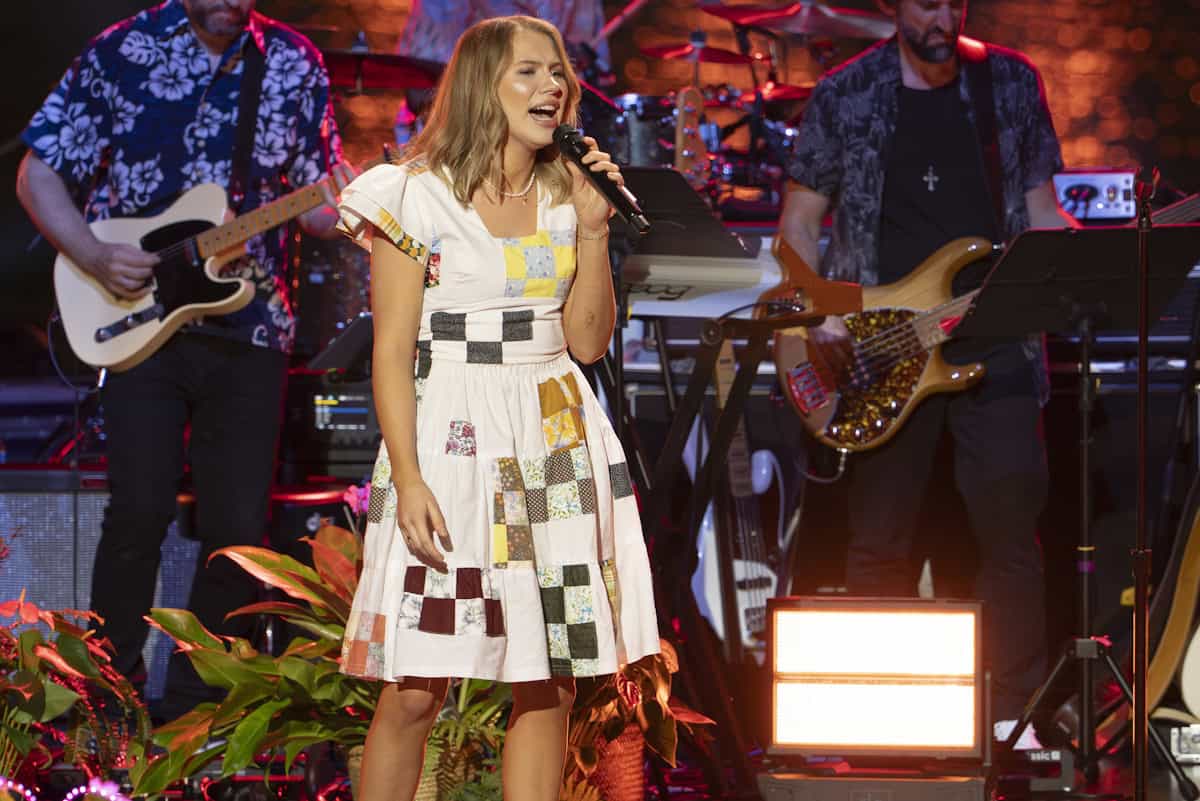
During the latest round in Hawaii, she stepped into that challenge once again. No instrument. No shield. Just her voice, her instincts, and a willingness to evolve in real time.
Choosing Discomfort Over Familiarity
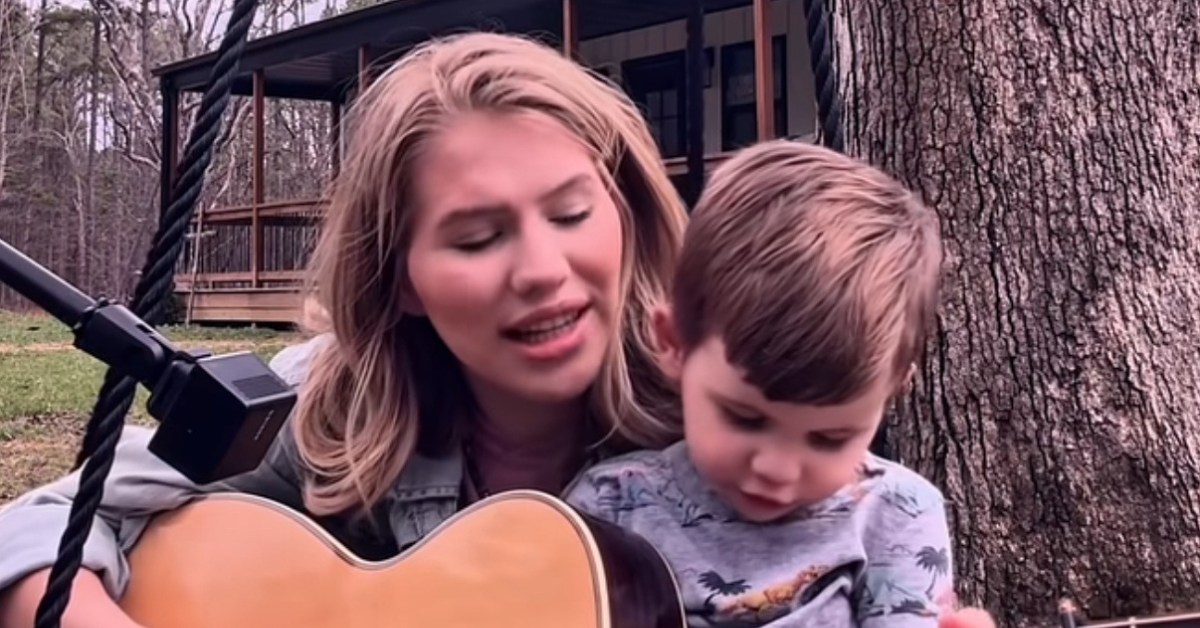
Harper’s musical roots run deep in bluegrass, a genre that values precision and tradition as much as storytelling. It’s a world where performers often remain grounded—literally and stylistically—anchored by their instruments and a steady, understated delivery.
Breaking away from that isn’t easy. It requires not just technical adjustment, but a shift in identity.
After being encouraged to open up more physically on stage, Harper made the conscious decision to continue performing without her guitar. It wasn’t a one-off experiment—it was a commitment to change. And it came with real nerves.
She acknowledged the discomfort openly, describing the challenge of stepping outside a style that had shaped her entire approach to performing. But that vulnerability became part of the performance itself.

A Song That Carries Weight
Her choice of “Ain’t No Grave,” associated with Bethel Music and Molly Skaggs and famously recorded by Johnny Cash, brought a different kind of intensity to the stage.
It’s not a song you can glide through. It demands conviction, a sense of purpose that builds from quiet resolve into something almost defiant. Harper leaned into that arc, allowing the performance to unfold gradually rather than forcing it from the start.
At first, there was restraint. Then momentum. And eventually, a full-bodied release that revealed a new dimension to her voice—one edged with grit, but still grounded in clarity.
Finding Strength in the Crowd
What made the moment resonate even more was the emotional backdrop surrounding it. Harper’s family—her husband and three young sons—were present, offering a kind of support that can’t be rehearsed.
That presence became part of her process. In earlier moments, she admitted that looking at them might overwhelm her emotionally. But in practice, their presence seemed to steady her.
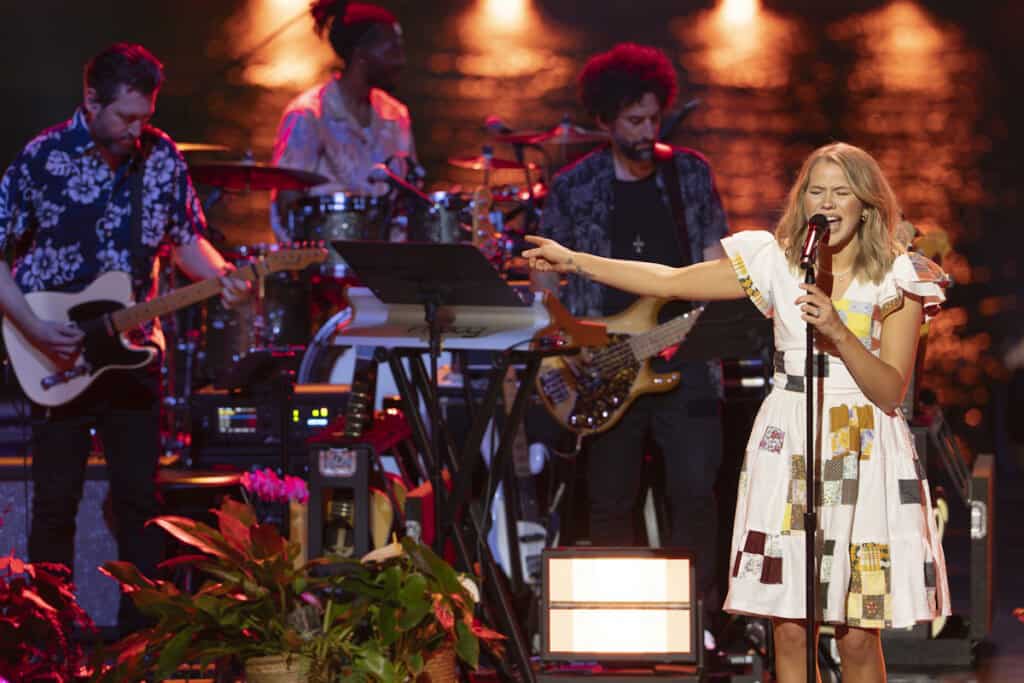
As the performance built, so did the energy around her. The audience clapped in rhythm, feeding the tempo, while the judges visibly leaned in. By the time the song reached its peak, the atmosphere had shifted entirely—less like a competition, more like a shared experience.
A Performance That Opened the Room
The response was immediate. Carrie Underwood noted the emotional impact of Harper’s voice, describing a performance that lingered from start to finish. Lionel Richie focused on the crowd’s reaction, recognizing the rare moment when an audience becomes fully engaged, not just attentive.
It wasn’t just about hitting notes. It was about creating movement—within the room, and within herself.
More Than a Performance
What Harper achieved that night wasn’t simply a successful rendition of a powerful song. It was a visible step forward in her evolution as an artist.
She didn’t abandon her roots; she expanded them.
And that distinction matters. Because the artists who endure on American Idol are the ones who learn how to carry where they came from into where they’re going—without letting it limit them.
Hannah Harper is still in that process. Still adjusting, still discovering. But performances like this suggest something important: she’s no longer just stepping outside her comfort zone.
She’s starting to outgrow it.