Reality singing competitions often promise transformation, but every so often, a performance actually delivers it. That’s exactly what happened when Hannah Harper stepped onto the American Idol stage in Hawaii and revealed a version of herself audiences hadn’t fully seen before—unfiltered, commanding, and deeply human.

From Comfort Zone to Center Stage
Harper’s artistic roots are grounded in acoustic storytelling—guitar in hand, voice steady, presence understated. But this round demanded something different. Letting go of her instrument wasn’t just a stylistic shift; it was a psychological leap.
Guided by mentors Brad Paisley and Keke Palmer, Harper confronted a challenge many musicians quietly wrestle with: how to connect physically with an audience when your instinct is to retreat into the music.
Palmer’s advice cut through the noise—don’t focus on movement for movement’s sake. Focus on connection. That subtle reframing helped Harper shift from thinking about performance mechanics to embodying emotion.
A Song That Demands More Than Vocals

Choosing “Ain’t No Grave”—a spiritual-rooted anthem popularized by Johnny Cash—was a bold move. It’s not just a song you sing; it’s one you inhabit. Its themes of resilience and transcendence require conviction, not perfection.
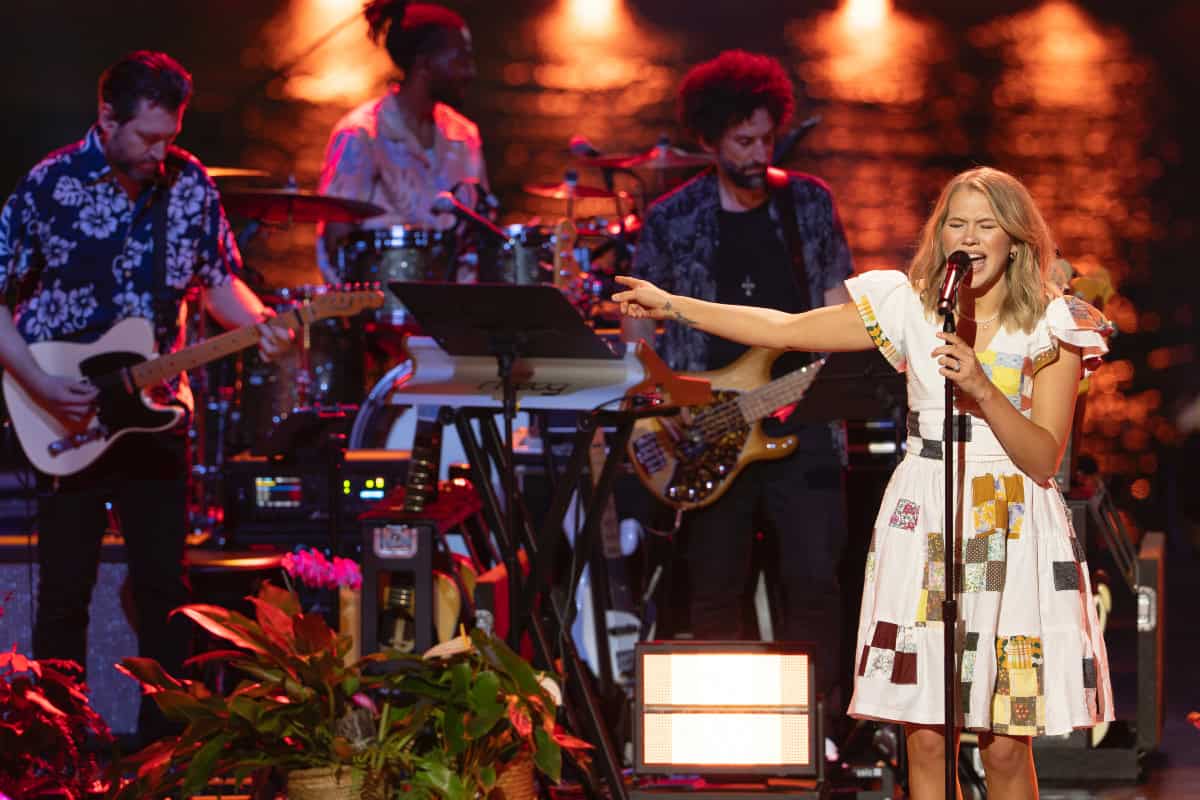
Harper delivered it with a blend of restraint and eruption. She didn’t overproduce the moment. Instead, she let the intensity build naturally—starting grounded, then gradually unlocking a raw, almost sermon-like energy that pulled the audience in.
This wasn’t just a vocal performance. It was storytelling with stakes.
The Power of Personal Context
What elevated the moment further was everything happening offstage. Harper, a mother of three, had her family in the audience—a rare luxury in the high-pressure environment of televised competition.
That presence mattered. Not just emotionally, but creatively.
She’s spoken about “peeling layers off” throughout her journey, and this performance felt like a visible result of that process. The stakes weren’t abstract. They were personal: showing her children what growth, courage, and vulnerability look like in real time.
Judges Recognize the Shift
The judges didn’t just praise her—they recognized evolution.
-
Lionel Richie highlighted her ability to transition from singing into something more akin to preaching—a moment where performance becomes communication.
-
Luke Bryan noted a newfound strength in her delivery, even joking she might’ve sparked a new genre with her intensity.
-
Carrie Underwood offered perhaps the most insightful feedback: stop overthinking. Trust the story.
That last note is crucial. Many technically strong performers plateau because they become hyper-aware of themselves. Harper’s breakthrough came when she let go of that self-monitoring—even if just for moments.
Why This Performance Matters
In a competition where standout moments often rely on vocal gymnastics or spectacle, Harper’s impact came from something more durable: authenticity under pressure.
Her performance signals three important shifts:
1. Identity Over Imitation
Rather than adapting to what she thought the show wanted, she leaned deeper into what makes her unique—spiritual intensity, emotional honesty, and a grounded vocal tone.
2. Growth Without Losing Core Strength
She expanded her stage presence without abandoning her roots. That balance is what separates temporary contestants from lasting artists.
3. Emotional Access as a Skill
What looked like vulnerability was actually control—knowing when to hold back and when to unleash.
The Bigger Picture: A Contender Emerging
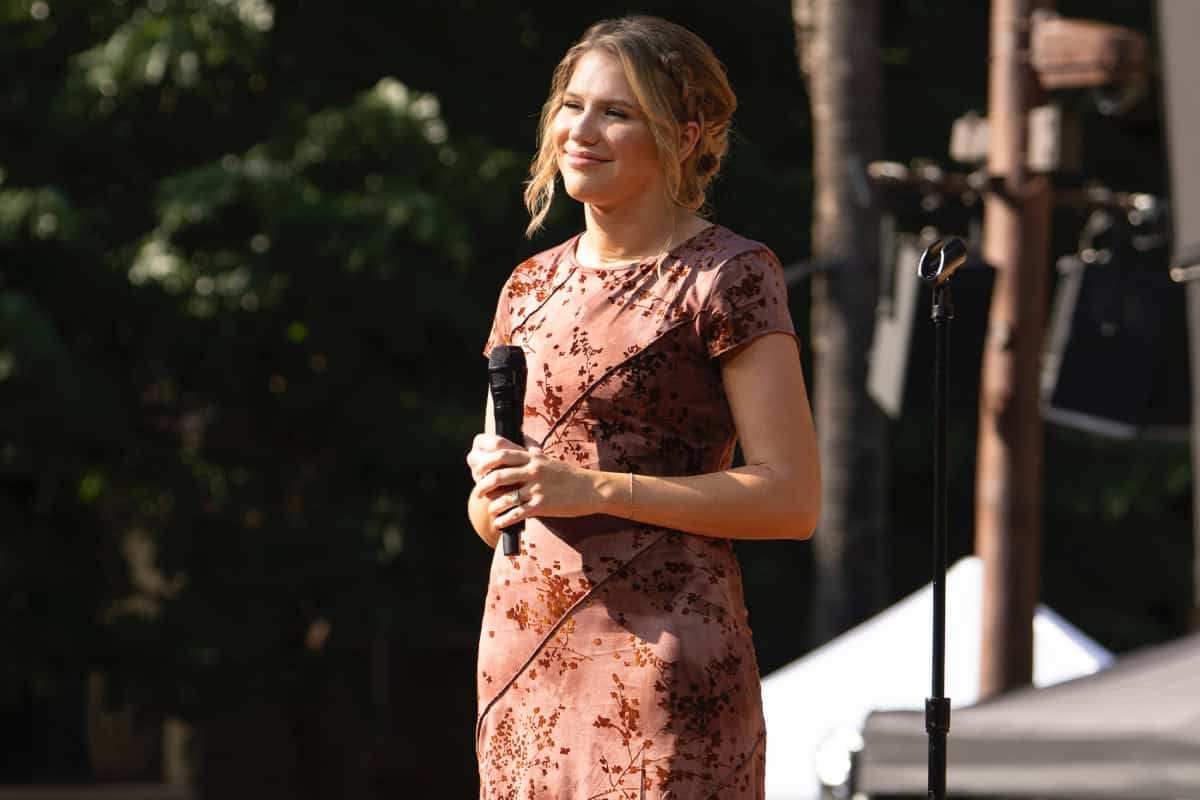
Harper’s journey on American Idol has been steadily building—from a heartfelt audition that resonated widely to increasingly confident performances. But this moment felt different.
It wasn’t just another strong showing. It was a pivot point.
If she continues to merge her storytelling instincts with this growing sense of physical and emotional command, she won’t just be competing—she’ll be defining her lane within the show.
And in a format built on audience connection, that might be the most powerful advantage of all.