On a season built around unpredictability, it takes something extraordinary to cut through the noise. During the Hawaii round of American Idol Season 24, Hannah Harper didn’t just stand out—she shifted the energy of the entire competition.
Her performance of Ain’t No Grave wasn’t simply another strong showing. It was a turning point—one that redefined her identity as an artist and elevated her from consistent contender to undeniable frontrunner.

A Risk That Changed Everything
Up to this point, Harper had built her reputation on intimacy.
Armed with a guitar and rooted in bluegrass storytelling, she leaned into stillness, subtlety, and emotional precision. It worked. Audiences trusted her. Judges respected her.
But familiarity can quietly become limitation.
So she did something crucial—she stepped away from it.
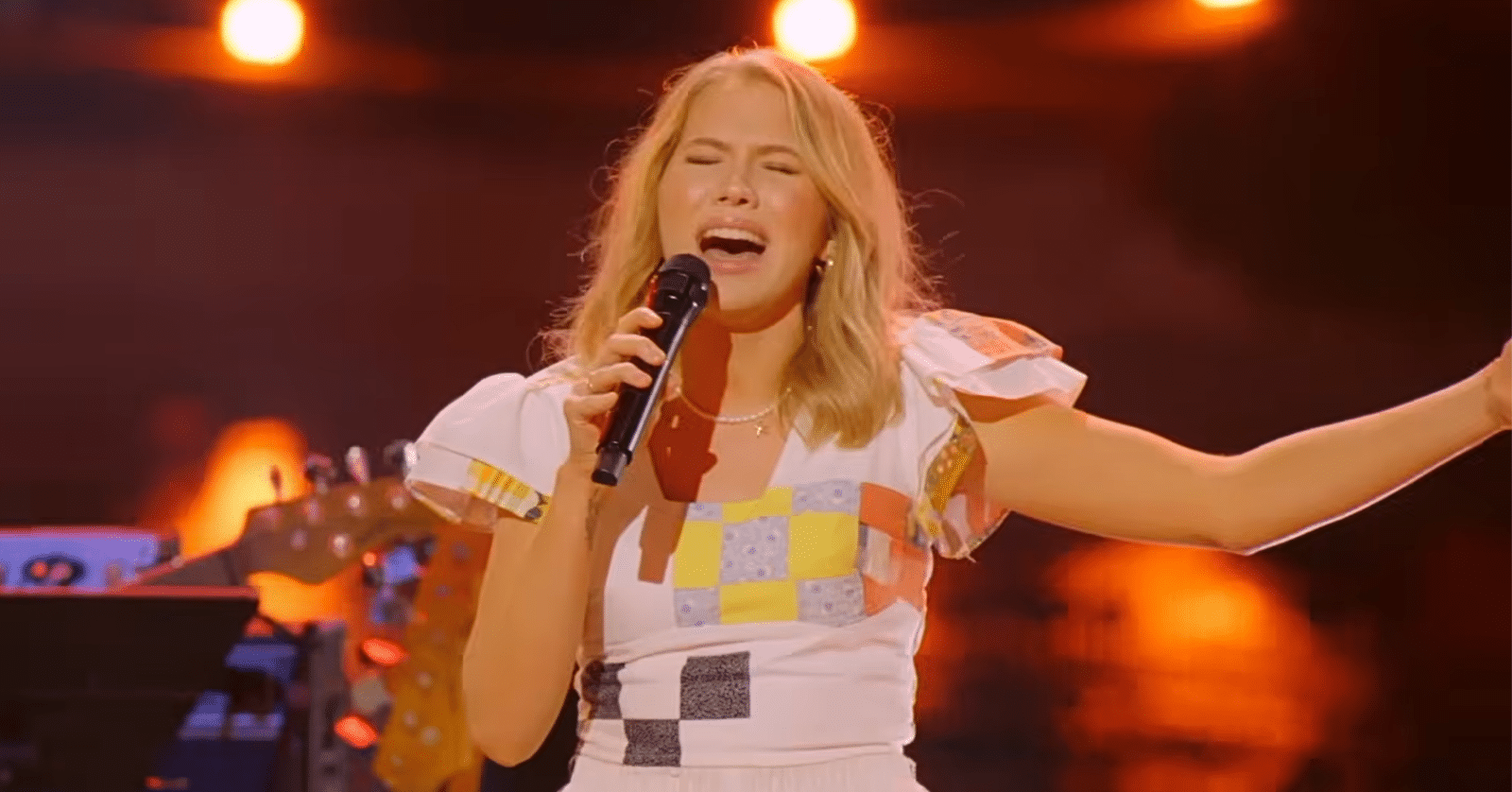
By leaving the guitar behind for only the second time in the competition, Harper removed her safety net. What replaced it wasn’t just movement—it was presence. The kind that demands attention rather than gently inviting it.
And that shift changed how the room experienced her.
From Storyteller to Force of Nature
The performance didn’t begin explosively. It unfolded.
Starting with a grounded, controlled delivery, Harper allowed the song’s spiritual weight to build naturally. But as the arrangement expanded, so did she.
Her voice sharpened. Her physicality opened up. The restraint that once defined her gave way to something far more dynamic—controlled intensity.
By the time the performance reached its peak, she wasn’t simply interpreting the song. She was driving it.
That transformation—from quiet storyteller to commanding performer—is one of the hardest transitions to execute on a stage like American Idol. Harper didn’t just attempt it. She made it feel inevitable.
Why “Ain’t No Grave” Was the Perfect Choice
Song selection is strategy, especially at this stage of the competition.
Originally written by Claude Ely and later popularized by Johnny Cash, Ain’t No Grave carries deep roots in gospel tradition. More recently, it’s been reinterpreted by Bethel Music and Molly Skaggs, blending classic themes with modern worship intensity.
That dual identity—traditional and contemporary—mirrors Harper’s own artistic space.
It gave her room to:
- Honor her Appalachian and gospel influences
- Expand into a bigger, more modern sound
- Showcase both control and power in one performance
Most importantly, it gave her permission to go big without losing authenticity.
The Judges’ Reaction: More Than Praise
When judges stand, it’s often a signal of excellence. But this felt different—it felt reactive, almost involuntary.
Lionel Richie captured the moment best, suggesting Harper had moved beyond singing into something closer to preaching. That distinction matters. Singing entertains. Preaching connects on a deeper, almost communal level.
Luke Bryan went further, calling it his favorite performance of hers and coining the phrase “Resurrection Rock”—a telling label that highlights how fully she embraced the song’s energy.
Then came the most impactful moment of all.
Carrie Underwood didn’t just praise Harper—she recognized herself in her.
Drawing from her own American Idol journey, Underwood offered advice that cut straight to the core of performance psychology: stop thinking, start feeling. Her story about overanalyzing movements on stage wasn’t just anecdotal—it was a warning.
Because what Harper had tapped into during that performance—the glimpses of instinct over control—is exactly what transforms great contestants into winning artists.
The Power of Letting Go
Underwood’s feedback revealed something subtle but critical: Harper’s biggest breakthrough came in the moments she stopped trying to manage the performance.
Those flashes—where movement wasn’t calculated, where emotion wasn’t filtered—were where the performance truly came alive.
This is the paradox of high-level performance:
- Control builds consistency
- Letting go creates magic
Harper has already mastered the first. This performance proved she’s beginning to access the second.
A Performance That Repositions the Entire Competition
Every season has a moment where the hierarchy shifts. Not gradually—but instantly.
This was that moment.
Before Hawaii, Harper was respected. After Hawaii, she became a benchmark.
Now the question isn’t whether she can advance—it’s whether others can match the level she just introduced.
Because performances like this don’t just elevate the performer. They raise expectations across the board.
Why This Resonated Beyond the Stage
Part of what made this performance land so deeply is how naturally it connects to Harper’s personal narrative.
A stay-at-home mom navigating ambition, identity, and purpose, she represents a story that feels grounded and real. When she sings about faith, resilience, or family, it doesn’t feel thematic—it feels lived.
That authenticity amplifies everything:
- Big moments feel earned, not staged
- Emotional peaks feel personal, not performative
- Growth feels meaningful, not strategic
Audiences don’t just watch that—they invest in it.
What This Means for the Top 14 Race
In a season defined by volatility, Harper just did something invaluable: she created a moment.
And moments translate into momentum.
Voting audiences remember performances that made them feel something immediate and undeniable. This wasn’t subtle. It wasn’t quiet. It was impossible to ignore.
That kind of impact can:
- Solidify a frontrunner position
- Expand appeal beyond a niche audience
- Create viral traction and repeat viewership
In short, it buys her margin—the most valuable currency in a live competition.
The Bigger Picture: An Artist Taking Shape
What makes this performance truly significant isn’t just how good it was—it’s what it signals.
Harper is no longer confined to one style, one staging approach, or one emotional register. She’s proving she can evolve without losing her core identity.
That’s the difference between a strong contestant and a potential winner.
Final Take: Not Just a Performance—A Declaration
Hannah Harper didn’t just deliver a standout moment in Hawaii. She made a statement.
She can be still.
She can be powerful.
She can be intimate.
She can be explosive.
And most importantly—she knows when to be each.
In a competition where adaptability and authenticity rarely coexist, that combination is rare.
If this performance is any indication, Harper isn’t just keeping up with the season’s unpredictability.
She’s starting to define it.