The Garage That Lied Inside Tupac Shakur’s Hidden Car Collection And The Heartbreaking Truth Behind His Legacy
los angeles When Tupac Amaru Shakur died in September 1996 the world mourned not only the loss of a legendary rapper but a cultural icon whose influence transcended music
His poetry his activism and his unfiltered voice made him a symbol of resistance and raw authenticity and as the years passed his legend only grew
Yet one chapter of his life remained largely unexplored by the public for decades a chapter locked behind the doors of a private garage filled not with the riches people expected but with a sobering revelation about the world Tupac navigated
When the vehicles associated with Tupac’s estate were finally examined fans family members and historians anticipated a display of wealth befitting one of the most influential artists of the 1990s
What they found instead was a mix of borrowed luxury modest personal treasures and material symbols that reflected the contradictions of fame exploitation and survivalRather than confirming an empire of riches the garage unveiled the fragile infrastructure behind Tupac’s public image
The Rolls Royce Illusion And The Mirage Of Hip Hop Royalty

At the center of the public’s fascination was the Rolls Royce Corniche a gleaming emblem of the superstar lifestyle
In countless photographs and music video moments Tupac appeared at ease behind the wheel exuding authority success and the aura of a self made kingFans assumed the luxury reflected his financial triumph
Yet when his mother Afeni Shakur began navigating her son’s estate she discovered a painful truth
The Rolls Royce was not owned by TupacIt belonged to the record label
The registration was held under Death Row Records
The same was true for several high end properties and assets believed by outsiders to be his
The revelation stunned even those familiar with the predatory nature of music contracts in the 1990sTupac had generated millions yet owned shockingly little
Afeni later described the moment as heartbreaking understanding that the illusion of wealth was part of a system that profited from her son while leaving him materially vulnerable
The Rolls Royce ultimately became a symbol not of success but of the financial traps surrounding one of the most influential voices in hip hop history
The 1992 Jeep Cherokee A Symbol Of Real Freedom
In sharp contrast to the opulence of borrowed luxury sat a black 1992 Jeep Cherokee tucked quietly in the back of the garage
This vehicle carried no entourage no cameras and no glamorous story
Yet its significance eclipsed every other car
The Jeep was the first vehicle Tupac ever purchased entirely on his own
On his twenty first birthday he made the down payment using the modest income from his early artistic career
The documentation revealed one of the rare instances of full ownership
Unlike the polished luxury cars used as props for stardom the Jeep represented authenticity freedom and independence
It reflected the Tupac who had not yet been swallowed by the machinery of fame a young man striving to escape poverty with nothing but determination and grit
For fans and researchers the Jeep became one of the emotionally richest elements of the collection
It was the car of a dreamer not yet a martyr
The Green Jaguar Xjs A Rare Moment Of True Ownership
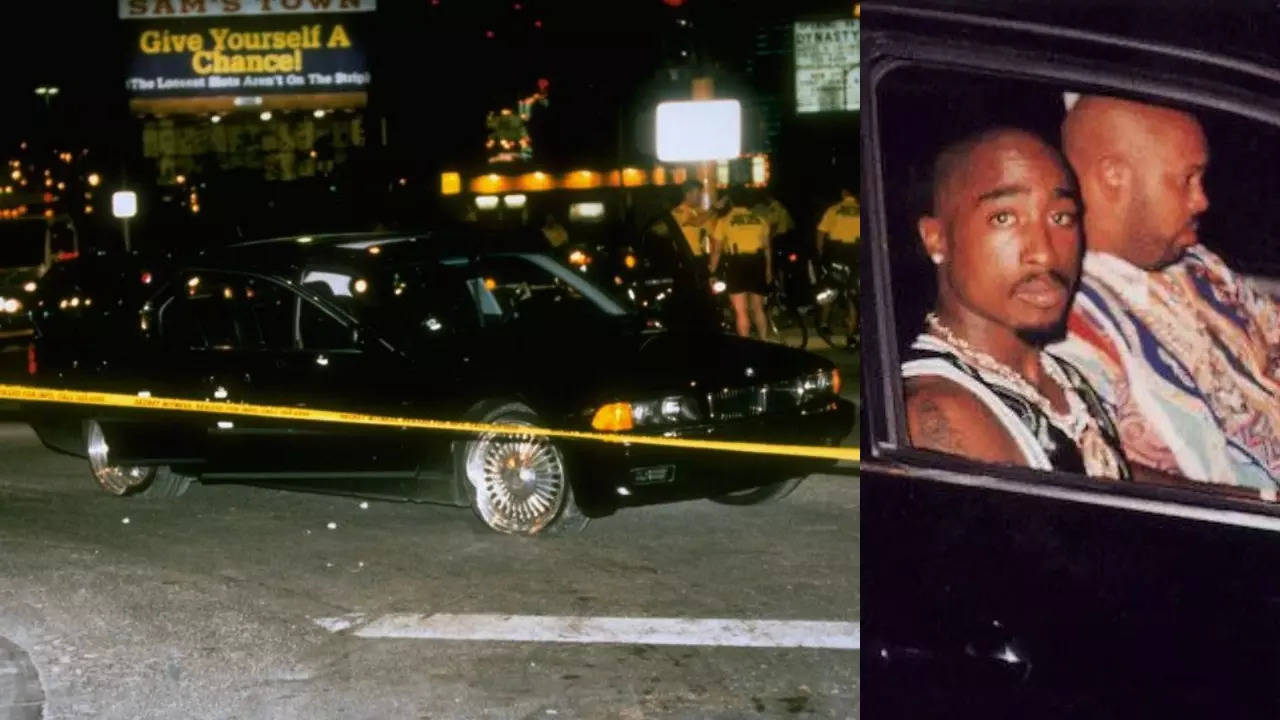
Among the vehicles recovered from the estate one stood apart not only for its elegance but for its legitimacy
The emerald green 1995 Jaguar XJS
Unlike the Rolls Royce this was a car Tupac actually owned outright
It was featured in the video for To Live and Die in LA becoming part of his artistic expression
The Jaguar communicated a different kind of success
Not ostentatious
Not borrowed
Not part of the label’s manufactured image
It was a quiet milestone in Tupac’s effort to build independence within an industry designed to control him
Years later the car resurfaced online its resale value inflated not merely by its condition but by the authenticity it represented
It was physical proof that Tupac achieved moments of self ownership even within a system that often denied him stability
The Hummer H1 A Fortress Built From Fear And Fame
Among the most striking vehicles linked to Tupac was the 1996 Hummer H1 a militarized imposing machine equipped with unconventional features including communication systems lights and defensive modifications
It resembled a vehicle prepared for conflict rather than celebrity leisure
This Hummer reflected the environment Tupac lived in during the final years of his life
Public pressure
Personal threats
Street politics
Industry rivalries
Constant surveillance and real danger
More than a status symbol it was a shield
It embodied the paranoia that fame had amplified a paranoia that proved tragically justified
At auction the Hummer later sold for more than three hundred thousand dollars a figure driven as much by cultural significance as by its physical condition
The 1961 Chevy Impala The Heart Of The Streets
The lemon yellow 1961 Chevy Impala stood out not because of financial value but because of cultural value
Lowriders have long been a staple of West Coast identity and Tupac embraced this tradition wholeheartedly
The Impala connected him to the neighborhoods and communities that shaped his worldview
It was a vessel of joy
A symbol of rebellion
A moving artwork
Unlike the luxury cars that represented corporate branding the Impala represented culture
Its presence in the garage served as a reminder that Tupac never abandoned the streets even as fame threatened to reshape him
The 1996 Bmw 750il The Car Tied To Tragedy
Though not stored in the garage long term the 1996 BMW 750iL became inseparable from Tupac’s story
It was the vehicle he rode in on the night of the shooting
A moment that became one of the most examined incidents in modern music history
The BMW would eventually be restored and sold at private auctions for over one million dollars a haunting example of how tragedy becomes commodified
It remains a reminder of both Tupac’s vulnerability and the troubling fascination the world holds with the objects surrounding a celebrity’s final moments
A Legacy Revealed In Steel Rather Than Gold
The opening of Tupac’s garage shifted the public’s understanding of the economic forces that shaped his career
It showed how an artist who appeared larger than life was often working within constraints that limited his financial control
It exposed the difference between commercial image and personal reality
Yet within the mixture of leased luxury and modest personal treasures emerged a profound truth about Tupac
He valued freedom
He valued culture
He valued authenticity
And even in a system that profited from him more than it supported him Tupac found ways to claim pieces of his identity through the vehicles that filled his world
The Jeep he purchased with his own savings
The Jaguar he proudly owned
The Impala that reflected the streets he loved
The Hummer that symbolized protection in a dangerous world
These vehicles form a fragmented autobiography written not in words but in metal
Each car is a chapter
Each registration paper a revelation
Each engine a reminder of how fiercely Tupac lived