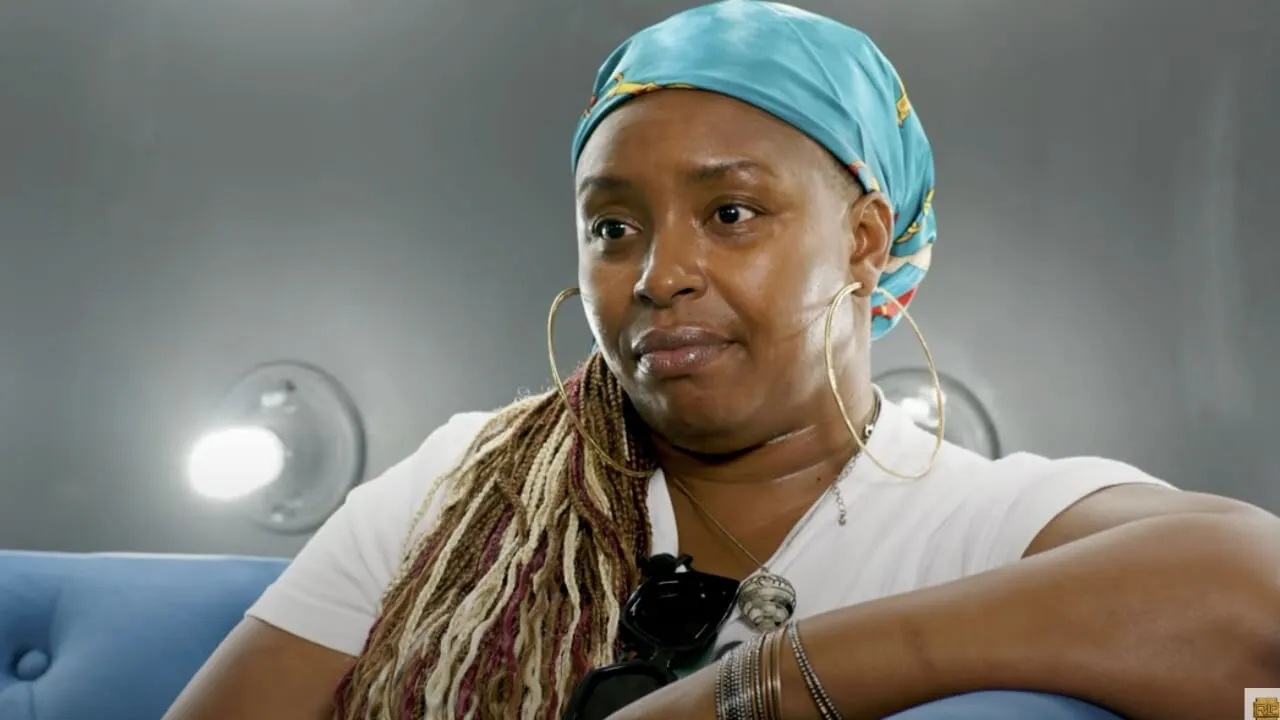
When Jaguar Wright began speaking about the new Diddy documentary, she didn’t sound surprised. To her, most of what the public is just now seeing has been known for years—just not openly discussed. She says she’s watched the story unfold quietly from the sidelines, already aware of what would eventually come out and what would remain hidden.
But one moment in the documentary stood out, even to her.
A Shocking Claim Finally Goes Public
The biggest turning point, according to Jaguar, came when Kirk Burroughs made a deeply personal allegation against Diddy. For the first time, he publicly claimed that he had been abused.
What made this revelation so significant wasn’t just the accusation itself. It was who it came from.
Kirk Burroughs had been close to Diddy from the very beginning, present during the early years that shaped his career and identity. Jaguar suggests that his proximity gave him a unique perspective, one that carries weight because he witnessed events firsthand over decades.
To her, this wasn’t new information. She says these kinds of claims had been quietly discussed behind closed doors for years. The difference now is that the person involved is finally speaking for himself.
Longstanding Rumors Resurface
Jaguar points out that many of the details now coming to light had been hinted at in the past. Stories about Diddy’s behavior, unusual relationships, and questionable situations had circulated for years, but rarely made it into public conversation in a serious way.
Even those who had seen troubling things before seemed caught off guard by the directness of Kirk’s claims. The shock wasn’t just about what was said, but that it was finally being said openly.
For Jaguar, this moment felt inevitable. She had previously chosen not to speak on it, believing that the story should come from the person directly involved. Now that it has, she sees it as confirmation of what many already suspected.
Questions About What Was Left Out
While the documentary revealed a lot, Jaguar believes it still left important pieces out—especially when it comes to Diddy’s early life.
She questions the image that was presented, suggesting that parts of his background may have been reshaped or softened to maintain a certain public persona. For example, she points to contradictions between claims that he didn’t drink or smoke and footage showing otherwise during key moments in his career.
To her, these inconsistencies hint at a larger pattern of image control.
A Complicated Childhood
Jaguar also raises the possibility that Diddy himself may have been shaped by difficult experiences early in life. She describes an environment that may have exposed him to adult situations at a young age, suggesting that his upbringing could have played a role in who he later became.
She paints a picture of a household filled with constant activity, unfamiliar people, and influences that may have blurred the lines between normal and harmful behavior. In her view, this kind of environment can shape how someone understands power, identity, and success.
She also reflects on how Diddy viewed his father, noting that he seemed to take pride in a background tied to hustling. Combined with the cultural influences around him, Jaguar believes this contributed to how he defined what it meant to be powerful or respected.
The Power of Control and Narrative
One of the most unsettling aspects of the documentary, according to Jaguar, was how Diddy handled the moment when federal agents approached his hotel.
Instead of avoiding attention, he reportedly began filming them.
To Jaguar, this wasn’t random. She interprets it as a calculated move—an attempt to control the narrative from the very beginning. She suggests he may have been gathering footage for his own version of events, positioning himself as the central figure in a story he could shape.
She describes this behavior as reflective of someone who believes they can direct not just their life, but how others perceive it.
Trying to Influence the Outcome
What concerned Jaguar even more was what was said during those recorded moments. She highlights a conversation where Diddy and his lawyer appeared focused on public perception and communication strategy.
In her view, this wasn’t just about responding to a situation—it was about getting ahead of it.
She points to remarks about needing to “speak to the potential juror,” suggesting an effort to influence opinion before any formal legal process had even begun. To her, that raises serious questions about how power and influence can shape public narratives long before facts are fully examined.
A Story Still Unfolding
For Jaguar Wright, the documentary is only part of a much larger story. While it brought certain issues into the spotlight, she believes it only scratched the surface.
What stands out most to her is not just what was revealed, but how long these conversations have existed without being fully acknowledged. Now that more voices are speaking publicly, she sees a shift happening—one where long-held silence is beginning to break.
And in her view, that may be the most significant development of all.