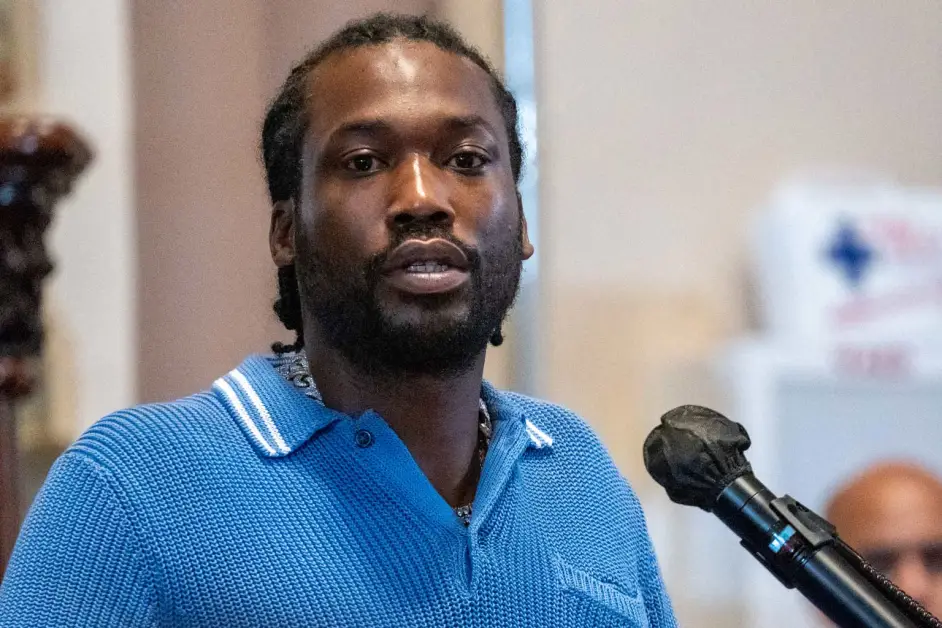
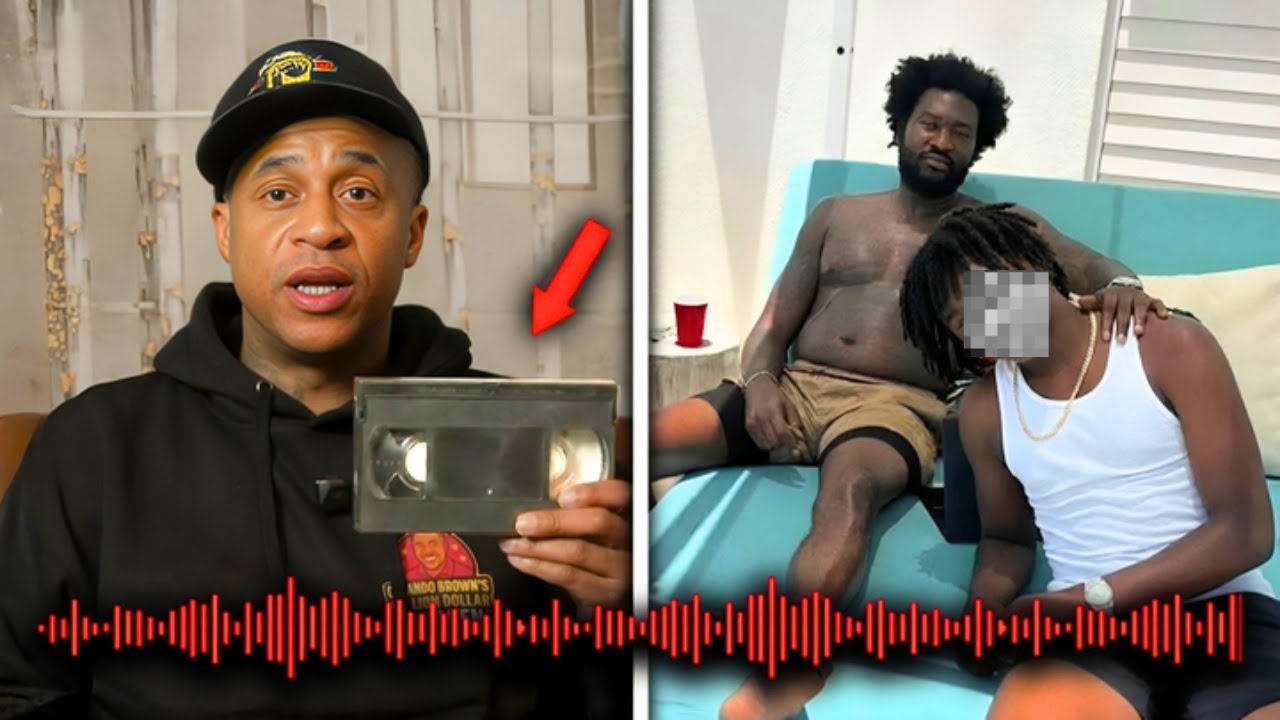
Orlando Brown is back in the mix, and this time he’s not just tossing out one-liners—he’s leaning into a specific claim that’s got the internet treating a circulating “audio receipt” like it’s the final piece of a puzzle.
It starts with that kind of interview exchange that instantly turns into a soundbite: someone asks why certain industry rumors keep popping up, Orlando shrugs it off with a “to each their own” vibe, then pivots into saying people “already know” what they “know” about who’s really who in rap circles.
When he’s pressed—“You think Meek Mill is gay?”—he answers like it’s obvious, then name-drops Rick Ross as someone who “knows,” the way people do when they want their statement to sound bigger than it is.
It’s messy, it’s blunt, and it’s exactly the kind of thing that lights up timelines because it’s not framed as evidence—it’s framed as “everybody knows.”
At the same time, Orlando also talks about his own life in a more serious tone, saying he’s at a point where he’s trying to be better, that he grew up in the streets like a lot of people did, but once you’ve been labeled a felon you get boxed in and pulled back toward the system.
He describes fighting for respect and trying to be who he is without letting other people write his story.
And that’s the pivot that makes viewers ask the obvious question: if Orlando is talking like this now, did he “know” something all along about what’s been whispered for years?
Because unless someone truly has been offline for a minute, they’ve heard the long-running chatter tying Meek Mill to Diddy—rumors that have floated around for years, growing every time a clip resurfaces or a caption gets reinterpreted.
In the current wave, people are re-sharing an old pool video and treating it like a coded confession, even though body language and vibes aren’t proof of anything.
The same clip is being recast as “context” for why people believe what they believe now, and the fact that Diddy is the one filming in that video has become part of the online narrative, with viewers zooming in on every word like it’s a courtroom transcript.
The latest spike in the story lines up with a lawsuit that pulled Diddy back into the headlines.
Music producer Lil Rod sued, alleging misconduct, and in the filing he name-dropped other artists while claiming Diddy had bragged about intimacy with them tied to career advancement.
Those are allegations, not verdicts, and they’re being contested in the real world—while the internet does what it does in the online world.
Usher didn’t publicly go point-by-point on the claims, but Meek was loud about being dragged into it.
He jumped online with a string of posts aimed at Black media, implying outlets were being paid to push the story and saying if any celebrity ever tried something “wild” with him, he’d go off.
He emphasized where he’s from—Philadelphia—his circle, and the idea that nobody could approach him with anything out of pocket without consequences.
He also tried to draw a hard line between himself and certain party/drug stereotypes, presenting himself as someone who moves too heavy to be played with like that.
Then he said he woke up and saw it everywhere, like blogs were waiting for him, laughing it off—but it didn’t read like a laugh.
It read like someone trying to swat a swarm.
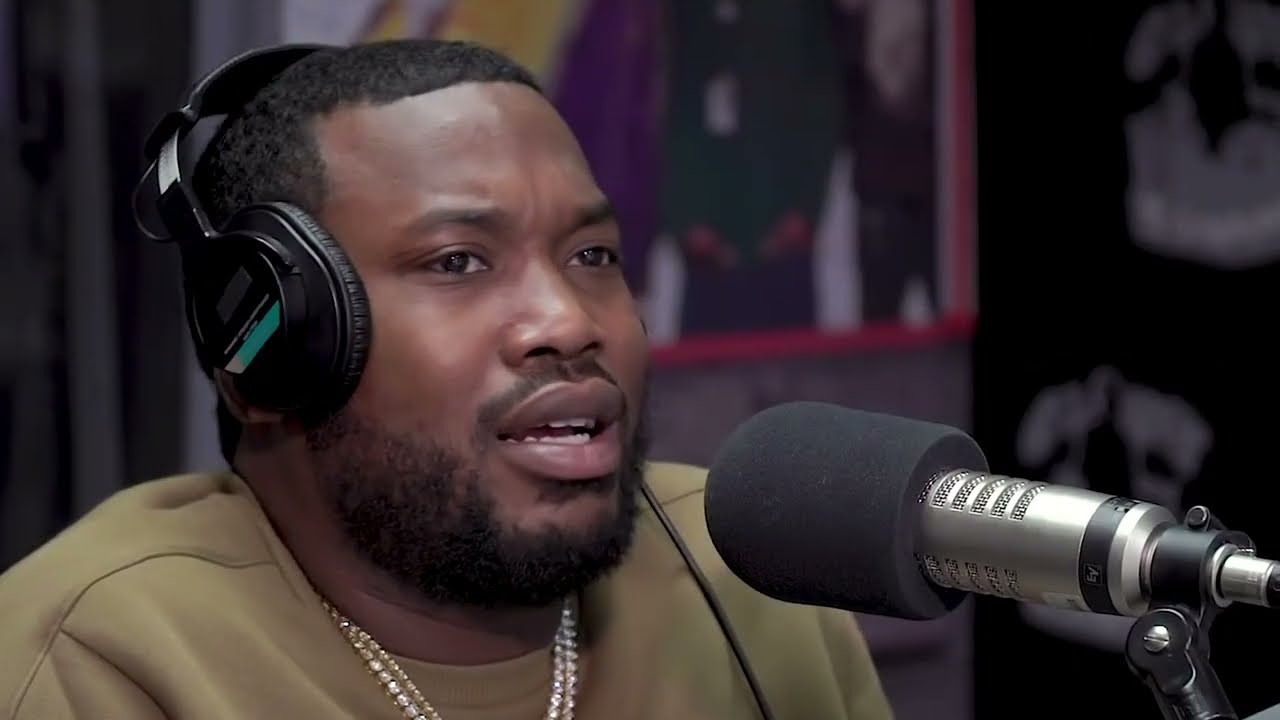
And right when he’s mid-defense, the internet drops what it always drops: “receipts.” Not paperwork, not sworn statements—viral fragments.
A disturbing audio clip began making rounds, described by posters as two men in an intimate situation, with one voice sounding uncomfortable.
People pushing it insisted the voices belonged to Diddy and Meek, and they built a whole scenario around it: a party, a private room, someone claiming they followed and recorded from behind a door.
That story is unverified, the audio’s origin is unclear, and nobody credible has established authenticity—yet the clip became gasoline because it “sounds like” something, and in 2026, “sounds like” is enough to get millions of plays.
Once that audio hit, the crowd started speed-running pattern matching.
They dragged the pool video back into the feed and claimed it suddenly “made sense.” They replayed Diddy’s words from the clip and treated them like a secret handshake.
They circulated screenshots alleging Meek followed an adult page on X that posts explicit material—again, screenshot culture with no context and no verification.
They dug up an old song and argued the lyrics were a confession.
And the more pieces they stacked, the more certain they sounded, even though stacking unverified pieces doesn’t magically create verification.
You’d think, after getting turned into a trending topic in the worst way, Meek would log off and let the storm burn itself out.
But he didn’t.
He stepped into another fire—50 Cent’s ongoing back-and-forth involving Christian Combs—and that’s when the entire situation shifted from “rumor cycle” to “public humiliation,” because 50 lives for a moment like this.
Meek accused 50 of being “federal,” implying informant behavior and saying street guys in Queens “know that,” then went personal, saying 50 picks on people while his own son can’t stand him.
Meek tried to take the high ground too, saying he’s grateful to be away with his son and friends, telling people not to follow miserable men who allegedly pay others to tear people down, and criticizing anyone laughing at Black people getting indicted because it “enhances cases.”
50 didn’t let it breathe.
He came back with the kind of insult that’s half numbers, half needle: he claimed Meek sold only 6,000 copies on his last project and said he shouldn’t be on vacation.
Then he added the line designed to keep the rumor alive without “proving” anything—praising him for “standing by your man.” Meek replied, but people clocked the selectiveness: he argued the sales point, saying a past project did 90,000 first week, and framed a more recent release as something done for history and contract reasons because everyone involved is already rich.
He tossed in a jab about style and connections.
But on the insinuations that the internet was really shouting about? He didn’t satisfy the crowd’s appetite, and the crowd interpreted that however it wanted.
Then 50 escalated again, reposting a throwback party clip of Meek singing toward Diddy with a caption meant to feminize and ridicule him, packaging the entire rumor into a meme.
At that point, the “story” wasn’t moving on evidence; it was moving on entertainment value.
That’s where Orlando’s role becomes central.
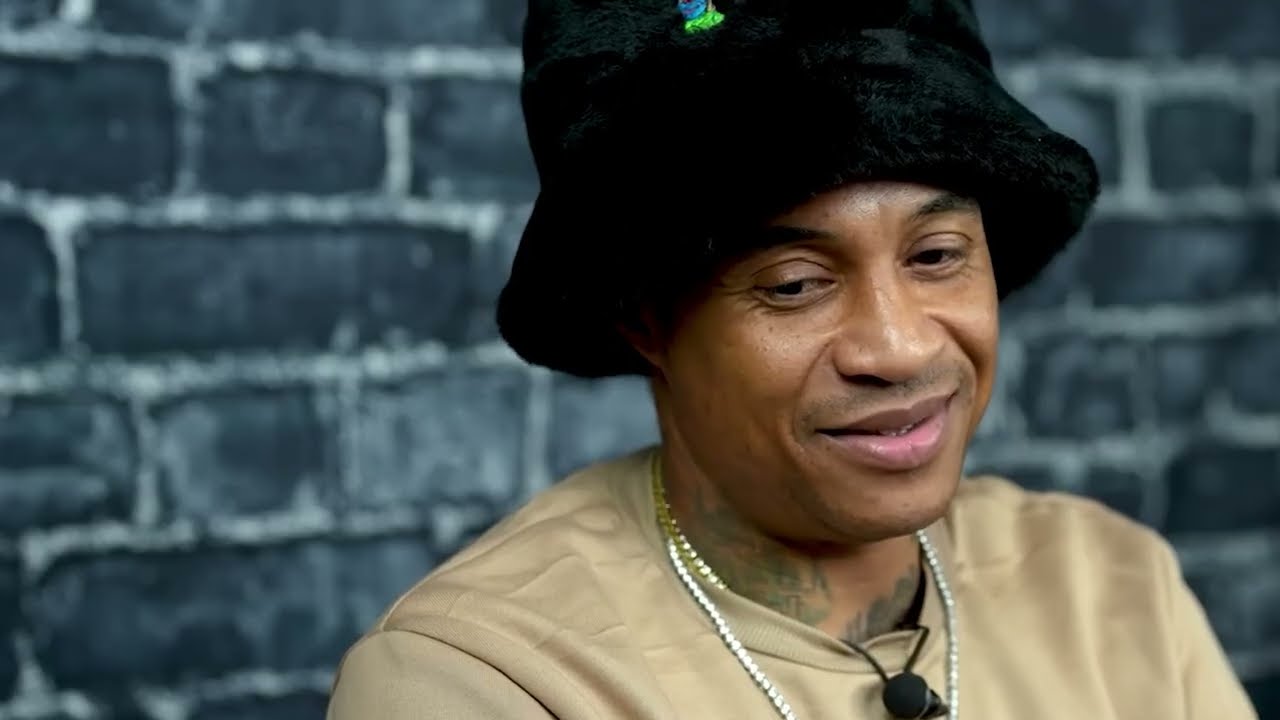
Orlando has been talking about Diddy-related industry darkness for a long time, and for years people wrote him off as trolling, spiraling, or performing.
Now, with lawsuits in the air and “receipts” flying, some viewers are reframing him as a traumatized insider who’s been hinting at the same thing all along.
He’s claimed, in interviews, that powerful people will spend big money to shape narratives and distance themselves—throwing out a number like it’s casual business.
He’s also described witnessing coercion and exploitation in the industry, making broad allegations about how fame can be used as leverage.
Those claims are serious, unproven, and not something anyone should treat as gossip—yet the clips spread because his delivery isn’t jokey in those moments.
He looks shaken, and that makes people lean in.
He also made claims about his own experiences with Diddy—again, allegations—and the way he tells it is what has people saying this isn’t the usual “Orlando show.” He suggests he was targeted and manipulated, and he hints at how cycles of silence get enforced.
He even implies that gatekeeping can involve families and adults making choices that harm younger people—an accusation that, if true in any context, would be horrifying.
But online, instead of that triggering the careful response it deserves, it mostly gets repackaged as another “tea” clip.
That’s the grim part: the internet treats pain like content.
When asked directly about the Meek-and-Diddy rumors, Orlando didn’t frame it like “career favors.” He framed it like preference, like something he believes Meek would’ve chosen.
Then he doubled down with that “Rick Ross knows” refrain, turning it into a “club” insinuation.
And then came the weirdest, most replayed detail of all—the money line.
Orlando joked about being paid to say it and dropped a specific figure: 2,000 USD.
The interviewer pushes back—“Me?”—and Orlando repeats it like a punchline: “You only paid me $2,000.” It’s chaotic, it’s unverifiable, and it’s exactly the kind of quote that spreads because it gives people a neat little number to hold onto when everything else is fog.
That 2,000 USD figure is now being used in two opposite ways: believers cite it like proof that “statements get bought,” while skeptics cite it like proof Orlando is performing and saying whatever keeps him in the conversation.
And that’s the split online right now.
One side says Orlando’s been “playing crazy” for protection and that once authorities have pressure on powerful people, he’s “singing like a canary.” Another side says they never thought he was lying—just traumatized—and they believe he’s telling the truth now because the timing finally makes sense.
The other side of the internet says all of this is reckless: that unverified audio is not confirmation, that old clips can be misread, that screenshots can be manipulated, and that turning a person’s private life into a blood sport—especially with allegations floating around—can cause irreversible harm even if the claims collapse later.
And that’s why this whole moment feels bigger than just one trending clip.
It’s a case study in how a lawsuit mention becomes a social-media verdict, how a celebrity’s defensive posts become fuel, how a troll war turns into “evidence,” and how one offhand line—2,000 USD—can become the hook people use to justify whatever conclusion they already wanted.
Orlando is telling the story the way Orlando tells stories: loud, sharp, and designed to stick.
Meek is fighting the narrative the way people fight narratives online: with denial, anger, and timing that keeps the spotlight hot.
And the internet is doing what it does best: turning uncertainty into certainty, then asking you to pick a side in the comments.