When a global figure like Rihanna becomes the center of a dramatic story—especially one involving violence—the internet reacts instantly. Within hours, speculation, commentary, and emotionally charged interpretations begin to circulate, often outpacing verified information.
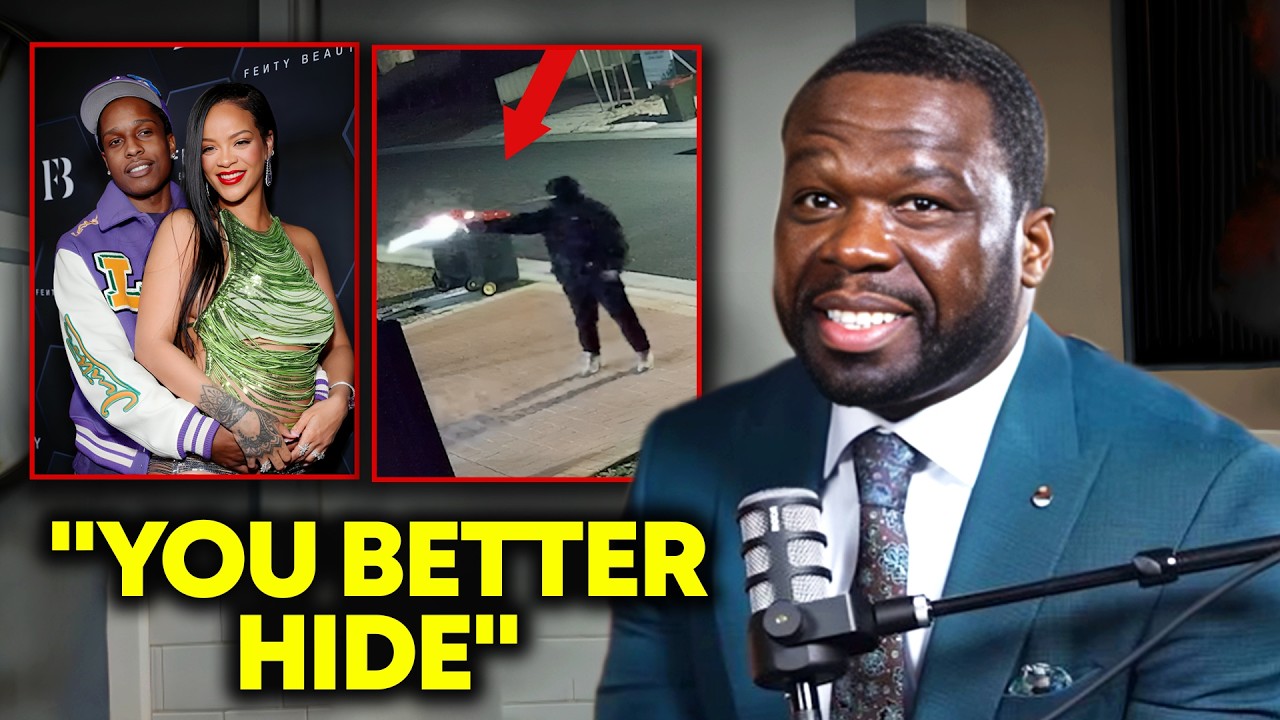
Recently, claims have spread online suggesting an “assassination attempt,” insider warnings from 50 Cent, and even a coordinated industry plot. These narratives are intense, cinematic, and compelling.
But they are also largely unverified, exaggerated, or entirely speculative.
To understand what’s really happening, it’s important to separate three things: confirmed facts, evolving reports, and viral storytelling.
What We Actually Know (and What We Don’t)
In high-profile incidents involving celebrities, early details are often incomplete and sometimes incorrect. Law enforcement investigations take time, and initial reports can shift as more information becomes available.
At this stage, there is no credible, verified evidence supporting claims that:
-
Rihanna was the target of a coordinated “industry hit”
-
The incident involved a trained or hired operative
-
High-profile figures secretly warned her to flee
-
The situation connects to broader conspiracies involving entertainment power structures
Claims about specific individuals, motives, or organized plots require reliable sources, official statements, or documented evidence—not viral posts or edited clips.
How Conspiracy Narratives Take Hold
The language used in viral content—phrases like “assassination attempt,” “false flag,” or “they’re after her”—is designed to provoke urgency and emotional reaction.
These narratives often follow a predictable pattern:
1. Reframing the Event
A criminal act (if one occurred) is reinterpreted as something larger and more coordinated.
2. Elevating Coincidences
Timing, location, or unrelated events are presented as meaningful connections.
Without evidence, powerful unseen actors are introduced as the “real” cause.
4. Casting Doubt on Official Accounts
Any explanation from authorities is dismissed as a cover-up.
This structure is effective—not because it’s accurate, but because it feels plausible in a world where people already distrust institutions.
The “Deranged Fan” vs. “Inside Job” Binary
A common tactic in these discussions is presenting only two possibilities:
-
A random, unstable individual
-
A coordinated, high-level conspiracy
In reality, situations are often far more complex—and usually fall somewhere outside these extremes.
Law enforcement cases involving celebrities frequently include:
-
Individuals with personal grievances or delusions
-
Security vulnerabilities that are later addressed
-
Incidents that appear dramatic but are not part of a broader plot
Jumping directly to a global conspiracy ignores these more grounded possibilities.
The Role of Celebrity Commentary
Figures like 50 Cent are often pulled into these narratives, with claims about private warnings or insider knowledge.
However:
-
There is no verified public record of such statements in this case
-
Social media posts are often misinterpreted, edited, or taken out of context
-
Commentary from celebrities does not equal confirmation of events
Even if a public figure expresses concern, that reflects personal opinion—not evidence of a coordinated threat.
Why the “Patsy” Theory Persists
References to historical figures like Lee Harvey Oswald or Mark David Chapman are often used to frame modern incidents as staged or manipulated.
These comparisons are powerful—but misleading.
They rely on:
-
Selective interpretation of history
-
Emotional resonance rather than factual similarity
-
The assumption that past controversies automatically validate present claims
Each case must be evaluated on its own evidence, not through analogy.
The Illusion of Precision and “Professionalism”
Another common argument is that the alleged act appeared “too precise” to be random.
But this reasoning is flawed.
Criminal acts can appear:
-
Planned without being part of a larger conspiracy
-
Effective without professional training
-
Coordinated without institutional backing
Perceived “precision” is not proof of a hired operation—it’s often just interpretation layered onto limited information.
The Barbados Narrative: Fact vs. Assumption
Claims that Rihanna and A$AP Rocky “fled” to Barbados as a direct response to a threat are also unverified.
Travel by global celebrities can occur for many reasons:
-
Personal time or family visits
-
Pre-planned schedules
-
Business or brand commitments
Without confirmation, framing such movement as an “escape” is speculative storytelling.
Why These Stories Spread So Fast
There are deeper reasons why narratives like this gain traction:
Emotional Impact
Stories involving danger, secrecy, and powerful figures trigger strong reactions.
Distrust of Institutions
Many people are predisposed to question official explanations.
Algorithmic Amplification
Platforms prioritize engaging content—often favoring dramatic or controversial claims.
The idea that “something bigger is going on” is inherently compelling.
The Real Risk: Misinformation
The danger of these narratives isn’t just that they’re inaccurate—it’s that they reshape how people interpret reality.
They can:
-
Spread fear without evidence
-
Damage reputations
-
Distract from actual facts or legitimate issues
-
Encourage a cycle where speculation replaces verification
In extreme cases, they can even interfere with ongoing investigations by distorting public perception.
A More Grounded Perspective
It’s entirely reasonable to question power structures, media narratives, and celebrity culture. Critical thinking is essential.
But critical thinking requires:
-
Evidence over assumption
-
Verification over virality
-
Context over emotion
Without those, skepticism turns into speculation—and speculation can quickly become misinformation.
Final Thought: Curiosity Needs Discipline
When a story feels dramatic, urgent, and full of hidden meaning, that’s exactly when it’s most important to slow down.
Right now, there is no credible proof supporting claims of an organized attempt on Rihanna’s life or a coordinated industry plot involving 50 Cent or others.
What exists instead is a fast-moving narrative built on:
-
Fragments of information
-
Heavy interpretation
-
And a strong appetite for dramatic explanations
The truth may eventually become clearer. But until it does, the most valuable approach isn’t choosing a side.
It’s staying anchored to what can actually be proven.