
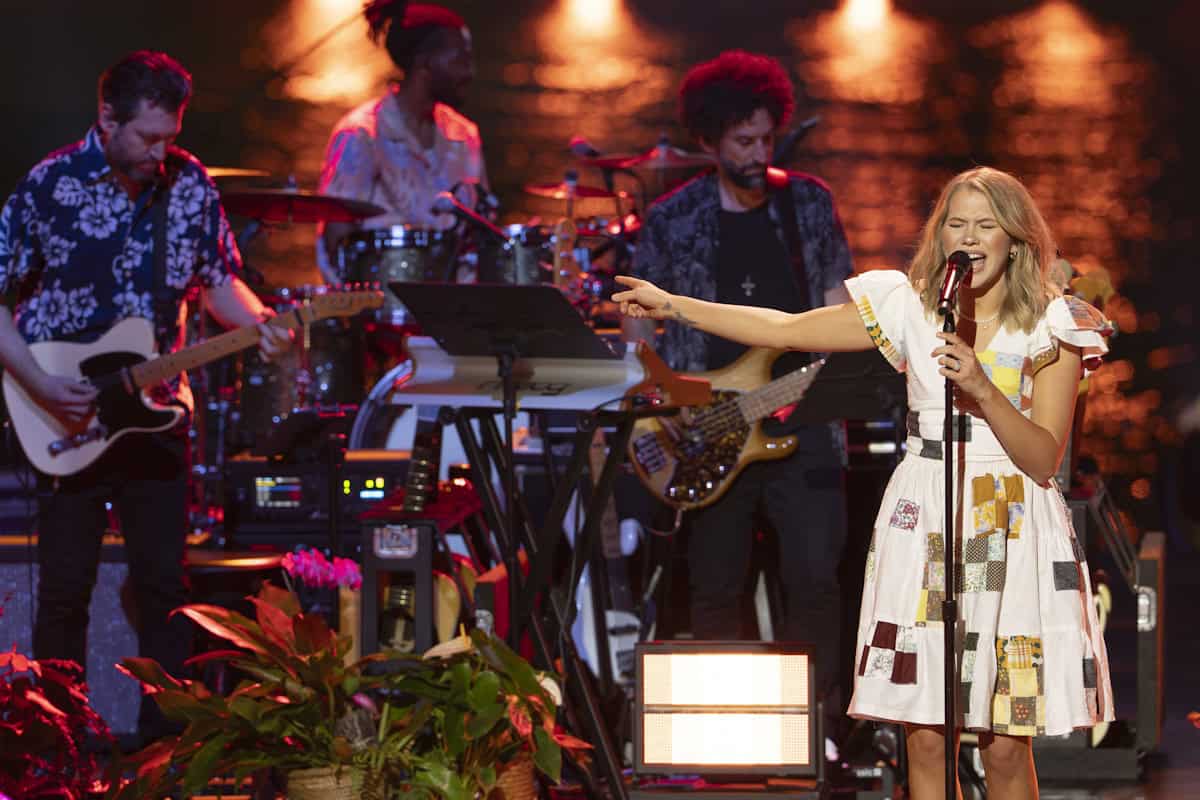
There are performances that check all the boxes—and then there are performances that change how an audience feels in real time. During the Hawaii round of American Idol 2026, Hannah Harper delivered the latter.
Her rendition of “Ain’t No Grave” didn’t just stand out. It shifted the energy of the room.

Why the Hawaii Round Matters More Than It Seems
The Hawaii showcase isn’t just another stop in the competition—it’s a filter. By this stage, technical talent is expected. What separates contestants now is identity.
Under open skies and heightened pressure, performers are asked a harder question: Who are you as an artist when it really counts?
Harper answered that question decisively.
Reinventing “Ain’t No Grave” Without Losing Its Soul
“Ain’t No Grave”—widely associated with Bethel Music—is already a song loaded with spiritual weight and emotional gravity. Covering it comes with risk. Lean too far into imitation, and it feels derivative. Push too far away, and you lose its essence.
Harper found the balance.
She fused gospel roots with a gritty, almost rock-driven intensity, layering in soul influences that gave the performance a raw, lived-in feeling. Instead of treating the song as something to replicate, she approached it like something to inhabit.
The result felt less like a cover—and more like a personal declaration.

Control Meets Release: The Technical Side of Emotion
What made the performance compelling wasn’t just power—it was restraint.
Harper didn’t overwhelm every moment with volume. She built tension, pulling back when needed and then expanding into full force at just the right time. That dynamic control gave the performance shape:
-
Quiet moments drew the audience in
-
Crescendos felt earned, not forced
-
Transitions carried emotional weight, not just vocal shifts
This is where many performances fall short. Big vocals can impress, but without intention, they don’t linger. Harper’s choices gave each note purpose.
The Invisible Skill: Making People Feel Something Real
Technical ability might get a contestant through auditions. Emotional truth is what people remember weeks later.
Harper’s delivery carried a sense of urgency—as if the lyrics weren’t just being sung, but needed to be expressed. That distinction matters. Audiences instinctively recognize when a performer is connected versus when they’re performing connection.
In that moment, the line disappeared.
Judges, Reactions, and a Subtle Passing of the Torch
While the judges’ feedback highlighted her control and presence, one comment stood out. Carrie Underwood reportedly told Harper she saw a reflection of her own journey in the performance.
That kind of comparison isn’t handed out lightly—especially on a stage that has launched careers for decades. It signals more than approval; it suggests potential longevity.

The Anatomy of a Breakout Moment
Looking back, the performance worked because several elements aligned at once:
Song Choice
A bold pick that allowed for emotional depth without being overused in the competition.
Interpretation
A clear artistic perspective instead of a safe, predictable approach.
Vocal Strategy
Power used with intention, not as a default.
Emotional Access
A willingness to lean into vulnerability without losing composure.
Most contestants excel in one or two of these areas. Harper delivered across all four.
Why This Performance Will Be Remembered
In a season filled with strong voices, moments like this create separation. They give audiences a reason to invest—not just in the next performance, but in the artist’s journey.
This wasn’t just about advancing in the competition. It was about establishing identity early enough that every future performance carries added weight.
More Than a Highlight—A Direction
What makes this moment significant isn’t just how good it was—it’s what it suggests moving forward.
Harper isn’t positioning herself as a singer who plays it safe. She’s signaling a willingness to take ownership of songs, reshape them, and deliver them with conviction.
That’s not just how contestants advance.
It’s how artists emerge.