
Some performances are designed to impress. They arrive with volume, spectacle, and precision, engineered to capture attention in an instant. And then there are the rare ones that do something far more difficult—they ask the room to slow down.
Hannah Harper’s stage presence belongs firmly in the second category.
What unfolded when she stepped into the lights wasn’t a bid for applause. It was an invitation into something quieter, more intimate, and ultimately more lasting.

The Art of Holding Still in a World That Moves Fast
Modern performance culture rewards immediacy. Big notes, dramatic builds, visible emotion—these are the tools most performers rely on to stand out. Harper, however, chose restraint.
She didn’t rush to fill the silence. She let it sit.
That decision alone changed everything.
Silence, when used well, creates anticipation. It draws the audience in rather than pushing sound outward. By allowing space before and between her phrases, she shifted the dynamic of the room. People stopped waiting to be entertained and started listening.
This is a subtle but powerful distinction: attention given versus attention earned.
A Voice That Sounds Lived, Not Polished
Technically perfect voices are easy to recognize. They’re clean, controlled, and often emotionally distant. Harper’s voice worked differently. It carried texture—small imperfections that made it feel human rather than manufactured.
It sounded like a voice that had existed long before the stage:
- Sung in quiet rooms, not just bright ones
- Used to comfort, not just perform
- Shaped by experience, not just training
That sense of history is what gave her sound weight. Every note felt connected to something beyond the moment, as if it had been carried forward rather than created on the spot.
Audiences respond instinctively to that kind of authenticity. They may not analyze it, but they feel it.
Story Over Sound: Choosing Meaningful Material
Song choice revealed as much about Harper as her voice did.
Instead of leaning on melodies designed for instant impact, she gravitated toward songs rooted in narrative—stories about home, faith, family, and patience. These are themes that don’t demand attention, but they reward it.
This approach reframes performance entirely. The goal is no longer to showcase vocal ability, but to serve the story.
And when that shift happens, something interesting occurs:
the audience stops judging and starts relating.
The Moment When Performance Becomes Personal
Every memorable performance has a turning point—a moment when it moves from skilled execution into something deeper.
For Harper, that shift came subtly.
It wasn’t marked by a dramatic key change or a vocal peak. Instead, it appeared in the way her voice settled into certain words. When themes of family and motherhood surfaced, her tone changed—not in volume, but in emotional depth.
These micro-shifts are easy to miss unless you’re paying close attention. But they’re often the most revealing:
- A slight hesitation before a lyric
- A softened consonant
- A breath that carries more meaning than the line itself
These details signal something important: the performer is no longer interpreting the song—they’re remembering it.
Letting the Stage Follow the Performer
Many performers try to rise to the scale of the stage. Bigger space, bigger energy.
Harper inverted that relationship.
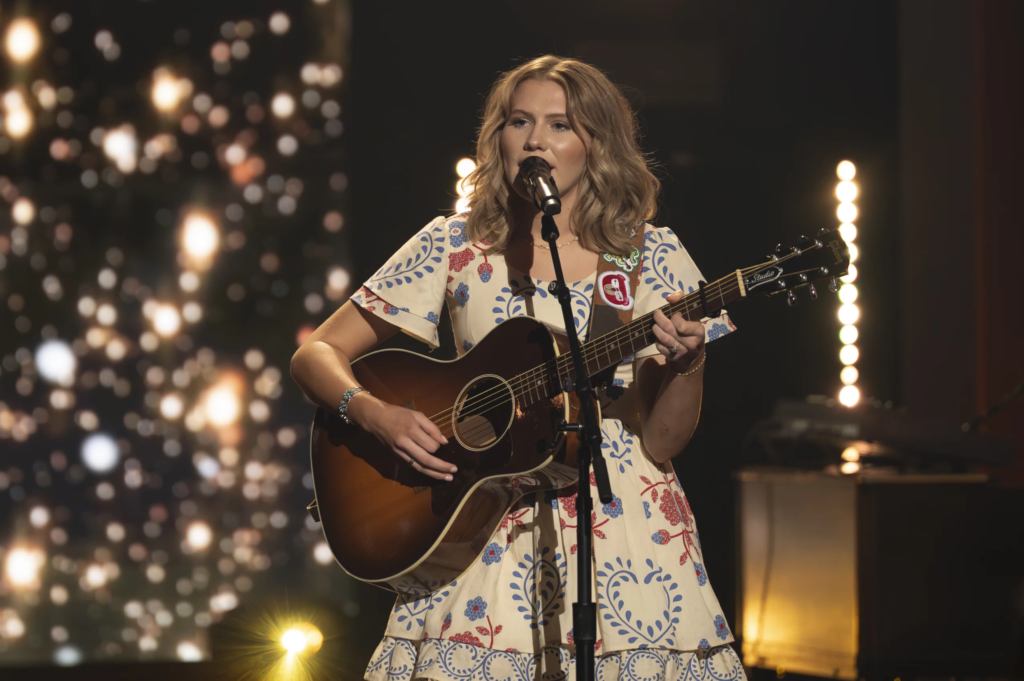
Instead of expanding outward, she drew everything inward. The band faded into the background, not because they were quieter, but because her presence redirected focus. The lighting, the cameras, the production—all became secondary.
This is a hallmark of strong artistic identity: the ability to redefine the environment rather than adapt to it.
In practical terms, it means the performance doesn’t feel like it belongs to the stage. The stage begins to feel like it belongs to the performance.
Emotional Precision Without Excess
There’s a fine line between emotional expression and emotional performance. Cross it, and sincerity turns into exaggeration.
Harper stayed firmly on the right side of that line.
She didn’t dramatize the lyrics. She allowed them to exist as they were. When emotion surfaced, it felt unforced—almost incidental. A slight tremor in her voice carried more impact than a full display ever could.
This kind of restraint requires confidence. It trusts the audience to meet the performance halfway instead of overwhelming them with signals about how to feel.

Why Quiet Performances Last Longer
The most striking aspect of Harper’s performance wasn’t a single note or moment. It was the atmosphere she created—and more importantly, what lingered after it ended.
Loud performances generate immediate reactions.
Quiet ones generate memory.
When the final note faded, there was no rush to fill the space with applause. The pause that followed felt intentional, almost necessary. It gave the audience time to process, to hold onto what they had just experienced before it disappeared.
That’s the difference between entertainment and resonance.
The End That Didn’t Feel Like an Ending
Great performances don’t conclude—they release.
Harper didn’t signal for closure. She lowered her presence gently, as if stepping away from something rather than finishing it. The final note hung just long enough to feel unresolved in the best possible way.
That lingering quality is what transforms a moment into a memory. It leaves space for reflection, for personal connection, for the audience to carry the experience with them rather than leave it behind.
What Performers Can Learn From This
Harper’s approach offers a compelling blueprint for anyone looking to create deeper impact:
1. Don’t fear silence
It’s not empty—it’s where attention begins.
2. Choose meaning over display
A well-told story will outlast a perfectly executed note.
3. Let emotion reveal itself naturally
Subtlety often communicates more than intensity.
4. Trust the audience
You don’t need to force connection if the material is honest.
5. Focus on presence, not performance
Being fully in the moment is more powerful than controlling it.
A Different Kind of Spotlight
In a setting built for spectacle, Hannah Harper created something rare: a moment that felt private.
Not because it excluded the audience, but because it included them in a way that felt personal. By the end, the performance didn’t belong to the stage, the cameras, or even the singer.
It belonged to everyone who had been quiet enough to receive it.
And that’s why, long after the lights faded, what remained wasn’t the sound—it was the feeling that, for a brief moment, something real had been shared.