Claressa wasn’t having it. She jumped online and laid it out in black and white: “Please, y’all want to run with the ugly narrative so bad. I was 17 years old, fighting for my entire country, and had an Olympic gold medal around my neck. Of course I glowed up and I’m gonna always be focused no matter what, like always.”
Then she doubled back and punched even harder: “Boy, y’all hate everything about blackness. Being Black, Black women, Black support, Black unity, Black noses, Black a**es. It’s really sad. I’m never joining the hate train of my own people. I didn’t wear a full face of makeup till I was 24 years old. Still beautiful and blessed.” She didn’t just defend herself; she called out the whole system that loves the culture but hates the features that created it.
Now, normally this is the part of the story where 50 leans into the chaos, grabs more screenshots, digs up more jokes, maybe drops a meme or three and keeps it moving. That’s his brand. That’s how he’s operated for decades — no apologies, no backtracking, just scorched‑earth trolling until everybody’s exhausted. But this time?

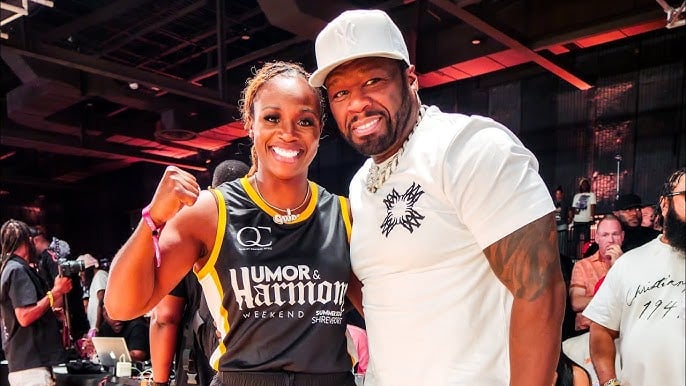
Something different happened. 50 recognized the moment. Instead of piling on and turning Claressa into the next punchline, he actually stopped and pivoted. He posted: “Okay, the truth is I’m a Claressa Shields fan. I think she’s an amazing fighter and she’s got a big fight coming up, so I’m going to chill and let her focus. Let’s go, champ.” No shade, no “but,” no sneaky double‑entendre. Just straight respect.
That’s why people are saying, “You lost this one, bro.” Because for the first time in a long time, somebody checked the narrative early, stood on it, and forced 50 to walk it back. Not in court. Not in private. In public, in front of everybody, with receipts. Claressa became the first person in recent memory to flip a 50 Cent stray into a 50 Cent salute.
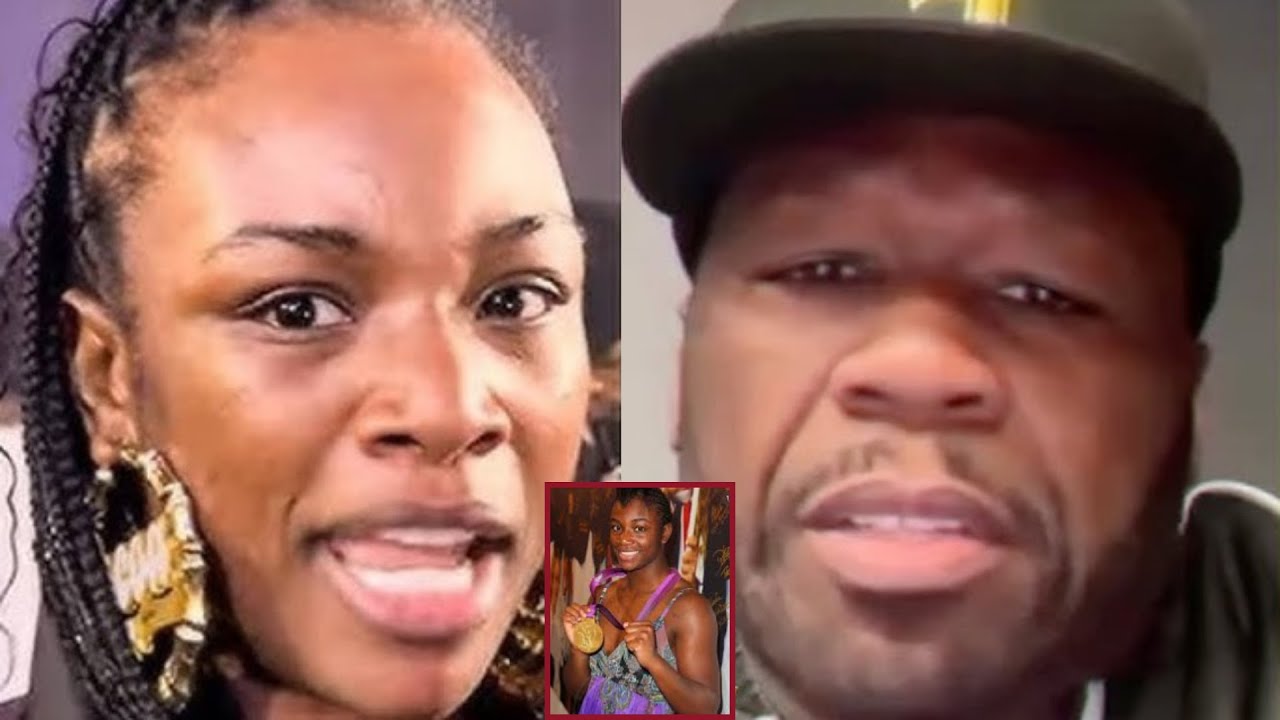
And she didn’t do it with tears or victimhood. She did it with context. While commenters were zoomed in on one frozen frame where she was bruised, sweaty and exhausted, she zoomed out: “I was 17, fighting grown women from around the world, representing a whole country, wearing a gold medal.”
That’s not a bad photo. That’s an artifact. It’s the exact moment a teenage girl from Flint turned herself into a global champion. Imagine looking at a soldier in combat gear after a mission and saying, “But your hair isn’t laid.” That’s how backward the internet can be.
Beyond that, Claressa named what a lot of people feel but don’t say: there is a deep obsession with tearing down Black women’s looks — their noses, their skin tone, their bodies — especially when they’re confident, successful and not begging for approval.
She made it crystal clear she’s not buying into that, and she’s not going to turn on her own people to appease folks who already decided they don’t like Blackness unless it’s filtered and packaged like a trend. That kind of clarity is exactly why 50 had to pause.
The optics of piling on a Black woman who’s literally brought home medals, built a legacy in a brutal sport, and is still holding it down for her community? That’s not banter. That’s bad business.
And while 50 was cooling off, the internet started talking. Clips of Claressa’s read‑down were circulating, timelines were debating beauty standards, old sports photos vs. glam shots, and who gets to decide what “pretty” even is. People started posting side‑by‑sides of that old fight photo next to her current looks: face beat, hair laid, fit on 10. Suddenly the “ugly” narrative looked even more ridiculous. It’s hard to keep calling somebody unattractive while staring at their glow‑up and their resume at the same time.
Cardi B, who knows a thing or two about being a Black/Latina woman in the spotlight, wasn’t about to sit this one out either. She’s already in her own never‑ending drama with Tasha K — the blogger who learned the hard way that defaming Cardi can cost you multi‑millions and possibly your whole savings account.
Tasha recently tried to get slick again, nudging around Cardi’s name while talking about Stefon Diggs, thinking that not saying “Cardi B” out loud would somehow protect her. Cardi hopped online and snapped instantly, warning Tasha that if she keeps poking around her business and the people she’s involved with, she could easily lose another chunk of cash. Cardi made it clear: she’s lawyering up again, and she’s not letting anybody play word games to get around court orders.
Why does that matter here? Because it shows a pattern: Black women in the public eye are done being silent targets. Claressa checked the beauty slander. Cardi is checking the “I’ll talk about you without naming you” slander. Different arenas — one in the ring, one on the charts — same energy. You talk wild, there’s a price. And suddenly a lot of people who used to treat them like easy content are realizing they’re looking at women who know their rights, their value, and their leverage.
Meanwhile, Tasha K is over there responding to Cardi’s latest warning by talking about “witness intimidation” and “you can’t contact alleged victims on behalf of someone being prosecuted.” Which is cute for Twitter, but not so cute when you’ve already been hit with a judgment for defamation and still haven’t fully squared up.
This is the same woman who allegedly repeated a grade multiple times — so legal chess might not be her strongest skill set. If your bank account already took a hit from somebody, common sense says you stop playing in their face. Cardi clearly has no problem becoming a professional bill collector at this point.
Zooming back out, you can see the fault lines. On one side, you’ve got the old playbook: drag women’s looks, drag their bodies, weaponize old photos, and say “It’s just jokes.” On the other side, you’ve got women like Claressa and Cardi who are weaponizing awareness, contracts, platforms and public sympathy.
The old way is starting to look dusty. It’s 2026 and fans are more media‑literate now. They know what bullying looks like. They know what anti‑Blackness looks like. They know what dog whistles sound like. So when 50 tried to do his usual thing and the timeline started shifting toward Claressa, he read the room. For once, the smart move was to step back and show love.
And that’s why this feels like a milestone. 50 didn’t just “go soft.” He did something even rarer for him: he let the narrative change. He acknowledged Claressa’s greatness, recognized she’s got a major fight coming up, and decided not to be the guy trying to distract a Black woman from history while strangers tear her down over a decade‑old image. He gave her her respect, called himself a fan, and said, “Let her focus. Let’s go champ.” Translation: “You got this one.”
So yeah — he lost this one, bro. And honestly? That’s not a bad thing. Sometimes losing looks a lot like growing. Claressa Shields walked out of this situation with her head higher, her message louder, and her image stronger. 50 Cent walked out looking more self‑aware than usual. Cardi B reminded everyone that she’s still small‑claims court’s worst nightmare if you speak on her sideways. And the crowd watching at home got a little clearer picture of what 2026 looks like for Black women in the spotlight: less silence, less shrugging, more boundaries, more consequences.
You can clown an old photo all you want, but at the end of the day, that “jacked up” shot of a 17‑year‑old girl with an Olympic medal around her neck is now officially the picture of the first woman to make 50 Cent say, “My bad…let’s go champ.”