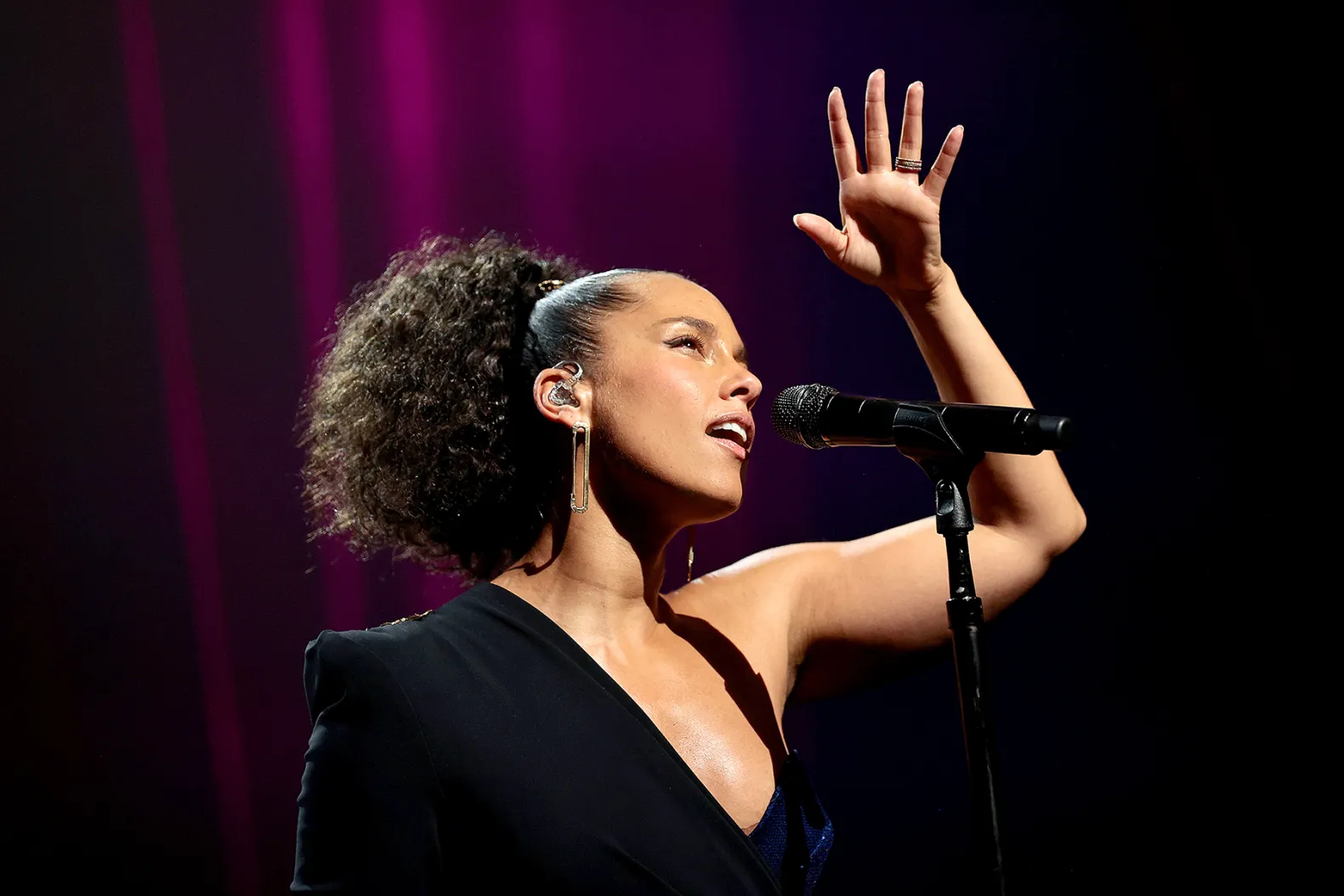
At 44, Alicia Keys stands as one of the most accomplished artists of her generation. With over 90 million records sold and 16 Grammy Awards, her legacy is firmly established. Yet behind the image of a poised, self-contained musician, a more complicated story has continued to unfold—one shaped by power, control, and the realities of navigating the music industry.
From Gifted Prodigy to Early Pressure

Born Alicia Augello Cook in New York City, Alicia Keys found her path early. Raised primarily by her mother after her parents separated, she turned to music as both refuge and expression. By the age of seven, she was studying piano, and by twelve, she was writing her own songs. Her talent quickly set her apart.
At just 15, she signed with Columbia Records, becoming one of the youngest artists to secure a major deal. What seemed like a dream opportunity soon became a struggle. Executives pushed her toward a more commercial image, urging changes to her appearance and sound. Her original work was dismissed in favor of outside writers, leaving her fighting for creative control during her teenage years.
The experience was difficult enough that she came to dread the studio. After several years of tension, the label dropped her, placing her future in doubt before her career had truly begun.
A Turning Point and a New Direction
That setback ultimately led to a pivotal shift. Clive Davis, launching J Records at the time, recognized her potential and offered her something she had been denied—creative freedom. At 19, she signed with his label and began shaping her music on her own terms.
Her debut album, Songs in A Minor, arrived in 2001 and quickly established her as a major force. Davis played a key role in positioning her, crafting an image that emphasized sophistication and restraint. While this approach helped define her public identity, it also raised questions about how much of that image was carefully managed behind the scenes.
Collaboration and Expanding Influence
A major milestone came in 2009 with “Empire State of Mind,” her collaboration with Jay-Z. The song became one of the defining hits of the decade and elevated her profile even further. The process behind it, including multiple recordings of her vocals, reflected the high expectations surrounding the project.
The collaboration linked her closely with one of hip-hop’s most influential figures, further embedding her within the upper tiers of the industry.
Public Scrutiny and Personal Controversy
As her career grew, so did scrutiny of her personal life. Allegations and commentary from figures like Jaguar Wright added to the conversation, raising claims about her relationships and the role of industry influence in shaping her path. These claims remain part of a broader narrative that has circulated publicly.
Her relationship with producer Swizz Beatz became a focal point of controversy. As rumors emerged during his previous marriage, public reaction intensified. Alicia largely remained silent as the situation played out, while Swizz maintained that his prior relationship had already ended.
By 2010, the two were married and starting a family. Over time, they, along with Mashonda Tifrere, reached a form of reconciliation, presenting a united front and sharing their experience of blended family life. Still, the earlier controversy left a lasting mark on her public image.
Silence, Strategy, and Survival
Throughout these moments, Alicia Keys has rarely addressed the surrounding narratives directly. She has chosen to focus on her music, her family, and her work, maintaining a steady presence while avoiding public conflict.
This approach has been interpreted in different ways. Some view it as grace and restraint, while others see it as a calculated way to navigate an industry where power dynamics can be difficult to challenge.
A Career Defined by Balance
Alicia Keys’ career reflects a balance between independence and structure. She has built a reputation for authenticity, writing, producing, and performing her own work. At the same time, her journey suggests an ongoing negotiation with the systems that shape success in the music world.
The early fight for control at Columbia contrasts with her later ability to work within established frameworks, raising questions about how artists adapt over time.
An Ongoing Conversation
As new voices continue to discuss the inner workings of the industry, Alicia Keys remains a central figure in those conversations. Her story highlights both the opportunities and the pressures that come with fame.
Now, at 44, she enters a new phase of her career with her legacy secure but questions still lingering. Her silence, whether intentional or protective, continues to shape how her story is understood.
In the end, her journey reflects something more complex than a simple rise to success. It is a story of talent, resilience, and the constant negotiation between personal truth and public life—one that continues to evolve.