Public discussion has intensified around the reported fallout between Cardi B and Latto, with growing online speculation and fan debate prompting Cardi B to share her perspective on the situation.
A Conversation Fueled by Online Speculation
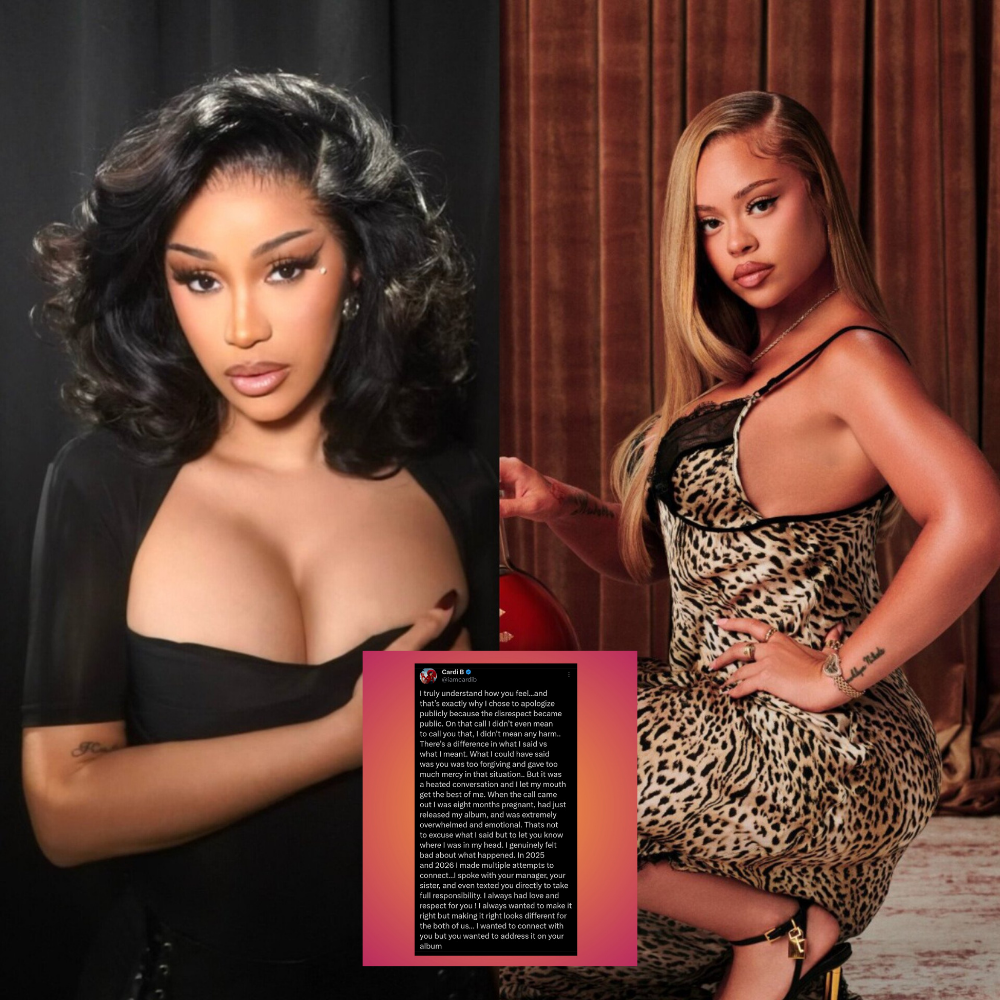
The conversation gained momentum after comments attributed to Cardi B began circulating online. In these widely shared remarks, she is said to have described efforts to repair the relationship privately rather than through public exchanges or music-related responses.
According to the circulating statement, Cardi B expressed frustration over differing expectations about how reconciliation should be handled. She suggested that she had attempted to maintain respect and reach out directly, but felt disappointed that unresolved issues had eventually become part of a public musical narrative.
As these comments spread, they quickly became central to ongoing discussions about the reported tension between the two artists.
Fans React and Take Sides
The reaction from fans was immediate, with social media users dividing into opposing perspectives.
Some supporters of Cardi B argued that her approach reflected a preference for handling conflict privately rather than escalating it publicly. They interpreted her comments as an attempt to seek resolution without turning personal matters into public entertainment.
Others expressed more understanding toward Latto’s previously discussed stance, suggesting that artists often process emotions through their music. From this perspective, creative expression and private reconciliation were seen as two approaches that do not always align neatly.
The result was a broader debate that extended beyond the two artists themselves, focusing instead on how personal disagreements should be addressed in public spaces.
Music, Emotion, and Public Interpretation
Across social media, users repeatedly returned to the question of whether conflict should be resolved through direct communication or through artistic expression.
Some argued that remaining silent can be interpreted as emotional distance or indifference, while others felt that expressing personal experiences through music naturally invites public interpretation and response. These contrasting views helped fuel an ongoing cycle of discussion and analysis.
The situation also highlighted how modern rap culture often blends personal relationships with artistic storytelling. Lyrics, interviews, collaborations, and social media activity are frequently examined together, shaping narratives that continue to evolve long after the original moment passes.
A More Complex Picture Behind the Headlines
Observers of the situation noted that conflicts in the music industry rarely come down to a single moment or simple explanation. Instead, they often involve overlapping factors such as personal expectations, professional pressures, timing, and public perception.
In this case, the discussion did not focus solely on competition or rivalry. Instead, much of the attention centered on emotional themes such as disappointment, communication, and differing ideas about what reconciliation should look like between artists.
At the heart of the conversation was the sense that both perspectives reflect the same situation viewed from different angles.
An Ongoing and Unresolved Public Discussion
As reactions continue to circulate online, audiences remain divided over what the exchange ultimately represents. Some see it as a step toward closure, while others believe it raises new questions about the relationship between the two artists.
For now, the broader conversation is less about assigning blame and more about understanding whether both sides ever shared the same expectations for how reconciliation would unfold.
What remains clear is that the discussion continues to evolve, shaped by fan interpretation, online debate, and the overlapping worlds of music and personal expression.