Chris Brown has spent years turning his concerts into elaborate productions filled with choreography, dramatic staging, and intimate moments with fans. But during a November 2026 performance in Los Angeles, one audience member became the center of attention for a reason that had little to do with her age-defying dance moves or celebrity status.
Her name was Ms. Joyce, and she was an older fan who received the kind of onstage serenade usually associated with much younger concertgoers.
The encounter took place during Brown’s Sunday night performance at SoFi Stadium, where the R&B singer invited Ms. Joyce to join him for his signature “Take You Down” experience.
What followed quickly became one of the most talked-about moments from the show.
Brown performed an intimate routine around his guest, dancing closely with her and incorporating a couch into the choreography. At one point, Ms. Joyce was positioned horizontally on the couch as the singer continued the performance.
The scene was captured on video, giving people who were not inside the stadium an opportunity to see the unusual interaction.
Brown later shared photographs from the moment on Instagram, accompanying them with a brief message expressing affection for his special guest.
The post made it clear that the encounter was memorable enough for the performer to highlight it on his own social media account.
But beyond the surprise of seeing an older woman participate in such a provocative concert routine, the moment raises an interesting question about the expectations audiences bring to live entertainment.
Why does the age of a concertgoer make such a difference to how people perceive an otherwise familiar performance?
For longtime Chris Brown fans, the “Take You Down” segment is hardly a new concept.
The song, released during the earlier years of his career, became one of his recognizable slow-tempo R&B recordings.
Its sensual presentation has made it a natural choice for concert moments built around close dancing and audience participation.
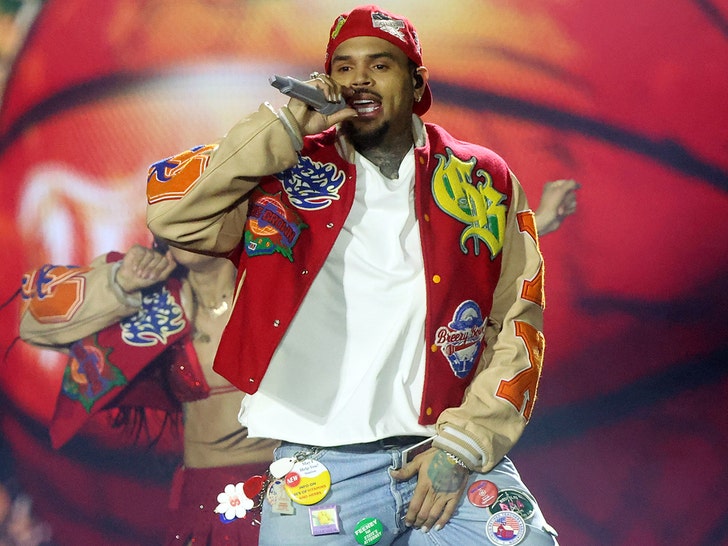
Brown’s live performances frequently emphasize physical movement, with carefully choreographed routines playing an important role in the overall experience.
The singer’s ability to combine vocals with demanding dance sequences has remained a defining feature of his stage identity.
During a large stadium concert, however, inviting an audience member into that choreography creates a different kind of interaction.
Instead of watching the performance from a distance, the selected fan becomes part of the show itself.
That shift can produce memorable moments because neither the audience nor the guest necessarily knows exactly how the interaction will unfold.
In Ms. Joyce’s case, the contrast between the expected participant and the person who actually appeared onstage became central to the story.
The original report described her as an elderly woman, but did not provide her exact age or detailed personal background.
It would therefore be inaccurate to assign her a specific age or speculate about her circumstances.
What is known is that she joined Brown during the Los Angeles concert and participated in a routine that included close dancing and a couch sequence.
Her outfit also attracted attention, with the report noting that she wore a coordinated look and removed her jacket during the appearance.
Those details helped distinguish the encounter from an ordinary fan interaction.
Rather than simply receiving a greeting, autograph, or brief acknowledgment, Ms. Joyce became involved in a full performance segment.
The moment also illustrates how celebrity concerts have evolved into experiences designed to generate memorable individual encounters.
For decades, performers have invited fans onto stages to sing, dance, or participate in special routines.
These interactions can create a sense of spontaneity within productions that otherwise involve extensive planning.
They also offer something that a recording or music video cannot reproduce in quite the same way: the possibility that an ordinary audience member will become part of an unforgettable live event.
In the social media era, that possibility has acquired another dimension.
A fan interaction that lasts only a few minutes inside a stadium can reach a much larger audience once video clips begin circulating online.
People who were not present can watch the encounter, share their interpretations, and discuss the performer’s choices.
That creates opportunities for unexpected moments to attract attention beyond the concert itself.
The Ms. Joyce performance is a particularly clear example because the encounter departed from conventional expectations surrounding an intimate R&B serenade.
Age is often treated as an important dividing line in entertainment and popular culture.
Music marketing, fashion advertising, and celebrity imagery frequently emphasize youth, especially when performances involve romance, sexuality, or physical attraction.
Older adults are less commonly presented as the central participants in these kinds of mainstream pop performances.
That does not mean they lack interest in the music or the experiences associated with it.
Many concert audiences include people from different generations, particularly when an artist has maintained a successful career over a long period.
Brown’s career spans more than two decades, beginning with his breakthrough as a teenage performer in the mid-2000s.
Listeners who discovered his music during those early years have grown older alongside him.
Others have encountered his recordings more recently, creating an audience that may include people with very different backgrounds and experiences.
An older fan attending a Chris Brown concert is therefore not inherently unusual.
What made Ms. Joyce’s appearance distinctive was her involvement in a performance segment generally associated with a younger audience member.
The resulting contrast created an unexpected visual moment.
But it also challenged an assumption that sensual entertainment belongs exclusively to younger people.
There is a difference between acknowledging that an interaction is surprising and treating someone’s age as a reason they should not participate.
Adults of different generations can enjoy music, dancing, humor, and theatrical performances without necessarily fitting the stereotypes associated with those activities.
That broader perspective helps explain why the encounter is more interesting than its most provocative details.
Ms. Joyce was not simply watching the show from the audience.
She was included in a recognizable part of Brown’s stage production.
The fact that Brown later shared photographs of the interaction suggests that he wanted to acknowledge the experience publicly.
His brief Instagram message conveyed warmth toward his guest, although it did not explain how she was selected or what arrangements preceded the performance.
Those details remain unknown.
There is also no verified account in the supplied reporting of Ms. Joyce’s private thoughts afterward.
While the video documents her participation, it would be misleading to invent statements about how she felt or what she told friends and family.
The same caution applies to claims about widespread audience reactions.
The encounter attracted attention because of the footage and subsequent coverage, but the available information does not establish a comprehensive picture of how everyone inside SoFi Stadium responded.
What can be examined is the nature of the performance itself.
Brown’s “Take You Down” routine relies on the contrast between an established celebrity performer and an audience member suddenly placed at the center of the production.
The guest becomes part of the choreography, while the surrounding crowd watches a familiar song take on a more personal dimension.
That format can make individual performances feel different from one concert to the next.
Even when the musical arrangement remains unchanged, the identity and participation of the guest can create a distinctive experience.
With Ms. Joyce, the encounter became notable because it challenged expectations about who might be invited into that role.
The performance also raises questions about how artists balance theatrical intimacy with audience participation.
A stadium concert is a professional production, and bringing someone onstage introduces practical considerations involving staging, movement, and the comfort of the participant.
The supplied report does not describe the arrangements made before Ms. Joyce joined Brown, so there is no basis for claiming that any particular preparation or agreement occurred.
Nevertheless, audience participation is most successful when the guest can enjoy the experience and the performer can maintain control of the production.
In this case, the visible outcome was a memorable performance that Brown subsequently chose to share with his followers.
There is also something significant about the setting.
SoFi Stadium is one of the largest and most prominent entertainment venues in the Los Angeles area.
Performing there places an artist in front of a substantial audience, making even a short interaction part of a major live production.
For a guest invited onto that stage, the experience is very different from being noticed at a small club or intimate theater.
The scale of the venue adds to the unusual nature of the encounter.
Ms. Joyce went from being an audience member to participating in a performance by one of R&B’s best-known entertainers.
That transformation is central to the appeal of live concert surprises.
Fans attend shows hoping to hear familiar songs, experience the atmosphere, and see performers they admire.
Occasionally, one person receives an experience that goes beyond the expectations of an ordinary ticket holder.
Those moments often become lasting parts of a concert’s identity.
In my view, the most interesting aspect of the Ms. Joyce encounter is not the provocative choreography.
It is the way the performance challenged assumptions about age and participation in mainstream entertainment.
An older fan was given the same kind of spotlight that audiences might ordinarily expect to see reserved for someone younger.
The moment did not require a special announcement about inclusion or generational differences.
It simply happened as part of the show.
Brown’s decision to share the photographs afterward helped bring attention to an interaction that might otherwise have remained a memory for the people inside the stadium.
And while the footage will likely be remembered for its unexpected visuals, the broader significance lies in how easily entertainment expectations can be challenged.
A familiar song, a recognizable concert routine, and one unexpected guest were enough to create a moment that stood apart from the rest of the performance.
Ms. Joyce’s appearance serves as a reminder that music audiences are not defined by a single age group.
Fans can remain enthusiastic, adventurous, and willing to participate in live entertainment throughout different stages of their lives.
And that leaves an interesting question: was Chris Brown’s decision to bring an older fan into his signature serenade simply a funny concert surprise, or does it highlight how unnecessarily restrictive our expectations about age and entertainment have become?