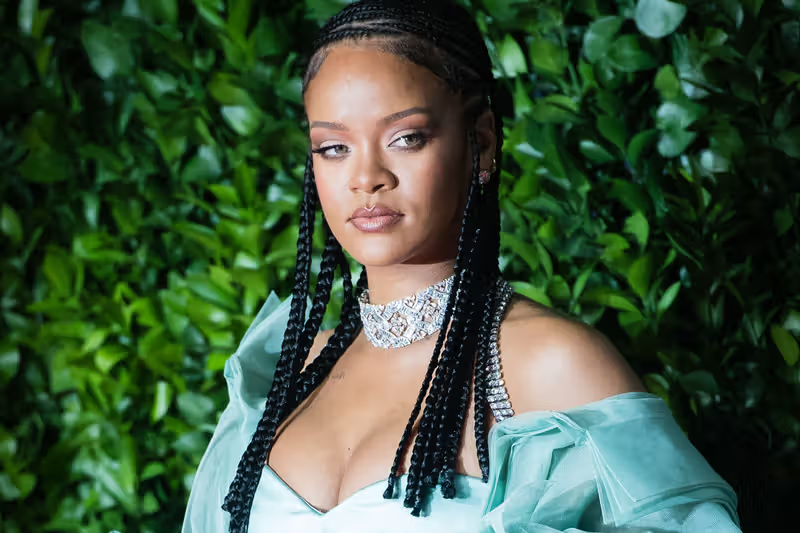
Chrisean Rock has spent years living much of her life in front of cameras, but one of her most revealing recent moments had nothing to do with celebrity drama or reality television. It came when the 26-year-old mother began thinking about a future she desperately hopes she will never have to face: a world in which her young son might have to live without her.
During a recent Kick livestream, Rock spoke about her relationship with three-year-old Chrisean Jr. and the responsibility she feels as his mother. Her words revealed a fear that goes far beyond the everyday challenges of raising a child, touching on a question many parents quietly confront but rarely discuss publicly.
What happens when a child depends so heavily on one parent that the thought of separation becomes almost impossible to imagine?
For Rock, the question is particularly personal because she believes her son needs her constant presence. She described their relationship as deeply attached, explaining that he relies on her throughout the day and that she feels equally connected to him.
That attachment has apparently led her to reconsider what it means to protect a child. Rock acknowledged that she sometimes questions whether she is being overly protective, but she also believes that the level of attention she gives her son reflects what he currently needs.
The conversation took a more emotional turn when she began discussing the natural reality that parents generally expect their children to outlive them.
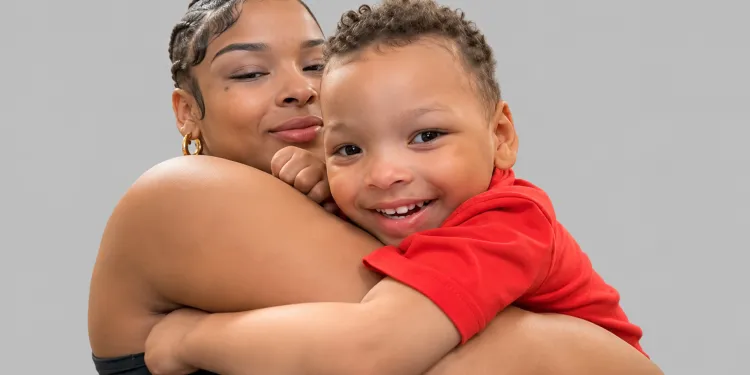
Rather than talking about her own ambitions, career plans or the next stage of her public life, Rock expressed a desire to remain alive for as long as her son is alive. The statement was not presented as a prediction or a plan, but as an expression of how difficult she finds the thought of eventually leaving him behind.
She admitted that the subject makes her nervous and suggested that parents do not discuss this particular fear often enough.
It was a striking change of tone for a public figure whose appearances frequently attract attention because of disagreements, relationship controversies and confrontational exchanges.
This time, the focus was not on another celebrity or an argument unfolding online. It was on the emotional responsibility of raising a child and the uncertainty that can accompany that responsibility.
There is an important distinction between wanting to be present for every moment of a child’s life and believing that a parent must remain physically present forever. Children grow, develop independence and build relationships beyond their immediate family. But Rock’s comments reflected her own fears about the future rather than an attempt to define how every family should function.
Her words also offered a different perspective on the public discussions surrounding her son’s development.
Since Chrisean Jr.’s birth in September 2023, his life has attracted attention from audiences who follow his mother’s livestreams and social media appearances. Some of that attention has centred on questions about his developmental progress and the support he receives.
Rock has previously addressed those questions publicly, including during an August appearance on The Jason Lee Show.
During that interview, she said her son had not received a diagnosis and explained that he was attending therapy. She also described her belief that he needed additional time to develop and that she was willing to follow his individual pace.
Those statements are significant because they establish what Rock herself has publicly disclosed, without providing grounds for outsiders to make medical conclusions about her child.
A parent’s observations about their child’s development are not the same as a clinical assessment, and the information shared through livestreams cannot establish whether a child has a particular medical or developmental condition.
Nevertheless, Rock’s decision to discuss the subject has made her parenting choices part of a wider public conversation.
Earlier in November, she became emotional during another Kick broadcast while responding to criticism about the way she was caring for her son.
During that appearance, Rock said she had already ordered leg braces for him and defended the efforts she was making as his mother.
Her response reflected the frustration of having personal parenting decisions examined by strangers, particularly when those decisions involve matters that may not be fully visible to an online audience.
The latest livestream approached the subject from a noticeably different direction.
Instead of concentrating on criticism, Rock spoke about the emotional bond she shares with her son and the fear that comes with recognising how much he means to her.
That distinction makes the conversation especially interesting. Public discussions about celebrity parenting often focus on whether someone is making the right decisions, but they can overlook the emotional experiences of the parent making them.
Rock’s remarks introduced a more complicated question: how does a mother balance the desire to protect her child with the knowledge that she cannot control every part of his future?
It is a dilemma that extends far beyond the entertainment industry.
Parents of young children routinely make decisions about independence, safety, education and emotional support. Those decisions can become more demanding when a child requires additional attention or when a parent feels uncertain about what the future may bring.
Rock has not publicly established the precise nature of any long-term care her son might require, so it would be inappropriate to assume that his current needs will remain unchanged as he grows older.
What her comments do reveal is the intensity of her concern and her desire to remain a dependable presence in his life.
The emotional weight of that concern became even clearer when Rock’s mood shifted towards the end of the livestream.
As she approached home, she spoke excitedly about seeing her son again, explaining that she was only about fifteen minutes away from him.
After discussing the possibility of someday being separated from him, the prospect of an ordinary reunion appeared to bring her immediate happiness.
She also described the love children give their parents as exceptionally pure, connecting that feeling to her religious faith.
Faith has been a recurring part of Rock’s public explanations of motherhood. In previous discussions about her son’s development and the criticism directed towards her, she has spoken about prayer and the confidence she draws from her belief in God.
That spiritual perspective appears to be one way she makes sense of the responsibilities and uncertainties she faces.
But the most revealing aspect of her latest comments may be the contrast between the public image associated with Chrisean Rock and the vulnerability she displayed while discussing her son.
Viewers who know her primarily through reality television or online controversies may be accustomed to seeing her respond forcefully to criticism. Her latest conversation showed a mother openly acknowledging a fear she cannot resolve through an argument or a confident declaration.
There is no simple answer to the question she raised.
No parent can guarantee how long they will live, and no family can remove every uncertainty from the future. What parents can do is provide care, build support around their children and help them develop as their needs change.
In my view, the most meaningful part of Rock’s confession was not the idea of living as long as her son. It was her willingness to admit that loving a child can also bring fears that are difficult to express.
That does not mean every parenting decision should be accepted without question, nor does it make public scrutiny of a celebrity’s statements automatically unfair. It simply means that concern for a child’s wellbeing and compassion towards a parent can exist at the same time.
Rock’s story also highlights the importance of distinguishing between what a parent has actually disclosed and what audiences might assume from short clips circulating online.
Her son is still very young, and his future development cannot be determined from public commentary or isolated moments on a livestream.
For now, Rock has made one thing unmistakably clear: she wants to be present for him, support him and experience as much of his life as possible.
And perhaps that is why her words carry an emotional significance beyond celebrity news. Behind the public persona is a mother confronting the same fundamental uncertainty that many parents eventually face.
Do you think Rock’s confession reflects a fear that most parents experience but rarely admit, or does it raise a larger conversation about helping children become independent while still giving them the support they need?