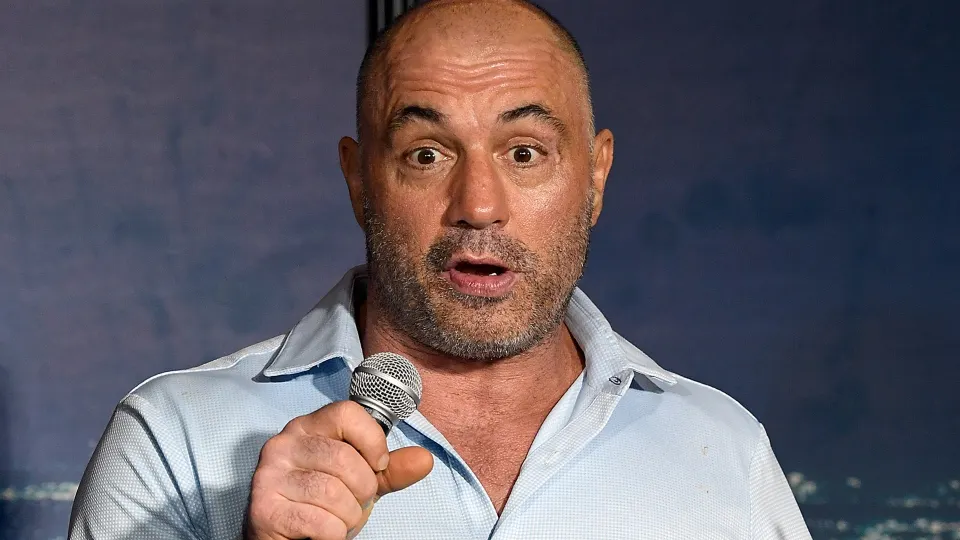
In recent weeks, claims circulating online—some amplified by figures like Joe Rogan—have painted a dramatic picture: celebrities quietly fleeing the United States in the wake of renewed attention on the Epstein files. It’s a compelling storyline, built on suspicion, timing, and the public’s long-standing distrust of elite power structures.
But when examined closely, the narrative begins to blur at the edges.

The Illusion of a Coordinated Exit
The idea of a coordinated exodus suggests intention—a synchronized retreat driven by shared fear. Yet, the movements cited as evidence tell a far less unified story.
Tom Hanks, for instance, has had documented ties to Greece for years, well before recent headlines. His honorary citizenship and property on Antiparos were not sudden decisions made under pressure, but part of a long-established personal connection.
Similarly, Ellen DeGeneres and Portia de Rossi have been known to buy and sell high-value real estate frequently, a pattern consistent with their lifestyle rather than a clear signal of flight.
Even Oprah Winfrey, often placed at the center of speculation, has maintained multiple residences for decades. Her properties in Hawaii are not new developments tied to recent events, but part of a long-standing real estate portfolio.
Association vs. Evidence
At the core of these claims is a deeper issue: the difference between association and implication.
The case of Jeffrey Epstein has cast a wide and complicated shadow. His network included a vast number of high-profile individuals—some connected socially, others peripherally, and many never accused of wrongdoing.
Public documents, including flight logs and contact books, have often been interpreted in ways that go beyond what they definitively prove. Being named, referenced, or even present in such materials does not equate to criminal involvement.
This distinction is critical, yet frequently lost in viral narratives.
The Power of Timing
What gives these theories their momentum is timing. Property sales, international travel, or lifestyle changes—ordinary for the ultra-wealthy—take on a different meaning when placed next to unfolding legal stories.
When Jay-Z and Beyoncé make financial moves, or when celebrities relocate, it can appear strategic. But without verified legal action or direct charges, interpreting these actions as evidence of guilt becomes speculative.
The human mind is wired to connect dots. The challenge is that not all dots are connected.
The Role of Public Distrust
What makes narratives like this resonate is not just the individuals involved—it’s the broader climate.
There is a growing skepticism toward institutions, celebrity culture, and systems of power. When stories emerge that suggest hidden networks or protected elites, they tap into that skepticism with force.
In that environment, even unverified claims can feel plausible.
What Remains Unproven
Despite the intensity of the conversation, there is no confirmed evidence of a mass celebrity exodus tied directly to the Epstein case. There have been no sweeping arrests connected to the names often mentioned in these discussions, nor official findings that support the more dramatic interpretations circulating online.
That doesn’t mean questions shouldn’t be asked. It means they should be grounded in verifiable fact.
A Story Still Being Written
The Epstein case continues to raise serious, unresolved issues about power, accountability, and justice. Those questions deserve attention—careful, factual, and persistent.
But the leap from unresolved questions to sweeping conclusions about fleeing celebrities risks turning a complex reality into a simplified narrative.
In the end, what we are witnessing may say less about secret escapes and more about something else entirely: how quickly uncertainty can be shaped into certainty, and how powerful a story can become when it fills the gaps left by what we don’t yet know.