Michelle Williams Opens Up About Feeling Overlooked Alongside Beyoncé and Kelly Rowland
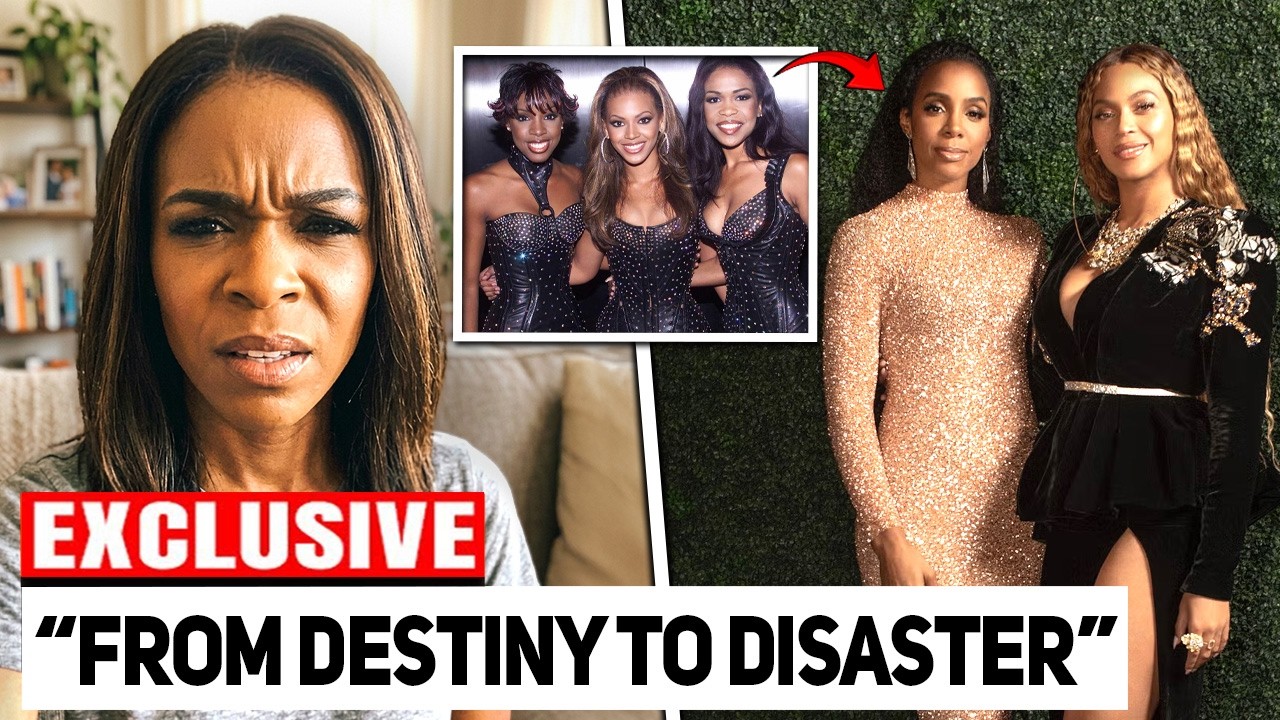
For years, Michelle Williams was often viewed as the quiet member of Destiny’s Child.
While Beyoncé became the undeniable superstar and Kelly Rowland built a reputation as the stylish, charismatic fan favorite, Michelle frequently found herself caught in the middle, praised for her vocals but rarely given the same level of recognition.
Now, after years of staying professional and avoiding public drama, Michelle is speaking more openly about the emotional toll that came with being part of one of the biggest girl groups in music history.
And according to fans, her recent comments have reignited long-running conversations about what life inside Destiny’s Child may have really felt like behind the scenes.
Michelle Williams Always Felt the Pressure
Michelle recently addressed the perception that she was never the “favorite” member of Destiny’s Child.
Rather than denying it, she explained that she was simply aware of how people viewed the group dynamic. She made it clear that those opinions did not destroy her confidence, but she admitted she always understood that she was often treated differently from Beyoncé and Kelly.
That honesty struck a chord with many fans who have long believed Michelle was unfairly overlooked despite her enormous contribution to the group’s sound.
Over time, Michelle became known by fans as the “queen of the bridges” because of the unforgettable vocal moments she brought to Destiny’s Child songs. Her tone added a distinct layer to tracks across the Survivor era and beyond, helping shape the group’s signature sound during some of its biggest years.
Still, much of the attention remained centered on Beyoncé, while Kelly was often viewed as the naturally charismatic co-star beside her.
Michelle was frequently left fighting for recognition.
Joining Destiny’s Child Was Never Easy
Michelle entered Destiny’s Child during one of the group’s most turbulent moments.
After the departure of original members LeToya Luckett and LaTavia Roberson, Michelle Williams and Farrah Franklin were brought in under enormous public scrutiny. Fans were already emotionally attached to the original lineup, and many people immediately treated the new members like outsiders.
Farrah Franklin’s time in the group ended quickly, leaving Michelle alone to navigate the pressure of joining an already established global act.
By that point, Beyoncé and Kelly Rowland shared years of history and chemistry that Michelle had to adapt to almost overnight. She later admitted that she entered the group focused entirely on being a team player and helping the group succeed rather than demanding attention for herself.
Michelle explained that she knew the opportunity was bigger than her ego. Her goal was simply to contribute and help Destiny’s Child continue winning at the highest level.
That mindset earned respect from many longtime fans, especially as people began revisiting her role in the group years later.
Behind the Success, Michelle Was Quietly Struggling
While Destiny’s Child dominated charts and sold millions of records, Michelle was privately dealing with severe emotional struggles.
She revealed that she experienced depression during the group’s peak years and even tried opening up about it to the group’s manager at the time, Matthew Knowles, who is also Beyoncé’s father.
According to Michelle, his response focused more on gratitude and success than on her emotional health. From the outside, Destiny’s Child appeared to have everything anyone could dream of: major tours, endorsement deals, worldwide fame, and financial success.
But Michelle said none of that erased the pain she was feeling internally.
She described her depression as feeling trapped in a deep pit, where every attempt to move forward only pulled her further down emotionally.
At the time, conversations around mental health were far less common than they are today, especially in the entertainment industry. Michelle later explained that she felt pressure to keep moving professionally even while struggling privately.
The Internet Turned Michelle Into a Joke
As social media culture exploded in the 2000s and early 2010s, Michelle became the target of endless online jokes.
Memes, viral clips, and “poor Michelle” hashtags spread across the internet, often mocking her stage moments or portraying her as the least important member of Destiny’s Child.
What many people now recognize is how relentless that criticism became.
Even though Michelle consistently delivered strong performances and contributed heavily to the group’s music, she often found herself reduced to punchlines online. Fans now look back on that period as unnecessarily harsh and deeply unfair.
In recent years, a growing number of listeners have revisited Destiny’s Child’s music and realized just how important Michelle’s vocals were to the group’s identity.
Many now openly admit that the group’s sound would not have been the same without her.
Beyoncé and Kelly’s Bond Often Left Michelle on the Outside
Part of what fueled speculation about tension within the group was the visible closeness between Beyoncé and Kelly Rowland.
The two shared a lifelong connection that naturally carried over into their careers. Fans often viewed them as inseparable, both personally and professionally.
Michelle, meanwhile, sometimes appeared more distant from that inner circle.
Over the years, some fans interpreted that distance as evidence that Michelle never fully felt included at the same level. Others believed she simply chose a different path and preferred staying away from public industry drama.
Unlike Kelly, who has occasionally defended Beyoncé publicly during controversies, Michelle has largely stayed focused on her own career and personal growth.
That decision led some people to speculate that her relationship with Beyoncé became less visible over time, especially as Beyoncé’s global fame continued reaching another level entirely.
Michelle Chose Her Own Path
When Destiny’s Child slowed down, Michelle moved in a completely different direction from her former groupmates.
Instead of chasing mainstream pop success, she focused heavily on gospel music, theater, and Broadway performances. Many fans believe that shift allowed her to finally build an identity outside the constant comparisons tied to Destiny’s Child.
Her work in productions like Death Becomes Her earned strong praise and reminded audiences that her talent extends far beyond her years in the group.
For Michelle, creating space away from the pressures of pop superstardom may have ultimately given her the peace and confidence she struggled to find during Destiny’s Child’s peak.
Fans Are Finally Giving Michelle Her Flowers
Today, public opinion surrounding Michelle Williams has changed dramatically.
Many longtime Destiny’s Child fans now openly defend her contributions and criticize the way she was treated by both the media and internet culture during the group’s biggest years.
What was once dismissed as “poor Michelle” jokes has turned into widespread appreciation for her resilience, professionalism, and vocal talent.
Fans continue celebrating her iconic bridge vocals, her honesty about mental health, and the grace she maintained despite years of criticism and comparison.
And as more people revisit Destiny’s Child’s legacy, many are realizing that Michelle Williams was never simply the background member of the group.
She was an essential part of what made Destiny’s Child work in the first place.