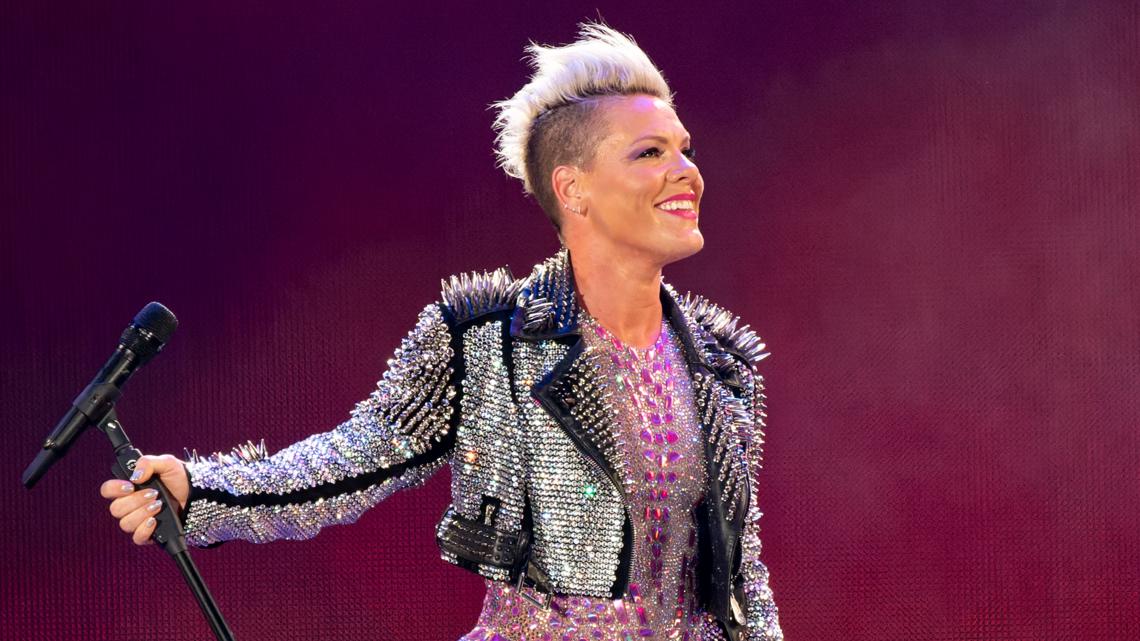
For most of her career, Pink has built her songwriting reputation on brutal honesty. Her music rarely hides the complicated parts of love—arguments, doubts, frustration, and the messy realities that sit behind long-term relationships.
But looking back on one of her own hits, the singer now admits that honesty may have crossed a line.
Reflecting on the 2013 single True Love, Pink has acknowledged that the tone of the song feels harsher to her today than it did when she wrote it. In interviews, she’s even joked that she now “owes” her husband a proper love song—one without the sarcasm and sharp edges.
A Song That Turned Frustration Into Pop
“True Love” appeared on Pink’s album The Truth About Love and quickly became a fan favorite. Built around a punchy pop-rock arrangement and featuring guest vocals from Lily Allen, the track captured the roller-coaster nature of long-term relationships.
Instead of romanticizing love, the lyrics leaned into the contradictions:
You adore someone… but sometimes they drive you completely insane.
For many listeners, that honesty felt refreshing. The song acknowledged that lasting relationships aren’t always soft or poetic—they’re often loud, frustrating, and occasionally ridiculous.
The track’s humor and candor made it relatable, and it went on to become a commercial success around the world.
But over time, Pink began to hear the lyrics differently.
Why Pink Now Calls the Song “Mean”
Years after its release, Pink admitted that certain lines in “True Love” feel unnecessarily harsh in hindsight.
What once felt like playful sarcasm now strikes her as unfair to the person at the center of the song: her husband, Carey Hart.
In interviews, she has described Hart as the steady presence in their relationship—someone who often absorbs the chaos that comes with her intense personality and high-pressure career.
That realization reframed the song for her.
Rather than capturing the balance of their relationship, Pink now feels it mostly highlighted her frustration while underplaying the loyalty and stability Hart brought to their partnership.
Her joking conclusion: she owes him a love song that doesn’t include a “but” halfway through the compliment.
The Music Video Told a Different Story
The contrast between the song and its visual counterpart makes the reflection even more interesting.
The video for “True Love,” directed by Sophie Muller, leaned heavily into warmth and humor rather than conflict. It featured Hart himself alongside their daughter, creating a playful portrait of family life.
Instead of dramatizing the biting lyrics, the video showed a couple navigating everyday chaos with affection—parenting moments, teasing interactions, and small glimpses of domestic life.
That contrast between the video’s tenderness and the song’s sarcasm is something Pink now recognizes more clearly.
A Relationship That Has Always Been Publicly Real
Part of why fans connect with Pink’s music is that her relationship with Carey Hart has never been presented as perfect.
The couple met in the early 2000s, married in 2006, and went through a highly public separation in 2008 before reconciling. Over the years, Pink has openly discussed therapy, communication struggles, and the work required to sustain a long-term partnership.
That openness has become part of her artistic identity.
Many of her songs—including the post-breakup anthem So What—draw directly from real events in their marriage.
But as time passes, the way an artist views those moments can change.
When Songwriting Freezes a Moment in Time
One challenge with autobiographical songwriting is that it captures a specific emotional snapshot.
When Pink wrote “True Love,” she was expressing a feeling that existed in that moment: the tension between affection and irritation that often appears in long relationships.
Years later, however, the broader perspective of marriage—and the growth that comes with it—can make that snapshot feel incomplete.
That doesn’t mean the song was dishonest.
It simply means it told only part of the story.
Growth Beyond the Punchline
What makes Pink’s reflection notable isn’t regret about the song itself—it’s her willingness to re-evaluate it publicly.
Instead of pretending the lyrics still represent her full perspective, she acknowledges that relationships evolve, and so does the way we talk about them.
Since the era of “True Love,” Pink’s songwriting has often leaned toward deeper reflections on partnership, parenting, and emotional accountability.
The humor and bluntness remain, but they’re often paired with a broader understanding of how relationships survive over time.
Why Fans Still Love the Song
Even with Pink’s changed perspective, “True Love” continues to resonate with listeners.
For many couples, the song reflects a familiar dynamic: love that coexists with annoyance, sarcasm, and the occasional urge to scream into a pillow.
That relatability is exactly why it became popular in the first place.
But Pink’s later reflection adds another layer to the story.
It reminds fans that relationships—and the songs inspired by them—are never static.
They evolve, just like the people inside them.
The Love Song She Says She Still Owes
Pink often jokes that one day she’ll write a straightforward tribute to Carey Hart—something sincere, uncomplicated, and free of the playful insults that colored “True Love.”
Whether that song ever arrives remains to be seen.
But the idea itself says a lot about how the singer views her marriage today.
Two decades into their relationship, Pink isn’t just writing about love anymore.
She’s learning how to look back at it—and sometimes, how to rewrite the story with a little more kindness.