The competition just took a turn—and it’s no longer just about who survives each week.
On American Idol, the Top 9 has evolved into something much bigger: a head-to-head clash between two completely different kinds of artists. And at the center of it all are Hannah Harper and Keyla Richardson—two performers whose styles couldn’t be more opposite… yet equally compelling.
This isn’t just a rivalry.
It’s a debate.
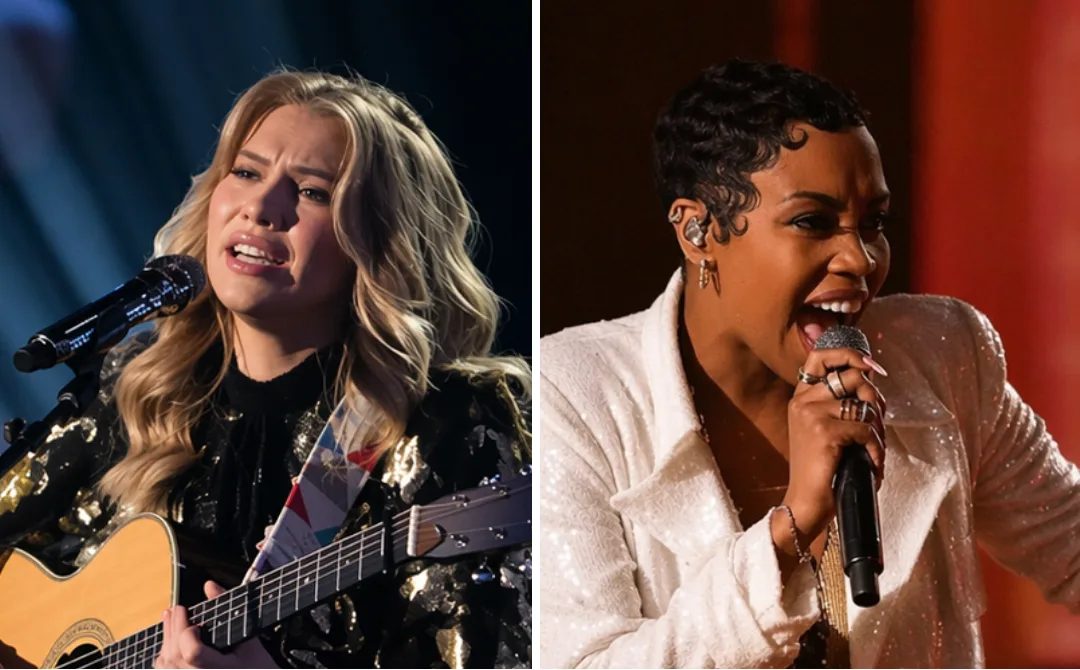
Hannah Harper’s “Landslide” performance didn’t chase big notes or dramatic moments. Instead, it pulled everything inward. With a soft, controlled delivery, she created something intimate—almost fragile—where every lyric felt intentional. She allowed silence to do part of the work, letting the emotion build naturally rather than forcing it.
The result wasn’t immediate applause—it was stillness.
The kind of silence that only happens when a room is completely locked in.
Her strength lies in emotional storytelling. She doesn’t just sing a song—she invites the audience into it. And when it works, it lingers long after the performance ends.
Then came Keyla Richardson.
And just like that, the atmosphere shifted.
Taking on Stevie Wonder’s “Signed, Sealed, Delivered (I’m Yours),” Keyla did the exact opposite. She brought energy, power, and undeniable control, delivering a performance that demanded attention from the very first note. Her vocals were sharp, confident, and technically impressive, with moments that felt effortless yet commanding.
Where Hannah created quiet… Keyla created impact.
The audience didn’t sit in silence—they reacted. They moved. They responded in real time to the energy she brought to the stage.
And now, fans are split right down the middle.
One side believes Hannah represents what American Idol is truly about—connection, authenticity, and the ability to make people feel something real. For them, emotion outweighs vocal power, and her consistency in delivering those moments makes her the clear frontrunner.
The other side sees Keyla as the total package when it comes to vocal ability. They argue that her control, range, and presence set a higher standard—and that performances like hers define what it means to stand out in a competition built on singing.
What makes this divide so intense?
Both sides are right.
American Idol has always been a balance between heart and power—and now, those two qualities are being pushed to their extremes through two very different artists.
As the competition moves forward, the pressure shifts.
For Hannah, the challenge may be expanding vocally without losing the emotional core that defines her. For Keyla, it’s about deepening that emotional connection to match the strength of her voice.
Whoever finds that balance first could take control of the entire competition.
But for now, the divide is real.
Fans aren’t just watching anymore—they’re choosing sides.
And in a competition where every vote counts, that split could decide everything.