At the exact moment America entered a new millennium, it also entered a new kind of cultural war. But the target wasn’t a policy, a system, or an institution. It was a voice. And that voice belonged to Eminem.
Marshall Mathers didn’t look like the threat people expected. He wasn’t polished, restrained, or diplomatic. He was raw. Confrontational. Unfiltered. And when “The Real Slim Shady” arrived in 2000, it didn’t just dominate radio—it provoked something deeper. The song sounded absurd on the surface, filled with humor, satire, and exaggerated characters. But beneath the chaos was something far more dangerous: clarity.
Eminem wasn’t simply making fun of celebrities or pop culture. He was exposing contradictions. He was holding up a mirror.
And America didn’t like what it saw.
When a Song Became a Political Problem
“The Real Slim Shady,” released as the lead single from The Marshall Mathers LP, exploded instantly. Produced by Dr. Dre, it carried an energy that was impossible to ignore—playful, sharp, and deliberately uncomfortable. But the discomfort didn’t stay inside the music industry. It reached Washington.
Suddenly, Eminem’s lyrics were no longer just lyrics. They were evidence.
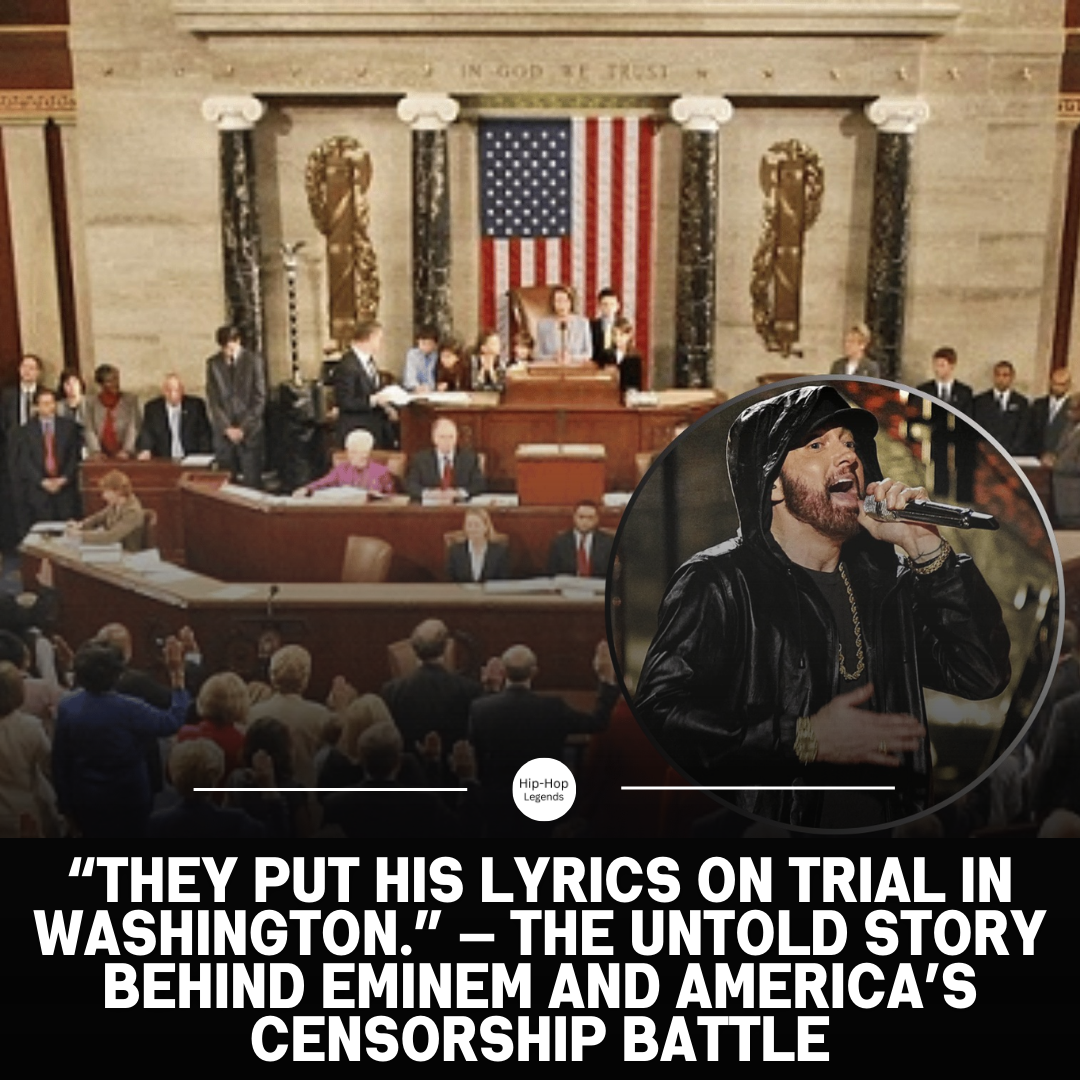
Between 2000 and 2003, U.S. lawmakers began referencing his music during congressional discussions about media influence, censorship, and what they described as “harmful content marketed to youth.” Political figures openly condemned him, labeling his work dangerous and morally corrosive. His name entered a space normally reserved for policy debates, not artists.
It was no longer about one song. It was about control.
Eminem’s response was simple and unwavering. He insisted his music wasn’t creating chaos. It was documenting it. His lyrics reflected environments shaped by instability, abandonment, anger, and survival. He wasn’t inventing those realities. He was reporting from inside them.
That distinction made all the difference.
When Censorship Reached Beyond the Lyrics
The backlash didn’t remain symbolic. It began to affect real-world decisions. Broadcast regulators, including the Federal Communications Commission, faced growing pressure to restrict content associated with Eminem’s music.
In one widely discussed case, a radio station faced penalties for airing even a sanitized version of “The Real Slim Shady.” The controversy quickly escalated beyond the song itself and into something larger: the boundaries of free expression.
The question wasn’t whether people liked the music. It was whether discomfort justified suppression.
The more institutions attempted to limit his reach, the more visible he became.
The Artist as a Scapegoat
Eminem understood something many critics didn’t want to admit. Outrage was easier than introspection.
It was easier to blame a rapper than to confront systemic problems. Easier to condemn words than to examine the environments those words came from. His music forced people to confront uncomfortable truths—about broken families, neglected communities, and emotional isolation.
He didn’t present himself as a role model. He presented himself as a product of circumstances many preferred not to discuss.
That honesty made him both powerful and threatening.
The Attempt to Silence Him Made Him Larger
The effort to contain Eminem didn’t weaken his influence. It accelerated it.
The Marshall Mathers LP sold at a pace that shattered expectations, becoming one of the fastest-selling solo releases ever recorded at the time. What critics labeled dangerous, audiences recognized as authentic. People weren’t drawn to him despite the controversy. They were drawn because of it.
And then came a moment no one could have predicted.
In 2003, Eminem stood on the stage of the Academy Awards as the winner of Best Original Song for “Lose Yourself.” It was a quiet, restrained moment—far removed from the chaotic image that had been constructed around him. It revealed something important. The same artist who had been treated as a cultural threat was also capable of creating something universally human.
It forced the world to reconsider who he really was.
The Legacy of the Conflict
Eminem never reshaped his voice to satisfy critics. He never softened his message to make it more comfortable. Instead, he allowed the reaction itself to become part of his story.
What emerged wasn’t just a controversy. It was a turning point. It exposed how quickly society could unite against discomfort while remaining silent about deeper structural pain. It revealed how art could become a battleground for questions that extended far beyond music.
More than two decades later, “The Real Slim Shady” still exists as more than a song. It stands as a reminder of a moment when an artist forced an entire culture to confront itself.
Because in the end, the fear wasn’t about profanity.
It was about recognition.