Thirty years ago, a young Detroit rapper pressed his first album, sold copies from the boot of his car, and watched it go almost nowhere. That record was Infinite, released on 12 November 1996 through WEB Entertainment, and this week six of its songs have landed on streaming services as a 30th anniversary EP. The tracklist is Infinite, It’s OK, Tonite, 313, Open Mic and Never 2 Far. For a record that most listeners never heard the first time round, it now looks like one of the most important flops in hip-hop history.
The reason is simple. Without the disappointment of Infinite, there may never have been a Slim Shady. Eminem’s debut was recorded in the Bass Brothers’ basement studio between December 1995 and June 1996, and it sounds like an artist still searching for his voice. Reference accounts of the period describe a young rapper shaped by Nas, AZ and Esham, writing in part about the pressures of raising his newborn daughter, Hailie. It was earnest, technical and introspective, and it bears little resemblance to the cartoonish, chaotic character who would later take over the charts.
The reception, by most accounts, was cold. Detroit radio largely ignored the record, and critics who did notice it kept coming back to the same complaint, that he sounded too much like the New York lyricists he admired. Eminem has never hidden from that. In a 1999 interview with Rolling Stone, he described the album’s style as “way hip-hopped out, like Nas and AZ”, a sound that was fashionable at the time but not distinctively his own. He has also compared Infinite to a demo that simply got pressed up, which is a remarkably candid way to describe your first commercial release.
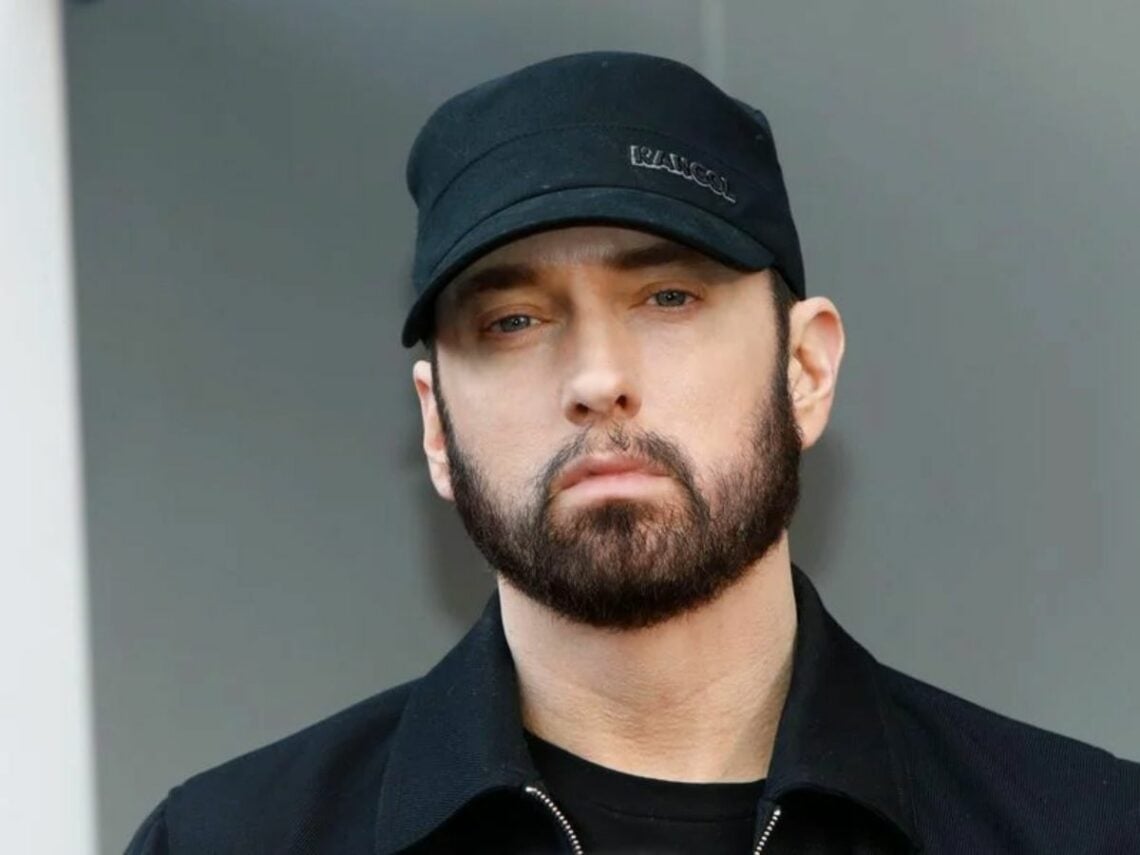
What happened next is where the story gets interesting. Eminem has said in interviews that once he stopped worrying about what people thought of him, people began to care about him. That shift, from trying to impress to simply not caring, arguably produced the persona that changed his career. The Slim Shady EP arrived in 1997 with a harder delivery and a darkly comic edge, and it generated far more buzz than Infinite ever did. That same year, he took second place at the Rap Coalition’s Rap Olympics in Los Angeles. A record that began as a self-funded Detroit project had suddenly become a calling card.
The Bass Brothers, who ran WEB Entertainment, saw potential long before the rest of the industry did. In a 2016 interview with Rolling Stone, Jeff Bass compared the young Eminem to early Michael Jackson and Prince, artists who sounded younger at the start but already carried something unmistakable. He said that listening to the 1996 recordings, he could still hear the Eminem of today, in the nuances of the tone and the rhythm. That is a fair point. Even on a debut that critics dismissed as derivative, the technical command that would later define him is already audible.
The tape that Dr. Dre heard after that period is the part of the story every hip-hop fan knows. Eminem signed to Aftermath Entertainment, and The Slim Shady LP arrived in 1999 with the single My Name Is. The album debuted at number two on the Billboard 200 with 283,000 copies in its first week, and it went on to win Grammys. Eminem became one of the biggest stars in popular music, and in 2022 he was inducted into the Rock and Roll Hall of Fame in his first year of eligibility. Infinite, meanwhile, became a footnote, a curiosity for completists and collectors.
That is partly what makes this anniversary release feel meaningful. Infinite has long been the missing chapter in Eminem’s streaming catalogue. Earlier reporting from Complex noted that, apart from the title track, the project was not available on the major platforms. Eminem marked the album’s 20th anniversary in 2016 with a remastered version of the title track and a short documentary called Partners in Rhyme, which featured interviews with the Bass Brothers and with Eminem himself. This new EP goes further by putting a substantial chunk of the original record in front of listeners who never had the chance to hunt down a cassette.
It also raises an interesting question about how we hear him now. For years, the popular story has been that Slim Shady was the real Eminem, the unfiltered id behind the microphone. Infinite complicates that. It suggests the character was a creative breakthrough rather than a revelation of hidden truth, a persona built, at least in part, as a response to being overlooked. Listening back to tracks like 313 and Open Mic, you can judge for yourself whether the old Marshall Mathers was hiding in plain sight or whether the Slim Shady mask gave him room to be braver.
My view, and it is only that, is that Infinite is more significant as a turning point than as a record. It is not the album that made Eminem a legend, and it was never going to be. But it is the project that taught him what did not work, and that lesson may have been the most valuable thing he took into the Slim Shady years. Plenty of artists have a debut they would rather forget. Few have one that so clearly explains everything that came after it.
So now that six songs from Infinite are finally a tap away, here is the question for hip-hop fans. Is the lost, earnest Eminem of 1996 an underrated version of the artist that deserves a fresh listen, or was Slim Shady the only way his talent was ever going to break through? And if the failure of Infinite really did change the course of rap, is it time it was ranked among the most influential debuts of all time?