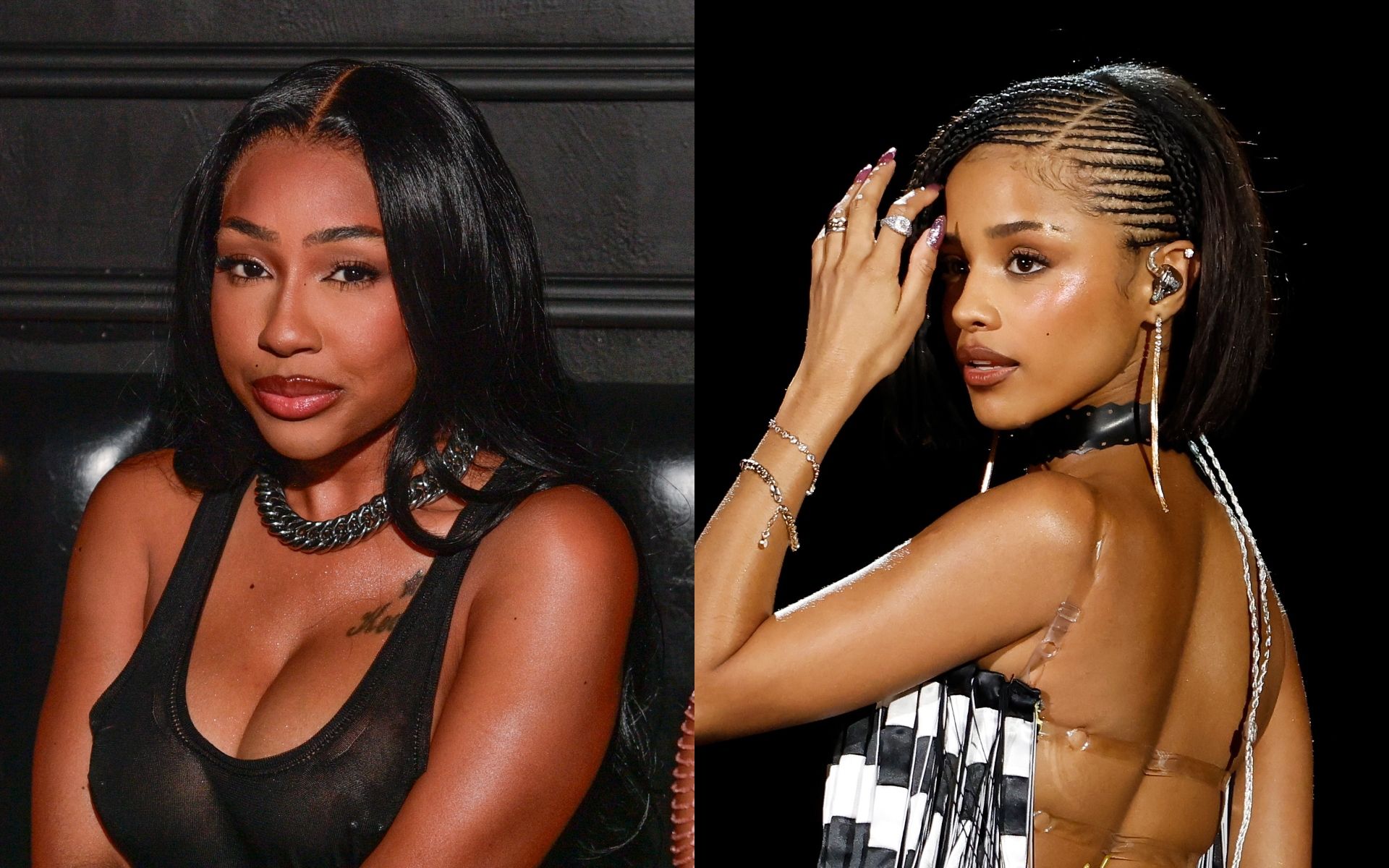
The hum of a Los Angeles studio in the sweltering summer of 2024 wasn’t supposed to echo into eternity—or at least, not like this. Yung Miami, the 32-year-old firecracker from Miami’s City Girls who flipped feisty freestyles into feminist anthems like “Twerk” and “Pussy Talk,” was in town for the BET Awards, her energy electric as ever. Amid the after-parties and award-show afterglow, she linked up with Tyla, the 23-year-old South African sensation whose sultry “Water” had just won her a Grammy nod and a global grip on the charts. It was the kind of casual crossover that fuels hip-hop’s heartbeat—two trailblazers trading tracks in a town where tomorrow’s hit is today’s half-sketched hook. Miami, fresh off teasing her solo debut with whispers of a “baddest baddie” banger called “Take Me to Chanel,” played a snippet for Tyla during a mutual producer’s late-night session. “Buy me what I like, put me in Chanel when you send your flight,” she crooned, the melody a mid-tempo magnet blending trap’s twirl with R&B’s ripple. Tyla nodded, smiled, and the night dissolved into the dawn. Fast-forward to October 16, 2025, and that snippet has sparked a supernova: Miami’s slapped Tyla with a $20 million lawsuit in Los Angeles Superior Court, alleging her Grammy-gilded “Chanel” is a carbon copy of the chorus she swiped from that sweltering studio cell.
It’s the kind of drama that hip-hop thrives on—bold claims, bolder beats, and a backstory bold as the bars themselves. Miami, born Caresha Romeka Brownlee, has always been the unfiltered force in City Girls’ duo dynamic, her quick quips and quicker clapbacks carving a career where authenticity is armor. From the 2018 breakout “Act Up” that amassed 1 billion streams to her 2024 BET Awards strut where she owned the stage with unapologetic allure, Miami’s been the mogul in the making, her solo teases like “Take Me to Chanel” promising a pivot from group glow to glow-up glow. The track, logged in Pro Tools Cloud on March 4, 2025, was her bold bid for the big leagues—a sultry siren call where luxury lures meet lover’s leverage: “Take me to Chanel, buy me what I like / Put me in Chanel when you send your flight.” It was raw, unrefined, but ripe—her hook a hypnotic hum at 95 BPM, laced with trap’s twinkle and R&B’s ripple, a melody meant to marry Miami’s Miami edge with universal yearning.

Tyla Laura Seethal, the Johannesburg jewel who’s woven Afrobeat’s alchemy into pop’s platinum pulse, was riding high when their paths crossed. At 23, her 2023 debut T.R.A.G.I.C. Girls had already etched her as the genre’s golden girl, “Water” winning the inaugural Grammy for Best African Music Performance and racking 800 million streams. BET weekend 2024 was her victory lap—her “Whoa” remix with Travis Scott still sizzling, her poise a perfect pitch for the producers circling like sharks. In that Airbnb Airbnb-adjacent Airbnb, amid the haze of hookah and half-written hits, Miami hit play. Tyla listened, leaned in—her smile the spark that, in hindsight, smoldered sinister. Months later, October 2025’s teaser dropped: Tyla’s “Say You Love Me Then Put Me in Chanel,” a velvet vibe at 94 BPM where the chorus croons, “Say you love me then put me in Chanel / You know what I like.” The hook? A haunting harmony, 68% lyrical larceny per Miami’s hired musicologist, the cadence a carbon copy where “buy me what I like” blooms into “you know what I like,” the flight-fueled fantasy rephrased but not reframed.
Miami’s meltdown was immediate, her X a wildfire of warnings. October 16 dawned with a dawn patrol tweet: “Take Me to Chanel is greater than Put Me in Chanel.” The follow-up frenzy: “This girl really ran off with my song—I don’t know how to feel about it. Mind you, I played this song for this girl.” The unnamed “girl”? Tyla, the tease turning to torrent as fans flooded the frame with side-by-side snippets, the similarities slicing through the skepticism. Miami, who’d hinted at the heist in August’s “everybody trying to take my song,” wasn’t playing—her legal leviathan landed October 18 in LA Superior Court, a $20 million Goliath demanding Goliath-sized justice: Copyright infringement, unjust enrichment, emotional eddies where the theft stole not just sales but soul. Affidavits armed with Pro Tools proofs predating Tyla’s tease by seven months, metadata milestones etching March 4 as the genesis, and a musicologist’s meticulous mapping: 68% lyrical lift, identical cadence cascades, BPM buddies at 95 and 94, key signatures kissing cousins in C minor. The producer pivot? A mutual maestro whose name stays shrouded, but whose session logs allegedly log the larceny.

Tyla’s camp? Cool as the Chanel she croons, her Epic Records enclave issuing a cease-and-desist October 17 that tempers the tempest with “frivolous” flak: No formal contract, no NDA in the Airbnb ether, the “session” a casual cell where inspiration, not infringement, ignited. Sources close to the South African songbird sing of “opportunistic” outrage, Miami’s mogul mandate a marketing mirage amid her solo stall-out post-City Girls’ 2023 hiatus. “Inspiration isn’t theft,” they counter, the cell’s “casual” croon a common crossroads where hooks hop from hum to hit. But Miami’s machinery marches on, her discovery demands delving deep: Raw stems, session sourcing, the producer’s pivot from pal to plaintiff. If the judge grants the TRO (temporary restraining order) filed October 20, Tyla’s October 24 drop delays to a dirge, her US streams stalled while the global Grammy glow dims. Settlement whispers? 5-10% of the stake—$1-2 million in co-credits, royalties remixed where “Take Me” tangles with “Put Me” in a tangled tango of titles.
The backstory? A brew of bold ambitions and bitter bygones. Miami’s solo siren call stalled since 2023’s “Twerkulator” tease—her City Girls clout clashing with JT’s joint ventures, edits of “Take Me to Chanel” her lifeline to the lane she longed to lead. Tyla, the Afro-fusion phenom whose T.R.A.G.I.C. girls turned tragedy to triumph with 1.2 billion streams, was Miami’s mirror: Bold, boundary-breaking, a beat where Afrobeats’ alchemy met trap’s twirl. Their BET overlap? A convergence of clout where Miami’s “baddest baddie” blueprint met Tyla’s “Water” wave—studio serendipity where hooks hummed in harmony, or harmony hijacked? Fans fracture: Team Miami’s “theft” tallies 60K tweet likes—”Merch the mogul, not the mimic!”—while Team Tyla tempers: “Inspo, not infringement—60%? That’s stretch, not steal.” Twitter’s tempest: “Why play a demo for Tyla? Gorilla, JT, Cardi—sure, but Miami? Mid.”

Legal lore? Copyright’s labyrinth where “substantial similarity” sways the scales—68% lyrical larceny a lofty ledge, but cadence cascades and key kisses could cascade the case. Musicologist Marvin Gaye ghosts Blurred Lines—$5M settled in 2015—where “got to give it to her” grinned too close to “dressed in black.” Miami’s mandate? $20M as anchor, the 500% hype hauling a haul where $1-2M in royalties remakes the remix. Tyla’s torque? Cease-and-desist cool, venue veto via international ink where jurisdiction jumbles, the Airbnb ether no enforceable echo. Discovery’s dagger? Raw reels revealing the real rhyme—stems stripped, metadata mined, the producer’s pivot from pal to plaintiff promising a protracted prose.
The ripple? A requiem for rap’s raw edges, where collabs’ casual cells cell into cells of conflict, where the hook’s hum haunts the harmony. Miami’s mogul march? A march where the mid’s moment meets the mogul’s mandate, her solo siren a siren call to the cell where Tyla teased. Tyla’s triumph? A triumph where the tease tantalizes, her Grammy glow guarding the gate where inspiration inks the immortal. As October’s end edges eternal, one hook haunts: “Take me” or “put me”—the cell’s secret, or the song’s soul? The drop? Delayed or defiant, but the drama? Drama’s dynasty, where the bold beat the bold, and the boldest? The boldest bold the bold for the bold. In hip-hop’s house of hooks, where the cell sings of surrender or steal, Nicki’s nod nods noble: The buck? Stops here. The beat? Beats on.