
Every season of American Idol creates its own storyline. Sometimes it’s about breakout contestants. Sometimes it’s about unforgettable performances.
This year, the spotlight has shifted somewhere else entirely—to the judges’ table.
Carrie Underwood, once celebrated as one of the show’s greatest success stories, is now at the center of a growing debate. Some viewers are calling her the “villain” of Season 24. Others are defending her as one of the few voices offering real honesty. And in the middle of it all, Keke Palmer’s recent appearance has added fuel to an already heated conversation.
But beneath the headlines and fan reactions, there’s a more interesting question:
What do viewers actually want from a judge in 2026?

How Carrie Underwood Became the Most Talked-About Judge This Season
Underwood’s judging style this season feels noticeably different from her earlier appearances.
Where she was once more measured and reserved, she’s now sharper, more direct, and far less concerned with softening her critiques. That shift hasn’t gone unnoticed.
Moments like her blunt feedback during Hollywood Week—paired with her now-viral line inviting boos from the audience—have positioned her as a polarizing figure. For some viewers, it reads as confidence and authenticity. For others, it crosses into unnecessary harshness.
What’s clear is this: she’s no longer blending into the panel.
She’s defining it.
The Rise of the “Villain” Narrative
Reality television has always thrived on clear character roles. The supportive mentor. The comic relief. The tough critic.
This season, Underwood has been cast—by viewers, not producers—as the tough critic who sometimes goes too far.
But labeling her a “villain” says as much about audience expectations as it does about her behavior.
In recent years, talent shows have leaned toward encouragement over critique. Judges often act as cheerleaders, offering constructive feedback wrapped in reassurance. Against that backdrop, Underwood’s more unfiltered approach feels jarring.
Not necessarily because it’s harsher.
But because it’s different from what audiences have grown used to.
Enter Keke Palmer—And a Completely Different Energy
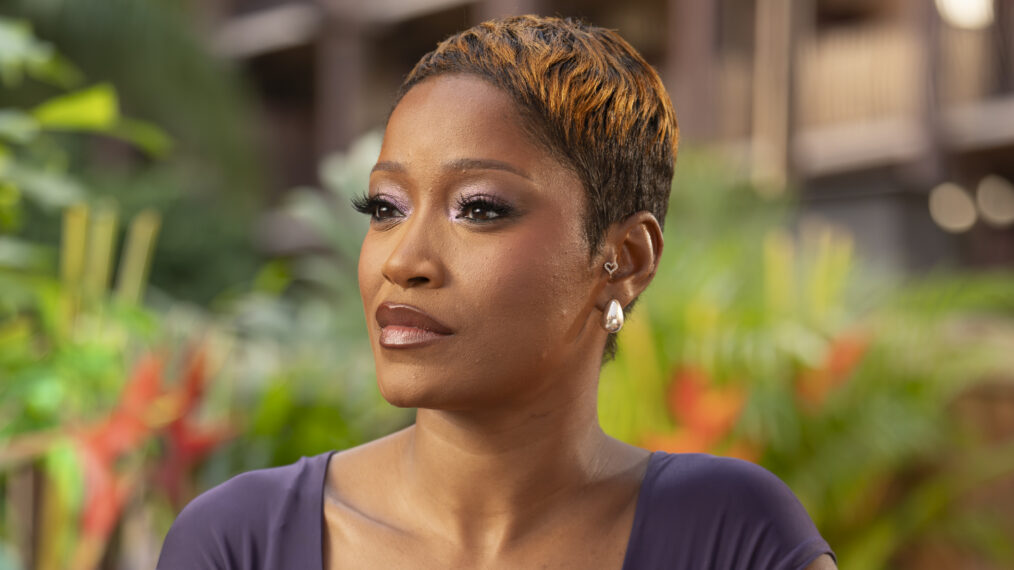
When Keke Palmer stepped in as a guest judge, the contrast was immediate.
Her style is energetic, playful, and highly engaging. She reacts in the moment, builds rapport quickly, and brings a sense of spontaneity that feels closer to entertainment than evaluation.
Viewers responded fast.
Social media lit up with praise, with many calling her presence refreshing and even suggesting she should join the panel permanently. For some fans, Palmer represents what they feel the show is missing—a sense of fun and warmth that balances the pressure contestants face.
But the comparison isn’t entirely fair.
Because Palmer and Underwood aren’t trying to do the same job in the same way.

What This Debate Is Really About
At its core, this isn’t just about two personalities.
It’s about two different philosophies of judging.
Carrie Underwood’s approach:
- Direct, sometimes blunt
- Focused on improvement and realism
- Willing to risk audience backlash
Keke Palmer’s approach:
- Encouraging and high-energy
- Focused on connection and confidence
- Designed to uplift the room
Neither approach is inherently better.
But they create very different viewing experiences.
And right now, audiences seem divided on which one they prefer.

Behind the Scenes: Editing, Pressure, and Perception
There’s another layer to consider—how much of this narrative is shaped in the edit.
Reports suggest Underwood has been frustrated with how certain moments—especially audience boos—have been emphasized in the final episodes. Reality TV thrives on tension, and highlighting those reactions can amplify a storyline quickly.
That doesn’t mean the moments didn’t happen.
But it does mean viewers are seeing a curated version of them.
At the same time, Underwood appears to be leaning into the criticism rather than retreating from it. If anything, she’s becoming more outspoken, not less.
That choice is risky—but it’s also what keeps her relevant in the conversation.
Why Producers May Not Make Any Changes
Despite the noise online, a major shift in the judging panel is unlikely in the short term.
Why?
Because controversy isn’t always a problem for shows like American Idol—it’s often an asset.
Debate drives engagement. Engagement drives viewership. And viewership drives decisions.
There are also indications that Underwood has influenced elements of the show’s direction, from themed episodes to a stronger connection to country and Nashville culture. That kind of behind-the-scenes impact makes her more than just an on-screen personality.
She’s part of the show’s current identity.
So… Villain or Necessary Voice?
The answer depends on what you think American Idol should be.
If the show is about encouragement and feel-good moments, Underwood’s style can feel out of place.
If it’s about preparing artists for a competitive industry, her honesty might be exactly what contestants need—even if it’s uncomfortable to hear.
What’s undeniable is that she’s made judging matter again.
People aren’t just watching performances—they’re reacting to the feedback, debating it, and forming opinions about it.
And in a long-running show, that kind of renewed attention is rare.
The Bigger Picture: A Panel in Transition
Keke Palmer’s appearance didn’t just introduce a new energy—it highlighted how much space there is for evolution within the panel.
It raised the possibility that American Idol doesn’t need to choose between warmth and honesty.
It could have both.
For now, though, the tension remains.
Carrie Underwood continues to speak her mind. Keke Palmer continues to win over fans. And viewers continue to debate what kind of judge they actually want to see.
Which might be exactly where the show wants them.